Low-FODMAP Dairy Alternatives: Milks, Yogurts, and Cheeses That Work
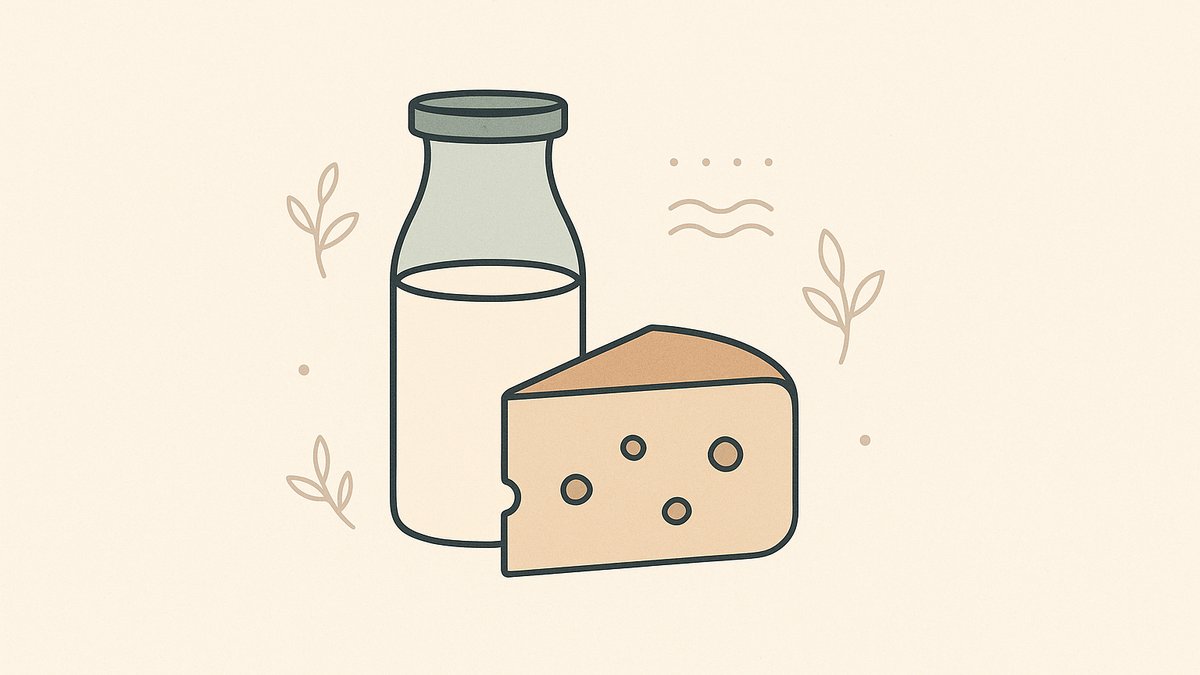
The low-FODMAP diet is not a dairy-free diet. That misread of the elimination phase is the most common one, and it pushes a lot of people off dairy they could safely eat.
The FODMAP in dairy is lactose. Some dairy foods are loaded with it. Others have almost none. Once you know which is which, and you know the serving sizes, most of the dairy aisle is back on the table.
This post covers milks (cow and plant), yogurts, cheeses, and fats like butter and ghee. For oat milk specifically, see Is oat milk low FODMAP?.
The short answer
Lactose is the FODMAP in dairy. Aged hard cheeses (cheddar, parmesan, swiss, brie) are low FODMAP at normal serves because aging consumes the lactose. Lactose-free cow's milk and lactose-free Greek yogurt give you a full real portion. Plant milks split into safe (almond, hemp, macadamia, soy from soy protein) and not-safe (soy from whole soybeans, large serves of oat).
The rule behind every dairy decision
Lactose is the FODMAP in dairy. Monash lab-tests each food and sets a low-FODMAP serving size based on the results. Under the tested serve, you're fine. Over it, you're not.
Two things drive whether a dairy food passes:
- How it's made. Aging, fermenting, and lactase treatment all strip lactose. Cheddar has aged long enough that most of the lactose is gone. Lactose-free milk has had its lactose pre-split. Fresh cheeses like ricotta still carry most of their lactose in the whey.
- How much you eat. A small wedge of brie is fine. A big bowl of cottage cheese is not. FODMAP stacking explains why a handful of "safe" dairy serves in one meal can still tip you over.
Serving sizes in this post are directional and change with formulation, so check the label on any specific product.
 Get the free Beginner's Guide to the Low FODMAP Diet
Learn what FODMAPs are, which foods to watch, and how to start finding your personal triggers. Plus practical tips and new recipes by email.
Milks at a glance
| Milk | Low-FODMAP serve | Notes |
|---|---|---|
| Lactose-free cow's milk | 1 cup (250 mL) | Regular milk with lactase added. Fully low FODMAP at a standard cup. |
| Almond milk | 1 cup (250 mL) | Plain, unsweetened. Skip anything with inulin or chicory root. |
| Soy milk (from soy protein) | 1 cup (250 mL) | Ingredient list must say "soy protein" or "soy protein isolate." |
| Soy milk (from whole soybeans) | High FODMAP at normal drinking serves | Most US soy milk, including Silk, is made this way. |
| Oat milk | Small serves only | Latte size is over the line. Full guide. |
| Coconut milk (UHT, carton) | Small-to-medium serves | Moderate at larger serves. Canned coconut milk is a separate food. |
| Rice milk | Small-to-medium serves | Can become higher FODMAP at bigger serves; check your brand's label. |
| Hemp milk | 1 cup (250 mL) | Usually fine. Check for added inulin. |
| Macadamia milk | 1 cup (250 mL) | Generally low FODMAP at a cup. |
Lactose-free milk is the easiest win
If you drink cow's milk, lactose-free milk is the simplest switch. Lactase has already split the lactose before it hits the carton, so there's nothing left to ferment. A full cup is low FODMAP. It tastes slightly sweeter because glucose and galactose are sweeter than lactose.
Lactaid, Fairlife, and most store-brand lactose-free milks work. Look for "lactose-free" on the front and lactase on the ingredient list.
The soy milk trap in the US
This one almost everyone gets wrong.
Soy milk from whole soybeans is high FODMAP. When you blend whole beans with water, GOS and fructans end up in the liquid. Most US soy milk, including Silk, is made this way.
Soy milk from soy protein isolate is low FODMAP. The protein is extracted first and GOS stays behind with the bean solids. This style is common in Australia and New Zealand but harder to spot in US stores.
Look for "soy protein" or "soy protein isolate" as the main ingredient after water. "Whole soybeans" or just "soybeans" means the high-FODMAP version.
Almond, coconut, rice, oat
Almond milk behaves most like lactose-free milk in practice. A full cup passes, and most plain unsweetened versions are fine. Skip flavored varieties that add inulin, agave, honey, or date syrup.
Carton coconut milk (not the canned cooking kind) passes at small-to-medium serves and climbs into moderate at larger pours. Canned coconut milk is a separate food with its own Monash serving size.
Rice milk works at a small-to-medium serve. Bigger serves can tip over, often from excess fructose depending on the brand.
Oat milk is the tricky one because a standard latte uses 2 to 3 times the low-FODMAP serve. The full oat milk post covers brands and coffee shop orders.
Yogurts
| Yogurt | Low-FODMAP serve | Notes |
|---|---|---|
| Lactose-free cow's yogurt | A standard single-serve tub | The easiest option. Lactaid and most store brands work. |
| Greek yogurt (regular) | Very small serves only | Has lactose. Low-FODMAP serve is impractically small. Use lactose-free Greek instead. |
| Coconut yogurt (plain, unsweetened) | About 1/2 cup | Check the ingredient list for inulin and added fiber. |
| Soy yogurt (from soy protein) | Varies, check app | Rare in the US. |
| Soy yogurt (from whole soybeans) | High FODMAP | Skip during elimination. |
Lactose-free Greek yogurt is the most useful dairy product on elimination if you like yogurt. It hits low FODMAP at a real portion, works in smoothies, tops chili, stands in for sour cream, and delivers real protein. Fage has a lactose-free line, Green Valley Creamery makes one, and store brands are expanding.
Plain unsweetened coconut yogurt is a solid dairy-free pick at about 1/2 cup. Watch out for flavored or "probiotic" versions that add chicory root fiber or inulin to boost the fiber claim. Those ingredients are high FODMAP and commonly trigger symptoms on elimination.
Cheeses
Cheese is the surprise winner of the low-FODMAP diet. Most hard aged cheeses are essentially lactose-free because aging consumes the lactose. You can eat real cheese on elimination.
| Cheese | Low-FODMAP serve | FODMAP load |
|---|---|---|
| Cheddar | 40 g (about 1.5 oz) | Very low lactose |
| Parmesan | 40 g | Essentially zero lactose |
| Swiss | 40 g | Very low lactose |
| Brie | 40 g | Low lactose |
| Camembert | 40 g | Similar to brie |
| Mozzarella | 40 g | Low lactose |
| Feta (plain, in brine) | 40 g | Avoid versions marinated in garlic or onion |
| Halloumi | 40 g | Climbs with bigger serves |
| Goat cheese (hard) | 40 g | Generally low |
| Ricotta | Smaller serve | Higher lactose than aged cheeses |
| Cottage cheese | Smaller serve | Higher lactose than aged cheeses |
| Cream cheese | Smaller serve | Watch bigger portions |
Why hard cheese is a free pass
When cheese is made, lactose ends up in the whey and gets drained off. The longer a cheese ages, the more bacteria eat whatever lactose is left. By six months of aging, cheddar has effectively nothing left to ferment. Parmesan is even further along. Monash rates aged cheeses like cheddar and parmesan as low FODMAP at typical serves and they stay low at considerably larger amounts than most people eat in a sitting.
Where soft cheeses get tricky
Fresh cheeses like ricotta, cottage cheese, and cream cheese haven't had the lactose drained or aged out, so they carry a real dose per bite. A small serve works. A big breakfast bowl of cottage cheese is a stack problem. Exact thresholds vary by product (full-fat vs low-fat, brand, country), so keep the serve small until you know how the specific tub in your fridge sits with you.
Flavored soft cheeses are another trap. "Garlic and herb" or "French onion" cream cheese spreads are high FODMAP from the flavorings, not the dairy. See the garlic post for why small amounts of garlic powder still matter.
Butter, ghee, and cream
The fats mostly pass with room to spare:
- Butter. Very low in lactose. Fine at normal cooking and spreading amounts.
- Ghee. Clarified butter with milk solids removed. Effectively lactose-free.
- Heavy cream. Contains lactose, but you're using a small splash at a time in practice. Monash has tested a specific serve, so keep it to a splash.
- Sour cream. Contains lactose. A small dollop is generally fine. Lactose-free sour cream exists (Green Valley Creamery).
A low-FODMAP dairy day
One pattern that works well across a day:
- Coffee. Lactose-free milk or plain almond milk. Full cup is fine.
- Breakfast. Lactose-free Greek yogurt with blueberries and a spoon of maple syrup.
- Lunch. Cheddar on a rice cake, or a salad with 40 g of plain feta.
- Snack. Parmesan and a few rice crackers.
- Dinner. Butter to cook in. A grate of parmesan on pasta.
- Dessert. Lactose-free ice cream (Lactaid, Breyers), or a small bowl of coconut yogurt.
Most of that is real dairy, and none of it is high FODMAP.
The low-FODMAP grocery list pairs these picks with the rest of the cart, and the elimination phase guide shows how to sequence dairy with other food groups.
The bottom line
Dairy on the low-FODMAP diet comes down to three moves:
- Swap regular milk for lactose-free cow's milk or the right plant milk.
- Lean on hard aged cheeses (cheddar, parmesan, swiss, brie). Watch portion size on fresh cheeses.
- For yogurt, pick lactose-free cow's yogurt or plain unsweetened coconut yogurt.
That covers most of the elimination-phase dairy question. For the science on why lactose is one of the FODMAP groups, see what are FODMAPs. For recipes that use these picks, browse the recipe section. To check a milk, yogurt, or cheese fast, scan it, its barcode, or ingredient label with the FODMAP Foods app, or search the low FODMAP list, for an instant verdict.
Get the free Beginner's Guide to the Low FODMAP Diet
Learn what FODMAPs are, which foods to watch, and how to start finding your personal triggers. Plus practical tips and new recipes by email.
Scan any food, search 1,000+ FODMAP ratings, and know your safe portion with FODMAP Foods.


Related articles


For educational purposes only. Not medical advice. Consult a healthcare professional for personal guidance.
References
- Dairy alternatives (beverage and yoghurt) - low FODMAP options — Monash FODMAP
- Lactose and dairy products on a low FODMAP diet — Monash FODMAP
- Milk alternatives on a low FODMAP diet — Monash FODMAP
- Is Cheese Low FODMAP? — FODMAP Everyday
- What Cheeses Are Low FODMAP? (Low Lactose) — A Little Bit Yummy