Low FODMAP Elimination Phase: A Week-by-Week Guide

The elimination phase is the first stage of the low-FODMAP diet and the part that changes how you shop, cook, and eat. It's also the part people get wrong most often: too short to see a real answer, too long because they're afraid to stop, or run without enough structure to know whether it worked.
This guide walks through it week by week: what to do before day one, what week one feels like, when bloating usually drops, how to tell you've hit a stable baseline, and what it means if you get to week six and nothing has changed.
What elimination is (and isn't)
Elimination is phase one of three. You temporarily remove high-FODMAP foods across all the FODMAP groups, fructose, lactose, fructans, GOS, and polyols, at the same time, to see whether your gut settles down when FODMAPs aren't in the picture. If it does, that's strong evidence FODMAPs are involved, and you move into reintroduction to figure out which specific ones are triggering you.
Monash, the research team that developed the diet, is explicit: elimination is meant to last 2 to 6 weeks, not longer. It's a diagnostic tool, not a lifestyle. Staying on strict elimination for months can narrow your gut microbiome and makes eventual reintroduction harder, not easier.
If you haven't already, read what FODMAPs are before you start. The more you understand the mechanism, the easier the food choices get.
Week 0: the prep week
Most people who struggle with elimination didn't fail on willpower. They failed because they started on a Monday morning with no plan, hit 6pm with nothing to cook, and ordered the usual takeout.
Before day one, do these things.
Audit your pantry and fridge. Pull out the obvious high-FODMAP items and set them aside, onion, garlic, wheat bread, regular pasta, honey, agave, most dried beans, cashews, pistachios, most dried fruit, and sugar alcohols (sorbitol, mannitol, xylitol, maltitol) in gum and "sugar-free" products. Chickpeas are more nuanced: canned and rinsed chickpeas at a small serve are low FODMAP, while dried chickpeas cooked from scratch are usually higher at typical serves, so stick to canned and rinsed rather than blanket-avoiding. You don't have to throw anything out. Just get it out of reach for a few weeks.
Read labels. Onion and garlic powder hide in roughly every packaged sauce, broth, dressing, and seasoning blend on the shelf. Check the ingredient list explicitly for onion, garlic, onion powder, garlic powder, and fructans. Stocks, marinades, salad dressings, and spice mixes are the biggest offenders.
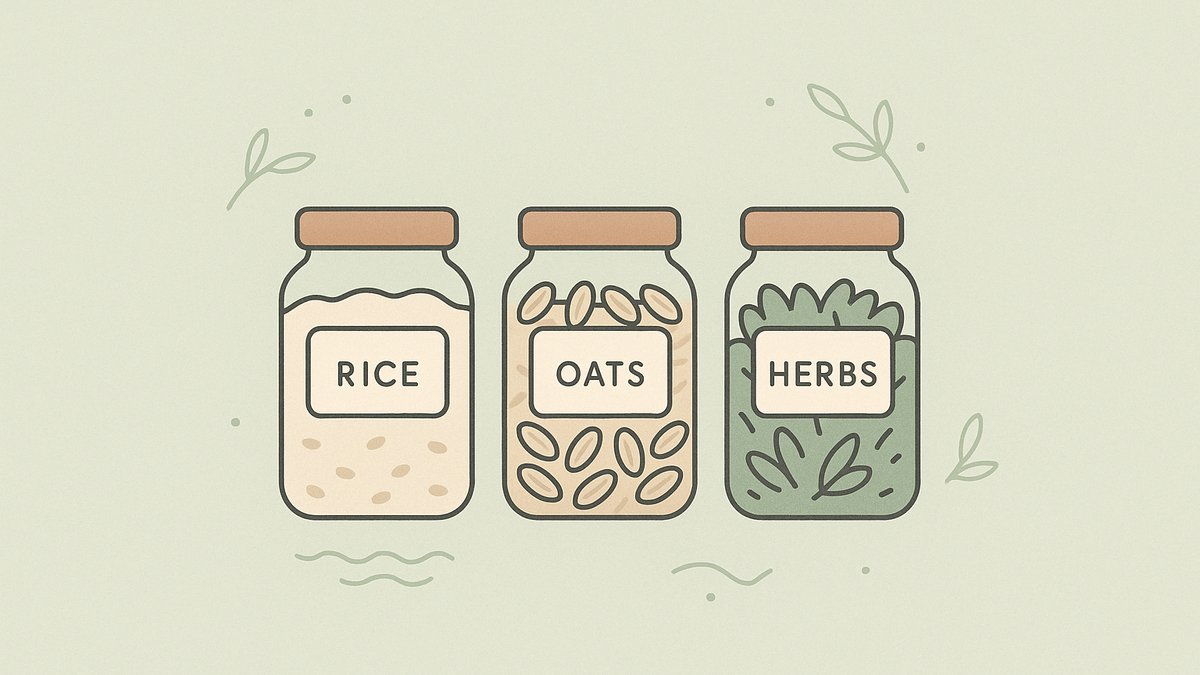
Stock the basics. A workable elimination pantry is simpler than it sounds: a garlic-infused olive oil (no garlic solids floating in it, buy one that's been strained, or make your own), rice, gluten-free oats, lactose-free milk or almond milk, hard cheeses (cheddar, parmesan, brie), eggs, plain meat and fish, firm tofu, canned (rinsed) lentils in small serves, and a rotating set of green-listed vegetables and fruits. Serving sizes decide everything, so get the FODMAP Foods app before you start: its portion guide shows how each food's rating changes with portion size, and you can scan labels at the store.
Plan your first four days of meals. Not the whole month, just enough to get over the initial hump without decision fatigue. A full week of meals is sketched out in the 7-day low-FODMAP meal plan if you'd rather copy than invent. Breakfast, lunch, dinner, one snack. Reuse the same meals for week one if you want. Novelty is overrated here; repetition is a feature.
Record a baseline. Before you change anything, write down your current symptoms for a few days. Bloating, pain, gas, bowel frequency and consistency, urgency. Use a 0-to-10 scale you can stay consistent with. Without a baseline, you won't be able to tell whether week two feels better or you just stopped noticing.
Pick a start date with a clear runway. Don't start the week you're traveling, hosting, or closing on a house. Elimination needs routine more than it needs discipline.
 Get the free Beginner's Guide to the Low FODMAP Diet
Learn what FODMAPs are, which foods to watch, and how to start finding your personal triggers. Plus practical tips and new recipes by email.
Week 1: adjustment (often worse before better)
Week one is the hardest week. A couple of things tend to happen.
Symptoms can get worse before they get better. This surprises people. You cut out the foods that were supposedly the problem and you feel more bloated, more gassy, sometimes constipated. The main reasons: a sudden shift in fiber type (swapping wheat for rice, apples for oranges), an adjustment in your gut microbiota feeding pattern, and hyper-awareness, you're paying more attention to your gut than you have in years. This is normal. Don't quit in week one.
Hidden FODMAPs are everywhere. Your first week will surface every garlic-powder-in-the-spice-blend, every onion-in-the-broth, every high-fructose-corn-syrup-in-the-ketchup mistake. Expect to make 2 or 3 of them. Just notice and adjust.
Stacking happens fast. FODMAPs from different foods add up within a meal. Two or three foods that are each fine at their own serving size can push you over threshold when you eat them together, and serving size is where most people get tripped up (broccoli heads vs stalks, canned vs dried chickpeas, small vs large avocado). If week one feels off despite "eating low FODMAP," stacking is usually why.
Early wins some people see. Bloating after meals often drops within 2 to 3 days, even before the bigger changes show up. Take that as encouragement, not the final verdict.
What to do in week one: stick to your plan, log everything, don't add new foods you have to look up mid-cook. Boring and repetitive is good.
Weeks 2 to 3: bloating drops, signals emerge
By the end of week two or into week three, most people start noticing the real shift.
The first signal is usually bloating. It stops building through the day. You don't need to unbutton your pants after lunch. Your stomach looks flatter in the morning in a way it hasn't for a long time. This is one of the most consistent findings in the clinical literature, Halmos et al. (2014), the landmark 21-day crossover trial, showed significantly lower overall GI symptom scores on the low-FODMAP diet versus a typical Australian diet, with bloating, abdominal pain, and gas all dropping.
Bowel habits start to regulate. For diarrhea-predominant IBS, stools firm up and urgency eases. For constipation-predominant IBS, the improvement is slower and sometimes partial; FODMAPs aren't always the driver for the constipated end of the spectrum. Mixed patterns tend to stabilize toward one end.
Pain and cramping soften. Not always gone, but less frequent and less intense.
Your baseline sensitivity changes. A specific thing happens around week two or three: you can suddenly tell when something's off. Before elimination, every day felt vaguely bad, so it all blurred together. Now most days feel okay, and a bad day stands out. That contrast is diagnostic, it's also the skill you'll need for reintroduction.
What to watch for: if you've had no change at all by the end of week three, revisit your execution. Are you sure about the garlic-infused oil (no solids)? Onion powder in anything? Too much stacking? Lactose in milk chocolate? One real-world execution issue is more likely than a failure of the diet itself.
Weeks 4 to 6: established baseline
By week four, if the diet is going to work for you, you're usually there. This is your new "calm gut" baseline.
What it should feel like. Consistent days in a row that you'd describe as normal. Not perfect, most people still have occasional off days from stress, sleep, or cycle hormones, but the pattern has shifted from "mostly bad with occasional okay" to "mostly okay with occasional bad."
What the research says to expect. Staudacher and Whelan's 2017 review summarized more than 10 randomized trials and found clinical response in roughly 50 to 80 percent of IBS patients on the low-FODMAP diet. Bloating, flatulence, diarrhea, and global symptoms all respond. That leaves somewhere between 1-in-5 and 1-in-2 people who don't get meaningful benefit. More on that below.
When to move to reintroduction. You're ready when:
- Your symptoms have clearly settled and held for at least a week. Not "a little better." Noticeably better, consistently.
- You have a stable baseline you can describe. What a normal day looks like for you now, on the diet.
- You've been on strict elimination for at least 2 weeks, less than that is usually too short to be sure.
Don't stay on elimination past 6 weeks just because it's comfortable. It's not the safest place long-term. The reintroduction phase is how you get your food list back.
Foods that come up the most
Three foods drive more elimination-phase questions than anything else. Each has its own post.
- Garlic. Out in any form except certified garlic-infused oil. No cloves, no powder, no roasted.
- Onion. Out, including onion powder and onion-based stocks. Scallion greens and leek greens are fine.
- Avocado. Low FODMAP only at a small serving. Easy to over-portion.
Read those if you haven't. They cover the substitutes that work and the common wrong answers (garlic powder, "just a little onion," half an avocado) that will quietly derail your elimination.
What if nothing changes by week 6?
If you're honest about your execution, no hidden onion or garlic, sensible serving sizes, not stacking heavy, and six full weeks in you're no better, FODMAPs probably aren't your main driver.
This is a real result, not a failure. The Monash and Staudacher data both put the non-responder rate at 20 to 50 percent. Stop elimination. Eat normally. Consider other possibilities:
- SIBO (small intestinal bacterial overgrowth). Overlaps heavily with IBS symptoms but has a different mechanism. A GI specialist can evaluate with a breath test, it's an imperfect tool, but combined with clinical picture it's the usual starting point. See IBS vs SIBO vs histamine intolerance for how to tell the patterns apart.
- Histamine intolerance. Similar GI symptoms plus often headaches, flushing, skin reactions. Low-FODMAP restriction isn't targeted at the underlying mechanism and often doesn't help much on its own.
- Bile acid malabsorption. A common missed diagnosis in diarrhea-predominant IBS.
- Celiac disease. Should be ruled out with blood testing before you cut gluten or wheat, the test requires ongoing gluten intake to work. Low-FODMAP elimination substantially reduces wheat, so this matters before day one.
- Functional dyspepsia, gastroparesis, IBD, pelvic floor dysfunction. All can present with bloating and altered bowel habits.
The right next step is a visit with a GI specialist, not another six weeks of elimination.
Tracking through elimination
Elimination works better with data than without. You're trying to answer two questions: did symptoms change, and how much. Both get a lot more accurate when you're logging instead of remembering.
A simple daily log works: what you ate, rough serving sizes, symptoms by type (bloating, gas, cramps, urgency) on a 0-to-10 scale, bowel movements with Bristol scale, and the non-food stuff that moves your gut (sleep, stress, cycle day, alcohol, travel). A few minutes a day is enough. See symptom tracking on low FODMAP for what to log and why each piece matters.
This is what the FODMAP Foods app is built for. Scan a food, barcode, or ingredient label for an instant Low, Moderate, or High FODMAP verdict, ask the AI about a meal you're unsure of, or search the low FODMAP food list of 1,000+ foods, so the food side is settled while you note symptoms in your daily log.
Summary
Elimination runs 2 to 6 weeks. Week one is rough, weeks two and three are when bloating drops, weeks four through six confirm your new baseline. If it worked, you move into reintroduction and start reclaiming foods. If it didn't, you've still learned something: FODMAPs aren't the issue, and it's time to look elsewhere.
Getting through elimination cleanly is mostly a logistics problem. A stocked pantry, a meal plan you can repeat, and a log you keep consistently. The basics of the diet are well-established. Your job is execution.
Get the free Beginner's Guide to the Low FODMAP Diet
Learn what FODMAPs are, which foods to watch, and how to start finding your personal triggers. Plus practical tips and new recipes by email.
Scan any food, search 1,000+ FODMAP ratings, and know your safe portion with FODMAP Foods.


Related articles

For educational purposes only. Not medical advice. Consult a healthcare professional for personal guidance.
References
- The 3 phases of the low FODMAP diet — Monash FODMAP
- Just 2-6 weeks, not a STRICT diet for life — Monash FODMAP
- Starting the Low FODMAP Diet — Monash FODMAP
- A diet low in FODMAPs reduces symptoms of irritable bowel syndrome — Halmos et al. (2014), Gastroenterology
- The low FODMAP diet: recent advances in understanding its mechanisms and efficacy in IBS — Staudacher & Whelan (2017), Gut
- Getting Started on the Low FODMAP Diet: Elimination Phase — A Little Bit Yummy