Is Coconut Low FODMAP? Milk, Cream, Flour, and Flesh
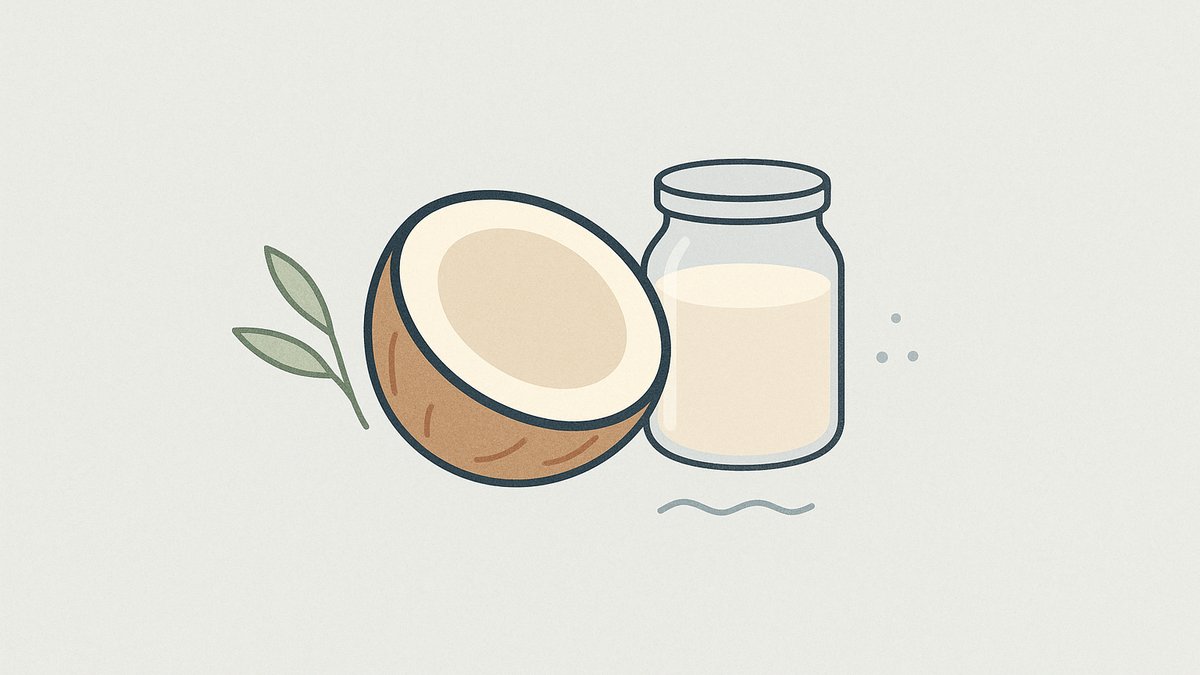
Coconut is low FODMAP in small serves and high FODMAP in larger ones, and the form matters. Coconut oil is always fine. Canned coconut milk is low at 1/4 cup and high at 1 cup. Coconut flesh, flour, water, and cream each have their own serve. The common thread is sorbitol at larger portions.
Coconut is a serving-size food, like avocado, where the same ingredient can sit under or over the threshold depending on how you use it.
The short answer by form
Rough Monash-style serves for each form a normal kitchen uses. Treat them as approximate, since coconut ratings have shifted over the years.
- Coconut oil. Always fine. No FODMAPs of concern. Cook with it freely.
- Canned coconut milk. Low FODMAP at roughly 1/4 cup. High FODMAP at around 1 cup.
- Coconut cream. Low FODMAP at a small serve, around 2 tablespoons. Richer than coconut milk, so the sorbitol load climbs faster.
- Fresh coconut flesh. Low FODMAP in a small serve only. A few tablespoons of shredded flesh sits safely; larger handfuls climb into polyol territory quickly.
- Dried/desiccated coconut. Low FODMAP in a very small serve, think a sprinkle rather than a scoop.
- Coconut flour. Low FODMAP per portion of a recipe, closer to a tablespoon than a quarter cup. Easy to push into higher FODMAP territory in breading or coatings.
- Coconut water. Low FODMAP at a small serve, around 100 ml. Half a standard bottle is already past the safe serve.
- Coconut yogurt. Varies wildly by brand. Plain coconut yogurt is often fine in a small serve. Flavored versions can hide inulin, added sugar, or fruit that bumps them into high FODMAP territory.
One rule covers the shopping list: small serves are fine, big serves are a sorbitol problem.
Why sorbitol is the issue
Coconut's FODMAP load comes from polyols, specifically sorbitol. Sorbitol and mannitol are sugar alcohols the small intestine absorbs slowly and incompletely. What isn't absorbed moves into the large intestine, pulls water in, and gets fermented by gut bacteria. That fermentation is what drives bloating, cramping, and loose stools for people with IBS.
Coconut flesh contains sorbitol. Everything made from the flesh (coconut milk, cream, dried coconut, coconut flour) carries some of that sorbitol with it. Coconut water is the liquid from inside a young coconut rather than pressed from the flesh, but its FODMAP content (a mix of polyols and other sugars depending on testing) still rises with larger serves. Coconut oil is the outlier: pure fat, no carbs, no polyols.
The same pattern shows up in avocado, mushrooms, and most stone fruit. Small serves sit under the polyol threshold. Larger serves stack over it. For a longer explanation of how FODMAP groups work, the what are FODMAPs primer covers all six.
 Get the free Beginner's Guide to the Low FODMAP Diet
Learn what FODMAPs are, which foods to watch, and how to start finding your personal triggers. Plus practical tips and new recipes by email.
Canned coconut milk: the curry problem
The most common coconut mistake on the low-FODMAP diet is curry. A typical Thai or Indian curry calls for a full 400 ml can split across two to four servings. That works out to 100 to 200 ml of canned coconut milk per bowl, well past the 1/4 cup (roughly 60 ml) low-FODMAP serve.
A few ways to make curry work:
- Dilute with low-FODMAP broth. Use 1/4 cup of canned coconut milk per portion and stretch the sauce with low-FODMAP chicken broth or water.
- Use lite coconut milk. Lite versions are diluted with water, so the serve is more forgiving. Scan the brand you buy in the FODMAP Foods app to check it.
- Split the can. Freeze half in portioned containers. Keeps portions honest and saves the rest for next week.
Coconut cream vs coconut milk
Two things go by "coconut cream." One is the fat-rich layer that separates to the top of a can of coconut milk in the fridge. The other is packaged canned coconut cream, sold as its own product, thicker and higher in fat than coconut milk. Either way, the sorbitol per spoonful is higher, which is why the safe serve is smaller. A couple of tablespoons in a curry or a dairy-free whipped topping is low FODMAP. Half a can in a single serving is not.
Coconut flour in baking
Coconut flour is extremely absorbent, so a typical cake or muffin recipe only calls for 1/4 to 1/2 cup across 8 to 12 servings. Divided across those servings, each portion comes in close to a tablespoon of coconut flour per serve, which is where it belongs for low FODMAP.
The place to watch coconut flour is breading or coatings, where one person can easily eat 1/4 cup in a single sitting. That's a much bigger serve than a slice of coconut cake. The low-FODMAP flours post covers how coconut flour compares to rice, oat, buckwheat, and almond flours.
Coconut water
Coconut water is marketed hard as a natural sports drink. For low FODMAP, it's a portion-control food. Around 100 ml is low FODMAP. A full 330 ml bottle is past the safe serve. Treat it like a splash of flavor, not a main hydration source. A small glass with ice is fine. A full bottle after a workout is a sorbitol challenge, not a recovery drink.
Coconut yogurt: read the label
Plain unsweetened coconut yogurt is often low FODMAP in a small serve, but the exact amount depends on the brand, because different companies thicken their coconut yogurt with different ingredients. Check the specific product you buy.
Watch for two things on the label:
- Inulin or chicory root fiber. Both are high-FODMAP fructans, even in small amounts. Some coconut yogurts add these as a prebiotic or thickener. Skip anything with either in the ingredients.
- Added sugar and fruit mix-ins. Flavored coconut yogurts with mango or apple often use high-FODMAP fruit in high-FODMAP amounts. Plain plus your own fruit is safer. Stick to low-FODMAP fruit like strawberries, blueberries, or raspberries.
Plain coconut yogurt is a solid pick for low-FODMAP breakfast or dessert. Flavored coconut yogurt is the one that quietly trips people up. For a dairy-free rotation, the low-FODMAP dairy alternatives post walks through coconut, almond, soy (protein), rice, and hemp options side by side.
The stacking trap
Coconut products are easy to stack without realizing. A coconut yogurt parfait for breakfast, a Thai curry for lunch, and a coconut macaroon as a snack each look fine on their own. Together, they add up to a big sorbitol day, possibly on top of an avocado or mushroom serve that was also under threshold.
That's FODMAP stacking in action. Many polyol foods are portion-dependent, and the total load across a day is what hits your gut. If multiple coconut products show up in one day, space them out or pull back on the serves.
The elimination-phase rule
During the 2 to 6 week elimination phase, keep coconut in small serves across all forms, or skip the borderline ones and lean on coconut oil. Once the sorbitol reintroduction challenge is done, you'll know how much polyol your gut tolerates and can scale coconut portions from there.
Plenty of people pass the sorbitol challenge and cook with a full can of coconut milk in recipes that make four good-sized servings. Others stay with 1/4 cup serves long term. Both are normal. Reintroduction is how you find out which one applies to you.
The one-line version
Small serves of any coconut product are fine. Coconut oil is always fine. The rest depends on the can, the bottle, or the spoon. The FODMAP Foods app lets you scan a coconut product, label, or barcode, or search the low FODMAP food list, so you can check each form, milk, cream, flour, or water, in seconds.
Get the free Beginner's Guide to the Low FODMAP Diet
Learn what FODMAPs are, which foods to watch, and how to start finding your personal triggers. Plus practical tips and new recipes by email.
Scan any food, search 1,000+ FODMAP ratings, and know your safe portion with FODMAP Foods.


Related articles




For educational purposes only. Not medical advice. Consult a healthcare professional for personal guidance.
References
- Coconut Products and the Low FODMAP Diet — Monash FODMAP
- Is Coconut Low FODMAP? — FODMAP Everyday
- Coconut milk and the low FODMAP diet — A Little Bit Yummy
- Polyols and the Low FODMAP Diet — Monash FODMAP