

Roast Turkey
A low FODMAP roast turkey with a garlic-infused oil herb butter under the skin, lemon, fresh herbs, and a pan-dripping gravy.
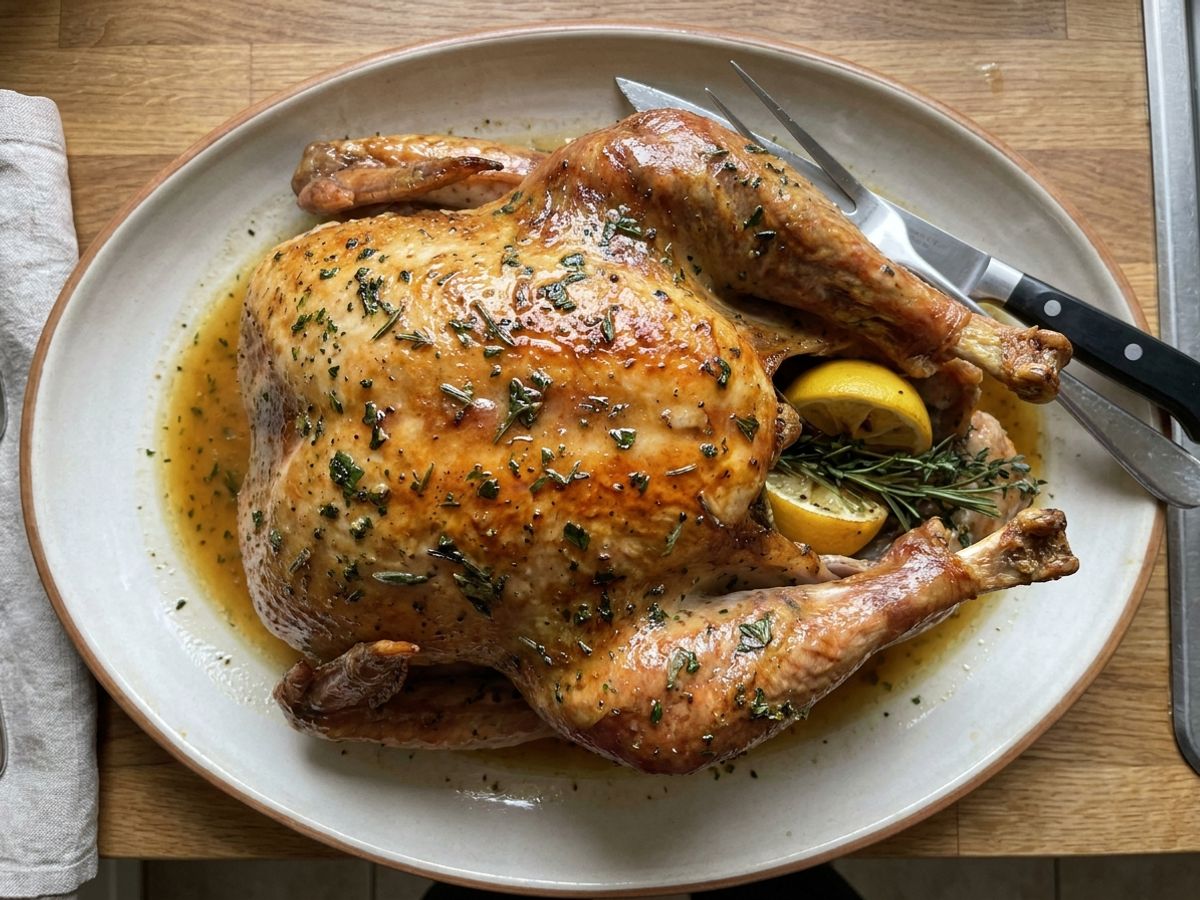
Ingredients
- 1 whole turkey, about 12 lb (5.4 kg), thawed, with giblets and neck removed. Choose a plain (natural) bird, not a self-basting or pre-seasoned one (see Tips).
- 1/2 cup (115 g) unsalted butter, softened. Butter is low in lactose and low-FODMAP in normal servings.
- 2 tablespoons garlic-infused olive oil
- 2 tablespoons chopped fresh herbs (a mix of rosemary, thyme, and sage), plus extra sprigs for the cavity
- 1 tablespoon chopped fresh parsley
- Finely grated zest of 1 lemon
- 1 lemon, halved, for the cavity
- 2 teaspoons fine salt (roughly 1 teaspoon per 4 to 5 lb of bird), plus more for the gravy
- 1 teaspoon freshly ground black pepper
- Green tops of 2 scallions or 1 leek, cut into 2-inch pieces (optional; use the green parts only)
- 3 large carrots, cut into chunks, to raise the bird off the pan
- 2 cups (500 ml) low-FODMAP chicken broth, for the pan
For the gravy
- Skimmed pan drippings
- 2 cups (500 ml) low-FODMAP chicken broth
- 3 tablespoons cornstarch, whisked with 3 tablespoons cold water
- 1/4 cup (60 ml) dry white wine (optional)
- Salt and black pepper, to taste
Instructions
Make the herb butter
- In a small bowl, mash together the softened butter, garlic-infused oil, chopped herbs, parsley, lemon zest, 1 teaspoon of the salt, and the black pepper until evenly combined.
- Set aside at room temperature so it stays soft and spreadable.
Prep and season the turkey
- Pat the turkey very dry inside and out with paper towels. Dry skin browns better and crisps.
- Starting at the neck end, gently slide your fingers under the breast and thigh skin to loosen it, taking care not to tear it.
- Spread about two-thirds of the herb butter directly on the meat under the skin, then rub the rest over the outside of the bird. Season the cavity with the remaining 1 teaspoon salt.
- Place the lemon halves, a few herb sprigs, and the scallion or leek green tops inside the cavity. Do not add onion or garlic bulb.
- Tie the legs together with kitchen twine and tuck the wing tips under the body.
Roast
- Position a rack in the lower third of the oven and preheat to 325 F (165 C).
- Scatter the carrot chunks across a roasting pan and set the turkey on top, breast side up, so air can circulate underneath. Pour 2 cups of broth into the pan.
- Roast for roughly 13 to 15 minutes per pound, about 2 hours 40 minutes to 3 hours for a 12 lb bird, basting with the pan juices every 45 minutes.
- If the skin browns too quickly, tent the breast loosely with foil. The turkey is done when an instant-read thermometer reads 165 F (74 C) in the innermost part of the thigh, the innermost part of the wing, and the thickest part of the breast, not touching bone.
Rest and make the gravy
- Transfer the turkey to a carving board, tent loosely with foil, and rest for 20 to 30 minutes. The temperature will climb slightly and the juices redistribute.
- Pour the pan drippings into a measuring cup and spoon off most of the surface fat. Add the drippings and 2 cups of broth to a saucepan and bring to a simmer. Stir in the white wine, if using.
- Whisk in the cornstarch slurry and simmer, whisking, for 2 to 3 minutes until the gravy thickens and turns glossy. Taste and adjust the salt and pepper, then serve with the carved turkey.
Tips & Substitutions
- Buy a plain bird. Many frozen turkeys are "self-basting" or injected with a solution whose natural flavors can include onion and garlic. Look for a turkey with turkey (and maybe salt or water) as the only ingredients.
- Keep the cavity onion-free. Lemon, fresh herb sprigs, and scallion or leek green tops perfume the bird from the inside without the fructans in onion or garlic bulb.
- Broth is where FODMAPs hide. Most store-bought stock contains onion and garlic, so make it from scratch or use a certified low-FODMAP brand for both the pan and the gravy.
- Dairy-free option. Butter is low in lactose, but if you avoid dairy, swap in extra garlic-infused oil or a dairy-free spread without inulin, chicory root or cashews for the herb rub.
- Gravy thickener. Cornstarch keeps the gravy gluten-free. A gluten-free 1:1 flour blend whisked into the fat as a roux also works if you prefer a flour-based gravy.
- Scale to your bird. Use about 1 teaspoon of salt per 4 to 5 lb of turkey and plan on the same 13 to 15 minutes per pound, always cooking to 165 F rather than by the clock.
 Join the waitlist
We're building a Low FODMAP Recipes app. Add your email and we'll let you know when it launches.
Why This Works
- Plain turkey has no FODMAPs. Fresh, unseasoned meat contains no fermentable carbs, so the FODMAP risk comes from the seasonings, brine, and gravy rather than the bird itself.
- Garlic flavor without the fructans. The fructans in garlic are water-soluble, not oil-soluble, so garlic-infused oil carries the flavor into the butter while the FODMAPs stay behind.
- Lemon and herbs replace the aromatics. Citrus, rosemary, thyme, and sage give the roast depth that cooks usually get from onion and garlic, and the green tops of scallions or leeks add a mild allium note that is low-FODMAP.
- Butter is low in lactose. Butter is almost entirely fat with only trace lactose, so a normal serving stays low-FODMAP. If you are sensitive, look up butter in the FODMAP Foods app to see how its rating changes with portion size.
Storage
Refrigerate carved turkey in an airtight container for 3 to 4 days, and store the gravy separately. To freeze, wrap portions tightly and keep for up to 2 to 3 months, then thaw in the fridge before reheating. Warm the meat gently with a splash of broth to keep it moist, and whisk the gravy as it reheats since it may thicken or separate. Reheat leftover turkey and gravy to 165 F (74 C).
Not sure about an ingredient?
Our low FODMAP food list rates 600+ foods low, moderate or high, with the serving size behind each rating, so you can check any ingredient or swap in this recipe before you make it.
For educational purposes only. Not medical advice. Consult a healthcare professional for personal guidance.
References
- Low FODMAP Roast Chicken — A Little Bit Yummy
- All about onion, garlic and infused oils on the Low FODMAP Diet — Monash University FODMAP Blog
- Safe Minimum Internal Temperature Chart — USDA Food Safety and Inspection Service