

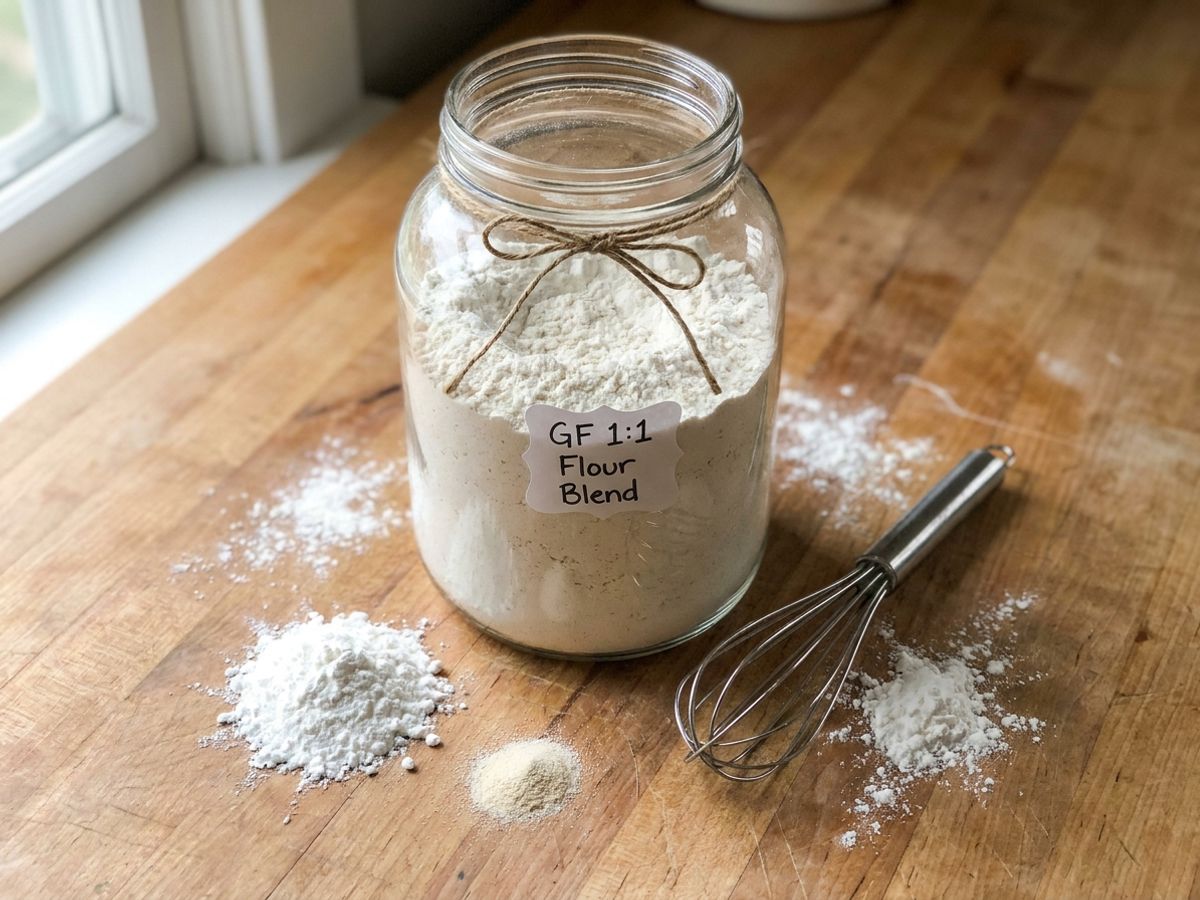
GF 1:1 Flour Blend
A low FODMAP gluten-free 1:1 flour blend of white rice flour, tapioca starch, potato starch, and xanthan gum.
Ingredients
- 2 cups (300 g) white rice flour
- 2/3 cup (80 g) tapioca starch (also labeled tapioca flour)
- 1/3 cup (55 g) potato starch (not potato flour)
- 1 teaspoon xanthan gum
Makes about 3 cups (435 g). One serving is 1/4 cup (about 36 g), which gives 12 servings.
Instructions
Combine
- Add the rice flour, tapioca starch, potato starch, and xanthan gum to a large bowl or the jar you plan to store it in.
- Whisk for a full minute so the xanthan gum distributes evenly. Clumps of xanthan in one spot will make that scoop gummy.
Store
- Transfer to an airtight jar or container. Label it with the date.
- Whisk or shake again before each use, since starches and flours settle at different rates.
Tips & Substitutions
- Swap 1:1 by volume in most cookie, muffin, quick-bread, and pancake recipes. If the batter looks thick, add liquid 1 teaspoon at a time until it matches the original texture.
- Commonly low-FODMAP-friendly commercial blends: Bob's Red Mill Gluten-Free 1-to-1 Baking Flour (blue bag) uses sweet rice, brown rice, sorghum, potato starch, tapioca, and xanthan. King Arthur Gluten-Free Measure for Measure is rice, sorghum, tapioca, and potato based. Schär Mix Universal is low-FODMAP certified in its home market. Check the current label before buying, or scan it with the FODMAP Foods app.
- Avoid the red-bag Bob's Red Mill Gluten-Free All-Purpose Baking Flour. It is not a 1:1 blend, and it contains garbanzo bean and fava bean flour, which are not low FODMAP at the amounts a baked good uses.
- Skip any blend with inulin, chicory root fiber, coconut flour above 15 g per serve, or almond flour above 24 g per serve. Some "high-fiber" GF blends add inulin for texture; check the label.
- For a xanthan-free version, leave it out and add 1 teaspoon of ground psyllium husk or chia seed per cup of flour when mixing the final recipe. You can also sub guar gum 1:1 for xanthan.
- Sweet rice flour (also labeled glutinous or Mochiko) can replace up to half the white rice flour for a softer crumb in cookies and cakes. It's still low-FODMAP.
- Prefer to skip gums? Use the psyllium or chia version above.
 Join the waitlist
We're building a Low FODMAP Recipes app. Add your email and we'll let you know when it launches.
Why This Works
Rice and starch do the lifting. White rice flour is low-FODMAP at 100 g per serve, which is far above any normal baking portion. Tapioca starch and potato starch are low-FODMAP at 100 g each. Together they get close to the texture of wheat flour and stay low FODMAP at baking amounts. See low-FODMAP flours: which to bake with (and which to skip) for a full breakdown.
The "1:1" label is misleading for FODMAPs. A gluten-free 1:1 blend only means it substitutes 1:1 for wheat in volume. It says nothing about FODMAPs. Bob's Red Mill sells a blue-bag 1-to-1 blend that fits and a red-bag all-purpose blend built on garbanzo and fava bean flour that does not. Always read the ingredient list.
Xanthan gum holds it together. Wheat flour has gluten, which gives baked goods their structure. Gluten-free blends need a binder to keep cookies from crumbling and breads from falling apart. Xanthan at 1 teaspoon per 3 cups of blend (about 1/3 teaspoon per cup) is low FODMAP at typical recipe amounts.
Drop-in for most recipes. Anywhere a recipe calls for all-purpose flour, you can scoop this blend in cup for cup and get close to the original result. It weighs more per cup than wheat flour (about 145 g), so for a recipe written in grams, measure by volume or check the batter. Denser, wetter doughs (like yeast breads) do better with a dedicated bread blend.
Storage
Keep the blend in an airtight jar at cool room temperature for up to 6 months. In a humid kitchen, store it in the fridge to prevent clumping. If you smell anything off or see moisture beading on the jar walls, start over with a fresh batch.
Not sure about an ingredient?
Our low FODMAP food list rates 600+ foods low, moderate or high, with the serving size behind each rating, so you can check any ingredient or swap in this recipe before you make it.
For educational purposes only. Not medical advice. Consult a healthcare professional for personal guidance.
References
- Choosing a Low FODMAP All-Purpose Flour — FODMAP Everyday
- What Flours & Starches are Low FODMAP? — A Little Bit Yummy
- FODMAP Everyday All-Purpose Low FODMAP Gluten-Free Flour — FODMAP Everyday
- Low FODMAP flour + high FODMAP flour list — The IBS Dietitian
- Are Xanthan Gum & Guar Gum Low FODMAP? — FODMAP Everyday