

Quinoa Tabbouleh
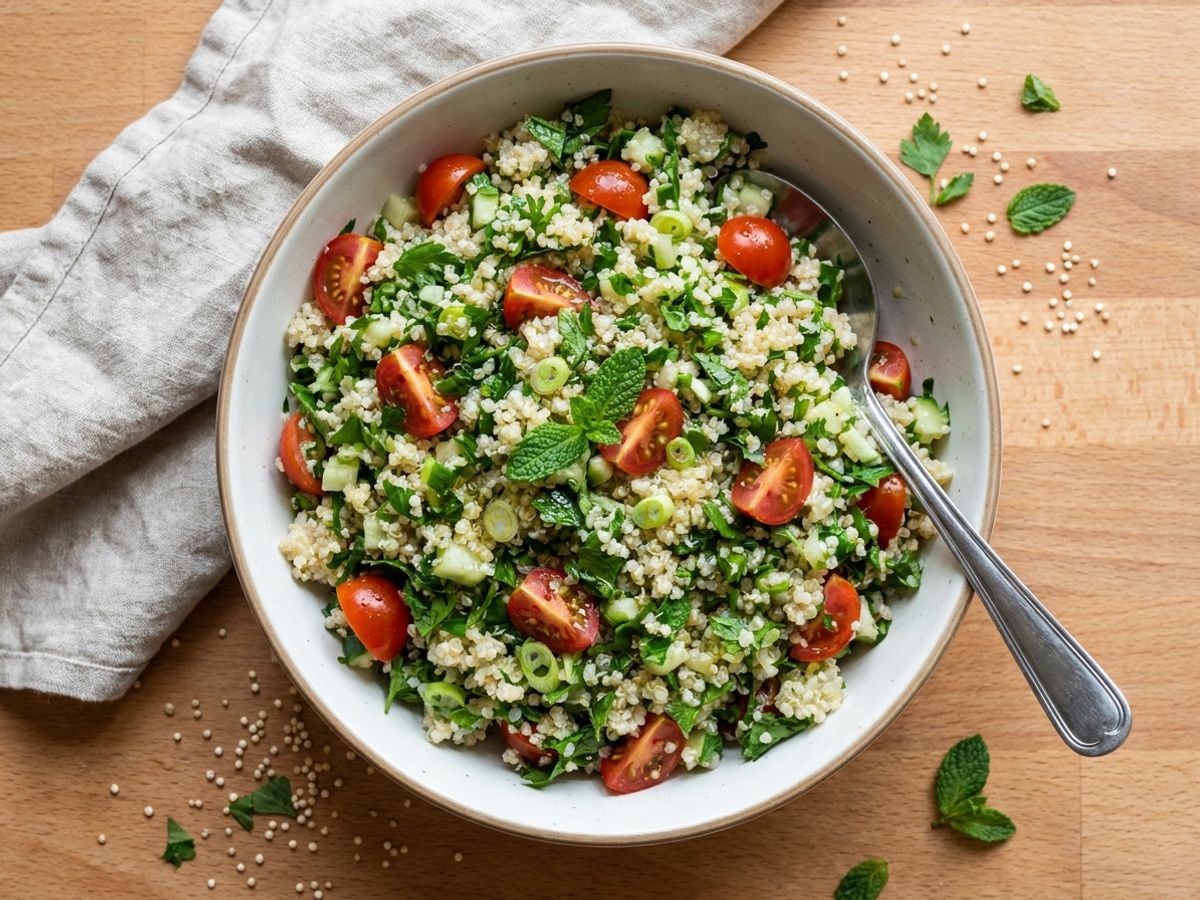
A low FODMAP quinoa tabbouleh with parsley, mint, cherry tomatoes, cucumber, scallion greens, lemon, and olive oil.
Ingredients
- 1 cup (170 g) uncooked white quinoa, rinsed well
- 2 cups (480 ml) water
- 1/2 teaspoon fine salt, for cooking the quinoa
- 2 cups (about 60 g) flat-leaf parsley leaves, very finely chopped
- 1/2 cup (about 15 g) fresh mint leaves, very finely chopped
- 18 cherry tomatoes (about 270 g), quartered
- 1 medium Lebanese or English cucumber (about 200 g), finely diced
- 1/2 cup (about 25 g) scallion greens only, thinly sliced
- 1/4 cup (60 ml) fresh lemon juice, from 1 to 2 lemons
- 1/4 cup (60 ml) extra-virgin olive oil, or garlic-infused olive oil
- 3/4 teaspoon fine salt, plus more to taste
- Freshly ground black pepper
- 1/2 teaspoon ground cumin (optional)
Instructions
Cook the Quinoa
- Rinse the quinoa in a fine-mesh strainer under cold water for 30 seconds. This washes off the bitter saponin coating.
- Combine the rinsed quinoa, water, and 1/2 teaspoon salt in a medium saucepan. Bring to a boil over high heat, then reduce to low, cover, and simmer for 15 minutes.
- Turn off the heat and let the pan sit, still covered, for 5 more minutes. Fluff with a fork and spread onto a rimmed baking sheet to cool to room temperature. Warm quinoa wilts the herbs.
Prep the Vegetables
- Pile the parsley leaves tightly on a cutting board and chop them very finely. Do the same with the mint.
- Quarter the cherry tomatoes. Dice the cucumber into pieces about the size of a pencil eraser. Thinly slice the scallion greens, discarding the white and pale-green bulb portions.
Dress and Toss
- In a large bowl, whisk the lemon juice, olive oil, 3/4 teaspoon salt, several grinds of black pepper, and the cumin if using.
- Add the cooled quinoa and toss to coat. Let it sit for 5 minutes so the grains soak up the dressing.
- Add the parsley, mint, tomatoes, cucumber, and scallion greens. Toss gently with a spatula to combine without crushing the tomatoes.
- Taste and adjust with more salt, lemon juice, or pepper. Serve at room temperature, or chill for 30 minutes for a firmer salad.
Tips & Substitutions
- Rinse the quinoa even if the bag says pre-rinsed. Unrinsed quinoa can taste soapy from the saponin coating on the seeds. A 30-second rinse under cold water fixes it.
- Chop the parsley by hand, not in a food processor. The processor bruises the leaves and turns them to a dark, wet paste. A sharp knife and a tight pile keeps the herbs green and dry.
- Use Lebanese or English cucumber. Both are low-FODMAP and have thin skins and small seeds, so no peeling or seeding needed. Regular American slicing cucumbers work too; peel and seed them for a cleaner texture.
- Make it a few hours ahead. Tabbouleh tastes better after 2 to 4 hours in the fridge. The grains keep absorbing the lemon dressing and the flavors meld. Wait to add salt right before serving if holding longer than a day, since salted tomatoes weep liquid into the bowl.
- For a grain-free version, swap the cooked quinoa for 1 1/2 cups (about 150 g) of very finely chopped cauliflower, pulsed raw in a food processor to rice-sized pieces. Cauliflower is low FODMAP at about ¾ cup (75g) per serve, and this works out to about 25 g per portion.
- Add toasted pine nuts (1/4 cup per batch, low-FODMAP up to about 2 teaspoons (8g) per serve) for crunch and richness. Scatter at the table so they stay crisp.
 Join the waitlist
We're building a Low FODMAP Recipes app. Add your email and we'll let you know when it launches.
Why This Works
Quinoa instead of bulgur. Traditional tabbouleh uses bulgur, which is cracked wheat and tends to carry fructans at typical tabbouleh portions. Quinoa is a seed, not a grain, and Monash rates it as low-FODMAP at typical serves. One cup of dry quinoa cooks up to roughly 3 cups, so 6 servings provide about 1/2 cup each.
Cherry tomatoes and portion size. Monash rates cherry tomatoes low FODMAP at 3 per serve (45 g), and 18 tomatoes across 6 servings gives each plate 3.
Scallion greens cover the onion note. Onion's fructans concentrate in the white bulb; the dark green tops are low FODMAP at this amount and deliver the allium snap. The same rule applies to leeks and spring onions. Slice only the green portion and toss the whites.
The salad gets better overnight. The quinoa keeps absorbing lemon juice and olive oil, and the parsley and mint oils perfume the grain. Dressed tabbouleh keeps well for 2 to 3 days in the fridge, so it works as a make-ahead lunch or side.
Storage
Refrigerate in a sealed container for up to 3 days at 40°F (4°C) or below. The herbs are fresher and the tomatoes firmer on days 1 and 2; by day 3 the herbs darken. Refresh leftovers with a squeeze of lemon and an extra pinch of salt before serving. Tabbouleh doesn't freeze; the tomatoes and cucumber turn mushy on thaw.
Not sure about an ingredient?
Our low FODMAP food list rates 600+ foods low, moderate or high, with the serving size behind each rating, so you can check any ingredient or swap in this recipe before you make it.
For educational purposes only. Not medical advice. Consult a healthcare professional for personal guidance.
References
- 10 Low FODMAP Recipes That Get a Boost From Parsley — FODMAP Everyday
- Are Tomatoes & Tomato Products Low FODMAP? — FODMAP Everyday
- Cooking with Onion and Garlic: Myths and Facts — Monash University FODMAP Blog