

Protein Pancakes
Low FODMAP protein pancakes made with a firm banana, eggs, rolled oats, and an inulin-free protein powder.
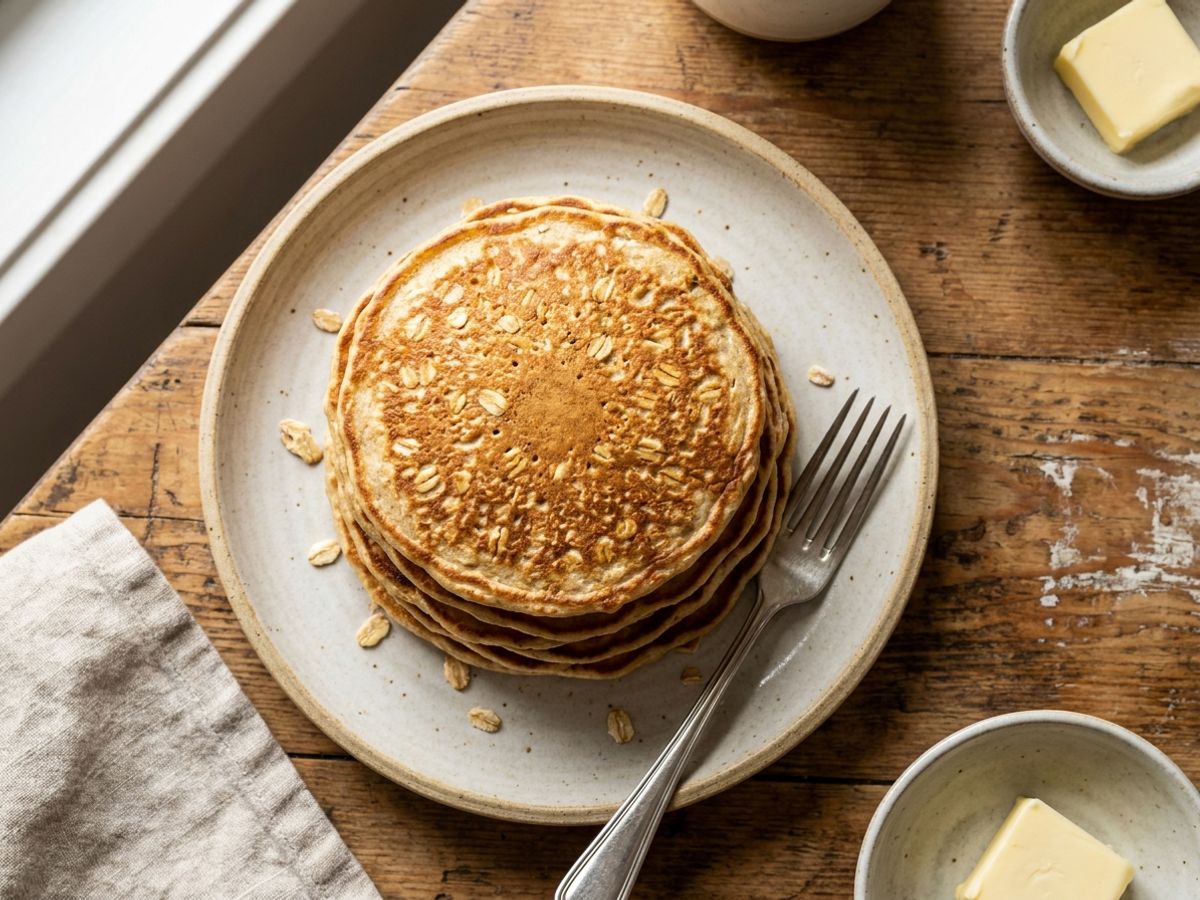
Ingredients
- 1 firm (just-ripe, still slightly green at the tips) medium banana, about 100 g, mashed
- 2 large eggs
- 1 scoop (about 30 g) low-FODMAP protein powder (see Tips for what to avoid)
- 1/2 cup (about 50 g) rolled oats, certified gluten-free
- 1 teaspoon baking powder
- 1/2 teaspoon ground cinnamon
- Pinch of salt
- 1/2 teaspoon vanilla extract
- 2 to 4 tablespoons lactose-free milk or unsweetened almond milk, to loosen the batter
- 1 to 2 teaspoons butter or a neutral oil, for the pan
- Maple syrup and a small handful of blueberries, to serve (optional)
Instructions
Blend the batter
- For a smoother, fluffier pancake, blitz the oats in a blender or food processor until they resemble a coarse flour. You can also leave them whole for a heartier texture.
- Add the mashed banana, eggs, protein powder, baking powder, cinnamon, salt, and vanilla. Blend or whisk to a thick, pourable batter.
- Stir in the milk a tablespoon at a time until the batter drops slowly off a spoon. Rest it for 5 minutes so the oats absorb liquid and the baking powder activates.
Cook the pancakes
- Heat a nonstick skillet or griddle over medium-low and add a little butter or oil to coat the surface.
- Pour about 3 tablespoons of batter per pancake. Cook until bubbles form across the top and the edges look set, about 2 to 3 minutes.
- Flip once and cook the second side until golden and cooked through, another 1 to 2 minutes. Banana and protein batters brown fast, so keep the heat lower than you would for standard pancakes.
Serve
- Stack the pancakes and top with maple syrup and a few blueberries if you like. Serve warm.
Tips & Substitutions
- Vet your protein powder. Many fitness blends add inulin, chicory root fiber, FOS, or agave for extra fiber and sweetness, all of which are high in FODMAPs. Read the label and choose a whey protein isolate or a powder tested as low-FODMAP, avoiding polyol sweeteners like sorbitol and xylitol.
- Keep the banana firm. A just-ripe banana stays within range at about 1 medium, while a spotty brown banana builds up oligofructans and pushes the serving higher.
- Mind the oats. Rolled oats test low at 1/2 cup dry, which splits to 1/4 cup per serving here. Use certified gluten-free oats if you need the pancakes gluten-free, and look up oats in the FODMAP Foods app to see how the rating changes with portion size.
- Swap the milk. Lactose-free milk, unsweetened almond milk, or macadamia milk all thin the batter. Skip regular cow's milk for the lactose.
- Sweeten carefully. For extra sweetness, stir in a teaspoon of maple syrup or white sugar rather than honey or agave. Blueberries and one kiwi are low FODMAP topping options.
- Make them dairy-free. Use a plant-based pea or rice protein (still checking the label for inulin) and a dairy-free milk, then cook in oil instead of butter.
 Join the waitlist
We're building a Low FODMAP Recipes app. Add your email and we'll let you know when it launches.
Why This Works
- The powder is the real trap. Standard protein pancakes usually hide FODMAPs in the powder, not the batter. Chicory root, inulin, and added FOS are common fiber boosters that are high in fructans, so the powder you pick matters most.
- Firm banana over ripe. Firm bananas keep oligofructans low, giving natural sweetness and binding without tipping the serving over the threshold.
- Oats in a tested portion. Each plate gets about 25 g of rolled oats, within the 1/2 cup (52 g) low FODMAP serve.
- Eggs. Eggs are low FODMAP and add lift and structure.
Storage
Cool any leftovers and refrigerate in an airtight container for up to 3 days. To freeze, stack the pancakes with parchment between them and freeze for up to 2 months. Reheat in a toaster, a dry skillet, or the microwave until warmed through. If you scale the recipe up, keep each serving to about 1/4 cup oats and half a firm banana to stay within tested portions.
Not sure about an ingredient?
Our low FODMAP food list rates 600+ foods low, moderate or high, with the serving size behind each rating, so you can check any ingredient or swap in this recipe before you make it.
For educational purposes only. Not medical advice. Consult a healthcare professional for personal guidance.
References
- Low FODMAP Protein Powders — FODMAP Everyday
- Let's Talk About Oats & The Low FODMAP Diet — A Little Bit Yummy