Ripe vs. Unripe Bananas: The FODMAP Difference
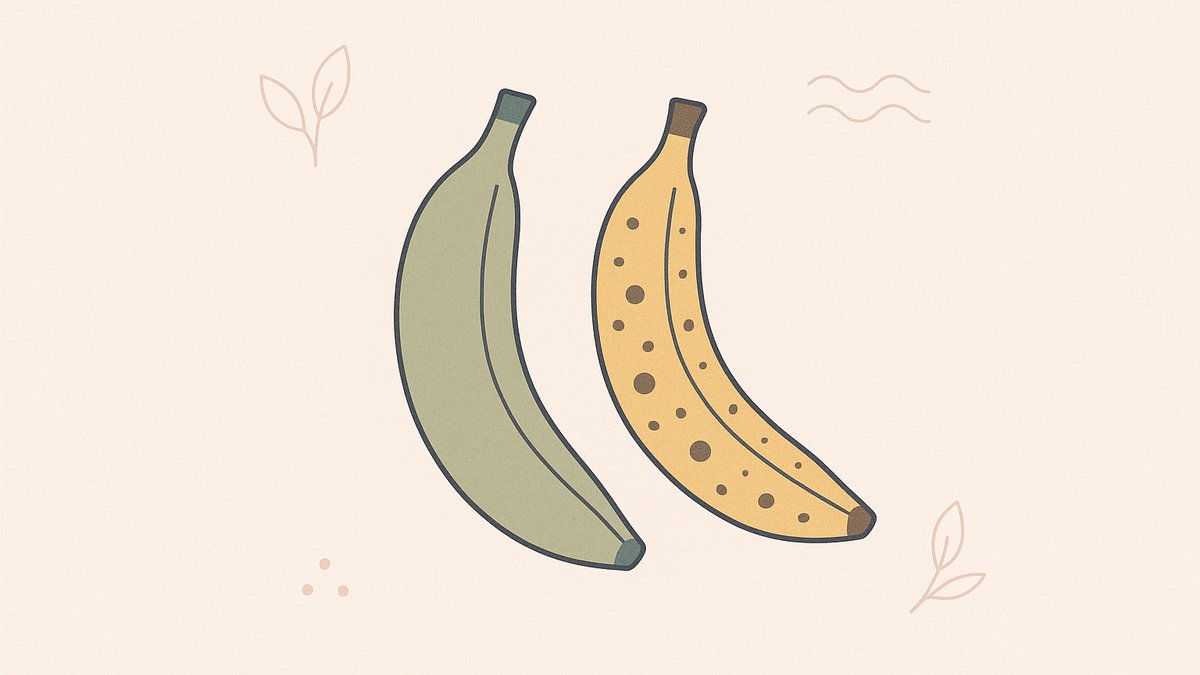
Bananas change FODMAP category as they ripen. A firm, green-yellow banana is low FODMAP at a standard serve. That same banana, five days later with brown spots, is high FODMAP at the same serve. The fruit changed, not the gut.
Most older food lists skip this and just say "bananas are low FODMAP." That's why someone can buy a bunch, eat one a day, and feel fine on Monday and bloated by Friday. The list wasn't wrong on day one. It was ripeness-blind.
This post covers how ripeness shifts the FODMAP load, what the Monash numbers are, and how to shop, store, and eat bananas so the math stays in the low-FODMAP zone.
The short answer
Firm, unripe bananas (green-yellow, no brown spots) are low FODMAP at one medium banana (about 100g). Ripe bananas (yellow with brown spots, soft to the touch) are high FODMAP at that same serve, and only a small portion (around 1/3 of a medium banana, roughly 35g) stays in the green zone.
The FODMAP load shifts as the fruit ripens. Monash's testing shows ripe, brown-spotted bananas contain more FODMAPs than firm bananas, which is why the low-FODMAP serve shrinks so dramatically at the ripe stage. Same fruit, different carb profile.
Why ripeness changes the FODMAP load
This was one of the more surprising findings out of Monash's fruit testing, and it's worth understanding because nothing else on the common fruit list shifts this much on the counter.
A green banana is mostly starch. That starch is what makes unripe bananas taste chalky and a little bitter. As the banana sits on your counter, enzymes inside the fruit break that starch down into simple sugars, which is why a ripe banana tastes sweet and feels softer than a green one.
That carb shift is what Monash has tested, and the result is clear: a firm banana lands in the low-FODMAP zone at a full medium fruit, and a ripe banana lands in the high-FODMAP zone at that same serve. The driver on the ripe side is fructans. You don't need to infer fructan load from how sweet a banana tastes, because Monash already did the lab work and published the serves.
FODMAP Everyday covers this pattern across multiple fruits in their piece on how ripening affects FODMAP content. Bananas are the clearest example because the change happens fast and visibly, and because Monash published separate serves for the firm and ripe stages.
 Get the free Beginner's Guide to the Low FODMAP Diet
Learn what FODMAPs are, which foods to watch, and how to start finding your personal triggers. Plus practical tips and new recipes by email.
The Monash numbers
Per Monash's ripeness blog post:
- Firm (unripe) banana: low FODMAP at 1 medium banana (roughly 100g).
- Ripe banana (brown spotted): low FODMAP at about 35g (roughly 1/3 of a medium banana). High FODMAP beyond that because of fructans.
That's roughly a 3x difference in safe portion between the same fruit at different stages of ripeness. Very few foods on the low-FODMAP diet shift this much based on ripeness alone. Monash occasionally retests and updates these numbers.
Note that "firm" in Monash's language means yellow but still a little green at the tips, with no brown spots and some resistance when you press it. A fully yellow, soft-skinned banana with no green left is already drifting toward the ripe category. If it smells strongly sweet from across the kitchen, it's past the firm stage.
How to shop and store bananas on low FODMAP
The practical trick is to buy at the right stage and eat fast, or freeze.
Buy green-yellow. Look for bananas that are mostly yellow with a green tint at the stem and tips. Skip the bunches with brown spots. Skip the bunches that are fully bright yellow too if you know you won't eat them in the next couple of days, because they'll be spotted by then.
Eat within 2 to 3 days of the firm stage. A banana that's firm today will be borderline ripe by day three on a normal kitchen counter. Plan your mornings around that window.
Refrigerate to slow ripening. The peel will turn brown in the fridge (this is cosmetic and doesn't affect the fruit inside), but ripening slows dramatically. A firm banana you put in the fridge stays firm for five to seven days.
Freeze past peak. If bananas are getting ahead of you, peel and freeze them in chunks while they're still firm. Freezing stops ripening cold, so a banana that went into the freezer firm stays in the firm category when it comes back out. Frozen firm banana works fine in smoothies and "nice cream" at the standard low-FODMAP serve.
Don't ripen on the counter on purpose. Some recipes call for "very ripe" bananas for banana bread. On elimination, that's working against you. Use firm bananas plus a bit of low-FODMAP sweetener if you want banana bread, or save those recipes for post-reintroduction once you know your fructan tolerance.
Green banana flour
Green banana flour is made from unripe bananas dried and milled at the firm stage, which is why it tests low FODMAP at small serves even though ripe bananas don't. FODMAP Everyday's entry on green banana flour has the current tested serve.
It's a useful tool in low-FODMAP baking because it's gluten-free, high in resistant starch, and doesn't carry the fructan load that ripe bananas do. The flavor is mild (no strong banana taste), which surprises people. It does absorb a lot of liquid, so it isn't a 1-to-1 swap for wheat or rice flour, but as a partial substitute in pancakes, muffins, or thickening sauces, it works.
Stick to the tested serve. Scaling up a recipe that uses green banana flour doesn't automatically scale safely, because resistant starch itself can ferment in the colon if you eat a large amount, even though it isn't flagged as a classic FODMAP.
The stacking angle
Bananas are a clear example of how FODMAP stacking catches people off guard. A firm banana by itself is fine. A firm banana in a smoothie that also includes honey, cashews, and an oversized pour of a nut or oat milk can push the whole meal past threshold, even though the banana is technically at its low-FODMAP serve. The issue isn't the banana in isolation. It's what it's stacked on.
During elimination, it's safer to treat a banana as one of your higher-FODMAP items for that meal and balance the rest of the plate around it. If breakfast is banana on toast, maybe lunch skips the extra garlic-infused oil and leans on plain protein and rice. Not because banana is dangerous, but because meal-level FODMAP load is what drives symptoms like bloating.
Comparison to other fruit
Bananas are the standout example of ripeness-driven FODMAP change on the common fruit list. Apples are high FODMAP regardless of ripeness, because their main issue is excess fructose rather than fructans. Pears have a similar story. Most other tested fruits are classified by serve size, not by how ripe they are, so bananas are the one you really have to think about at the counter.
For the full tested list with serve sizes, see the low-FODMAP fruit list.
Reintroduction notes
Once you've moved past elimination, ripe bananas are worth testing. Plenty of people find they tolerate a small ripe banana just fine once they've worked through their fructan reintroduction, and the gap between firm and ripe stops being something you have to shop around. Work with a dietitian or a structured reintroduction plan to figure out where ripe banana fits for you, rather than guessing.
For the background on how fructans and other FODMAPs work in the first place, see what are FODMAPs. During elimination: buy them green-yellow, eat them firm, freeze the rest. Ask FODMAP Foods about bananas, or search the low FODMAP list, to see how the firm and ripe serves differ before one goes in the smoothie.
Recipes on this site built on firm-yellow bananas: banana bread, banana pancakes, and the peanut butter banana smoothie.
Get the free Beginner's Guide to the Low FODMAP Diet
Learn what FODMAPs are, which foods to watch, and how to start finding your personal triggers. Plus practical tips and new recipes by email.
Scan any food, search 1,000+ FODMAP ratings, and know your safe portion with FODMAP Foods.


Related articles


For educational purposes only. Not medical advice. Consult a healthcare professional for personal guidance.
References
- Ripe vs. unripe bananas — Monash FODMAP Blog
- High and low FODMAP foods — Monash FODMAP
- How Dehydration, Ripening and Storage Affect the FODMAP Content in Fruit — FODMAP Everyday
- Green Banana Flour — FODMAP Everyday
- How much fruit can I eat on the Low FODMAP Diet? — A Little Bit Yummy