

Lemon Poppy Seed Muffins
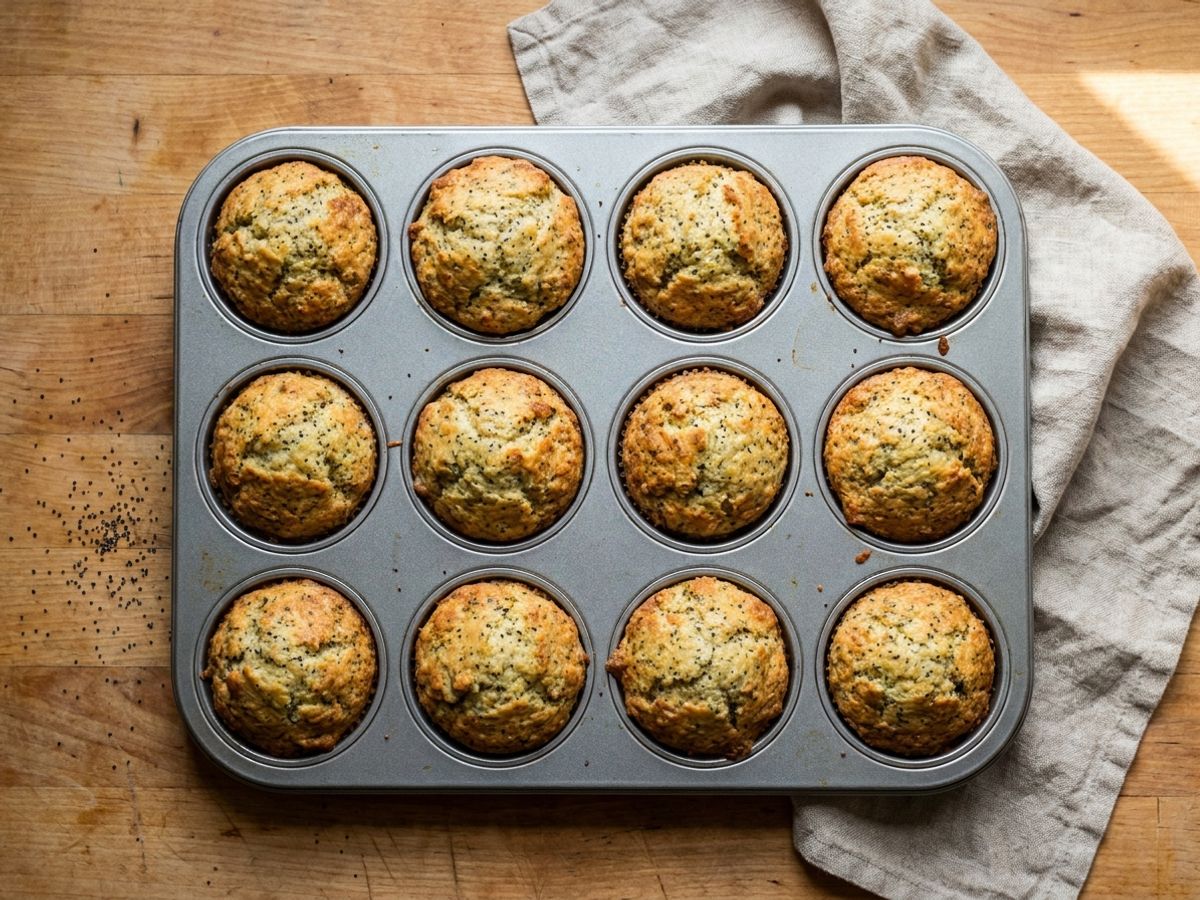
Low FODMAP lemon poppy seed muffins made with a gluten-free 1:1 flour blend, poppy seeds, eggs, oil, lactose-free milk, and fresh lemon.
Ingredients
- 2 cups (280g) gluten-free 1:1 flour blend
- 1/2 teaspoon xanthan gum (omit if your blend already contains it)
- 2 teaspoons baking powder
- 1/4 teaspoon baking soda
- 1/2 teaspoon salt
- 3/4 cup (150g) white or cane sugar
- 2 tablespoons (24g) poppy seeds
- 2 large eggs, room temperature
- 1/2 cup (120ml) neutral oil (light olive, canola, or sunflower)
- 3/4 cup (180ml) lactose-free milk, room temperature
- 1/4 cup (60ml) fresh lemon juice (about 2 lemons)
- 2 tablespoons finely grated lemon zest (from 2 to 3 lemons)
- 1 teaspoon vanilla extract
- Optional glaze: 3/4 cup (90g) powdered sugar whisked with 1 to 2 tablespoons fresh lemon juice
Portion note: lemon and poppy seeds are both low-FODMAP. Monash lists a low serving for poppy seeds, and 2 tablespoons spread across 12 muffins keeps each one well under it. Lactose-free milk is low FODMAP at the amount used. Look up any ingredient in the FODMAP Foods app to see how its rating changes with portion size.
Instructions
Prep the pan and oven
- Preheat the oven to 375F (190C).
- Line a 12-cup muffin tin with paper liners, or grease the cups well.
- Stir the lemon juice into the lactose-free milk and let it sit for 5 minutes. It will thicken slightly and act like buttermilk, which softens the crumb.
Mix the batter
- In a large bowl, whisk together the flour blend, xanthan gum (if using), baking powder, baking soda, and salt.
- Rub the lemon zest into the sugar with your fingertips until the sugar smells strongly of lemon, then whisk the sugar and poppy seeds into the dry ingredients.
- In a separate bowl, whisk the eggs, oil, vanilla, and the milk-lemon mixture until smooth.
- Pour the wet ingredients into the dry and stir just until no streaks of flour remain. Do not overmix.
Bake and glaze
- Divide the batter evenly among the 12 cups, filling each about three-quarters full.
- Bake for 18 to 22 minutes, until the tops spring back when pressed lightly and a toothpick inserted in the center comes out clean.
- Cool in the tin for 5 minutes, then move the muffins to a wire rack. If glazing, whisk the powdered sugar with lemon juice and drizzle over the muffins once they are fully cool.
Tips & Substitutions
- Check your flour blend. A gluten-free 1:1 baking blend keeps the muffins low-FODMAP where wheat flour would add fructans. Scan the label for added inulin, chicory root, or legume flours, and add xanthan gum only if the blend does not already list a gum.
- Use real lemon, not extract alone. Fresh zest and juice give the brightest flavor, and lemon is low-FODMAP at these amounts. A few drops of lemon extract can boost the aroma but should not replace the zest.
- Keep the milk lactose-free. Regular milk adds lactose. Lactose-free milk behaves the same in the batter, or use a low-FODMAP plant milk such as unsweetened almond or rice milk for a dairy-free version.
- Do not skip the resting step. Letting the lemon juice sit in the milk for 5 minutes gives the acid time to thicken it, which helps the baking soda lift the crumb.
- Swap the sweetener carefully. Cane or white sugar is low FODMAP at baking amounts; maple syrup adds liquid, so it is not a direct swap in this batter. Skip honey, agave, and high-fructose corn syrup, and avoid polyol "sugar-free" sweeteners like xylitol or maltitol.
- Freeze the extras. These muffins freeze well, so bake the full batch and store what you will not eat within a couple of days.
 Join the waitlist
We're building a Low FODMAP Recipes app. Add your email and we'll let you know when it launches.
Why This Works
- GF flour instead of wheat. Wheat flour carries fructans, which are high FODMAP at baking amounts. A gluten-free 1:1 blend gives structure without that load.
- Lactose-free milk. Removing the lactose lets you use a generous amount of milk for a moist crumb with the lactose already broken down.
- Lemon and poppy seeds stay small. Both are low-FODMAP, and the quantities here sit well under the tested serving sizes even before you divide the batter into 12 muffins.
- Xanthan gum as a binder. A small amount of xanthan gum mimics the elasticity gluten would provide and is low-FODMAP in the quantities used for baking.
Storage
Store the cooled muffins in an airtight container at room temperature for up to 2 days, or in the fridge for up to 5 days. For longer storage, freeze them in a sealed bag for up to 2 months and thaw at room temperature or warm briefly before serving. Glaze after thawing for the cleanest look.
Not sure about an ingredient?
Our low FODMAP food list rates 600+ foods low, moderate or high, with the serving size behind each rating, so you can check any ingredient or swap in this recipe before you make it.
For educational purposes only. Not medical advice. Consult a healthcare professional for personal guidance.
References
- Choosing a Low FODMAP All-Purpose Flour — FODMAP Everyday
- Lactose and dairy products on a low FODMAP diet — Monash University FODMAP Blog
- Low FODMAP Banana Bread — A Little Bit Yummy