

Korean Ground Beef Bowl
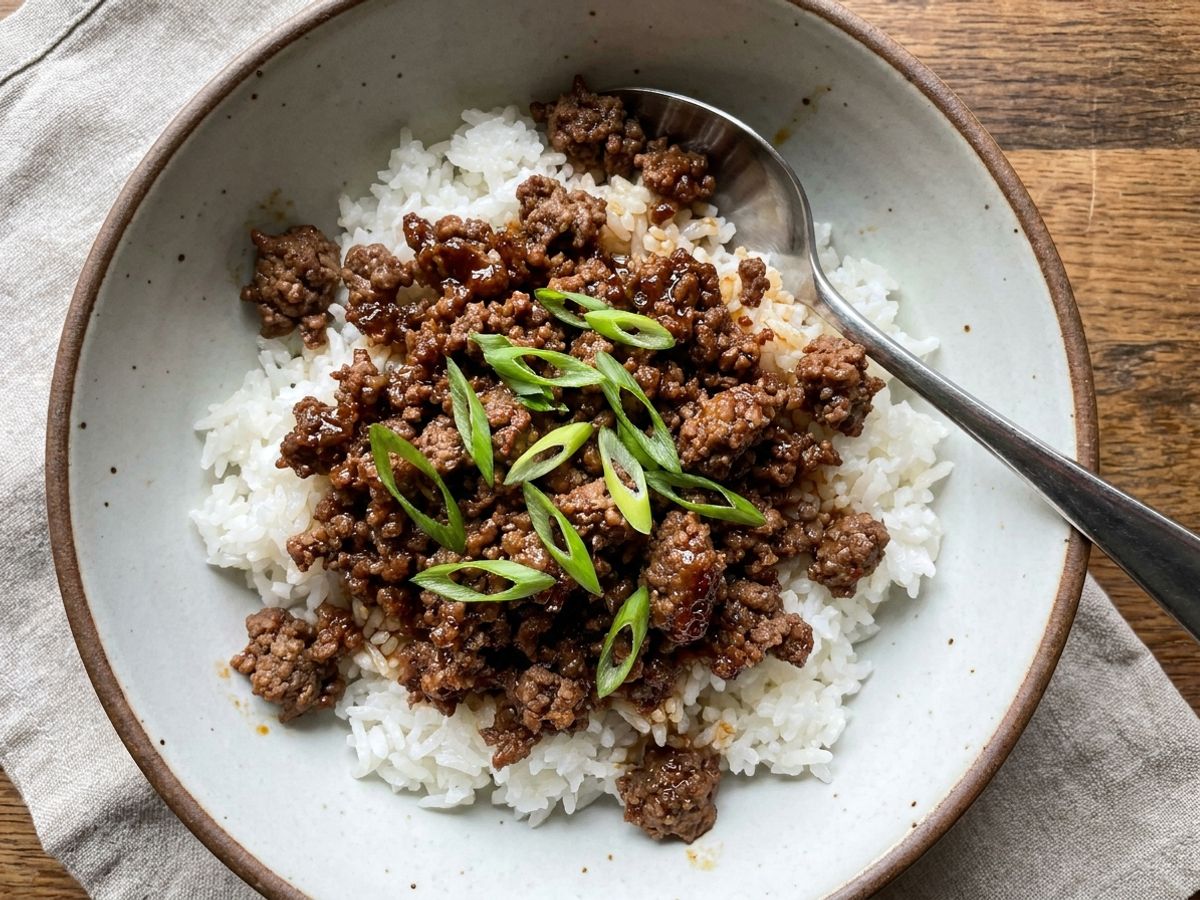
A low FODMAP Korean ground beef bowl with tamari, brown sugar, ginger, sesame oil, and scallion greens over white rice.
Ingredients
Beef and sauce
- 1 lb (450 g) lean ground beef
- 2 tbsp garlic-infused olive oil
- 1 tbsp toasted sesame oil
- 1 tbsp fresh ginger, finely grated (about a 1-inch/2.5 cm piece)
- 3 tbsp tamari (gluten-free soy sauce). Split across 4 servings this is under 1 tbsp each, well within the 2 tbsp low-FODMAP cap
- 2 tbsp brown sugar (or white sugar)
- 1 tsp rice vinegar
- 1/2 tsp gochugaru (Korean chili flakes) or red pepper flakes, optional
To serve
- 3 to 4 cups cooked white rice (jasmine or long-grain), about 3/4 to 1 cup per bowl
- 4 scallions, GREEN tops only, thinly sliced
- 1 tbsp toasted sesame seeds
- 1 cup sliced cucumber, optional
Instructions
Mix the sauce
- In a small bowl, whisk together the tamari, brown sugar, rice vinegar, and gochugaru until the sugar starts to dissolve.
- Grate the ginger and slice the scallion green tops. Keep them separate; the ginger goes in the pan and the greens are a topping.
Cook the beef
- Heat the garlic-infused oil and sesame oil in a large skillet over medium-high heat.
- Add the grated ginger and stir for about 30 seconds, until fragrant.
- Add the ground beef. Break it up with a spoon and cook for 5 to 7 minutes, until browned with no pink remaining and an internal temperature of 160°F (71°C). Spoon off any excess fat.
- Pour the sauce over the beef and simmer for 2 to 3 minutes, stirring, until the liquid reduces and coats the meat.
Assemble the bowls
- Divide the cooked rice among 4 bowls.
- Spoon the beef and its sauce over the rice.
- Top each bowl with scallion greens, sesame seeds, and cucumber if using. Serve warm.
Tips & Substitutions
- Keep the tamari measured. Soy sauce and tamari are low-FODMAP at about 2 tbsp per serving, so measure the 3 tbsp for the whole batch rather than pouring straight from the bottle.
- Swap the protein. Ground chicken, turkey, or pork all work in place of beef with no change to the sauce. Cook poultry to 165°F (74°C).
- Add low-FODMAP vegetables. Stir in grated carrot, sliced red bell pepper (cap about 43 g per serve), or common green cabbage (cap 75 g per serve) with the beef for more bulk.
- Skip the gochujang. Korean chili paste usually contains onion and garlic. Use plain gochugaru or red pepper flakes for heat instead.
- Prep ahead. Cook the beef and rice separately, then combine at serving time so the rice does not go soggy.
- Check your rice. Plain white rice is low-FODMAP, but pre-seasoned rice blends often hide onion and garlic powder, so read the label.
 Join the waitlist
We're building a Low FODMAP Recipes app. Add your email and we'll let you know when it launches.
Why This Works
- Garlic flavor without the fructans. Fructans do not dissolve into oil, so garlic-infused oil carries the taste while leaving the FODMAPs behind in the discarded solids.
- Onion note from green tops. The green parts of scallions are low-FODMAP, unlike the white bulbs, so they add a fresh onion finish at this serving.
- Tamari stays in range. Tamari is a gluten-free soy sauce, and at under 1 tbsp per serving here it sits comfortably below the tested low-FODMAP limit.
- Sweetened with sucrose. Brown or white sugar is table sugar (sucrose), which is low-FODMAP in normal amounts, so there is no need for honey or agave.
Storage
Store leftover beef in an airtight container in the fridge for 3 to 4 days, keeping the rice separate if you can. Reheat in a skillet or microwave until steaming hot. The cooked beef also freezes well for up to 2 months; thaw overnight in the fridge before reheating. Add fresh scallion greens and sesame seeds after reheating for the best texture.
Not sure about an ingredient?
Our low FODMAP food list rates 600+ foods low, moderate or high, with the serving size behind each rating, so you can check any ingredient or swap in this recipe before you make it.
For educational purposes only. Not medical advice. Consult a healthcare professional for personal guidance.
References
- All about onion, garlic and infused oils on the Low FODMAP Diet — Monash University FODMAP Blog
- How to Use Spring Onion (Green Onion) on the Low FODMAP Diet — A Little Bit Yummy
- Safe Minimum Internal Temperature Chart — USDA Food Safety and Inspection Service