

Gingerbread Cookies
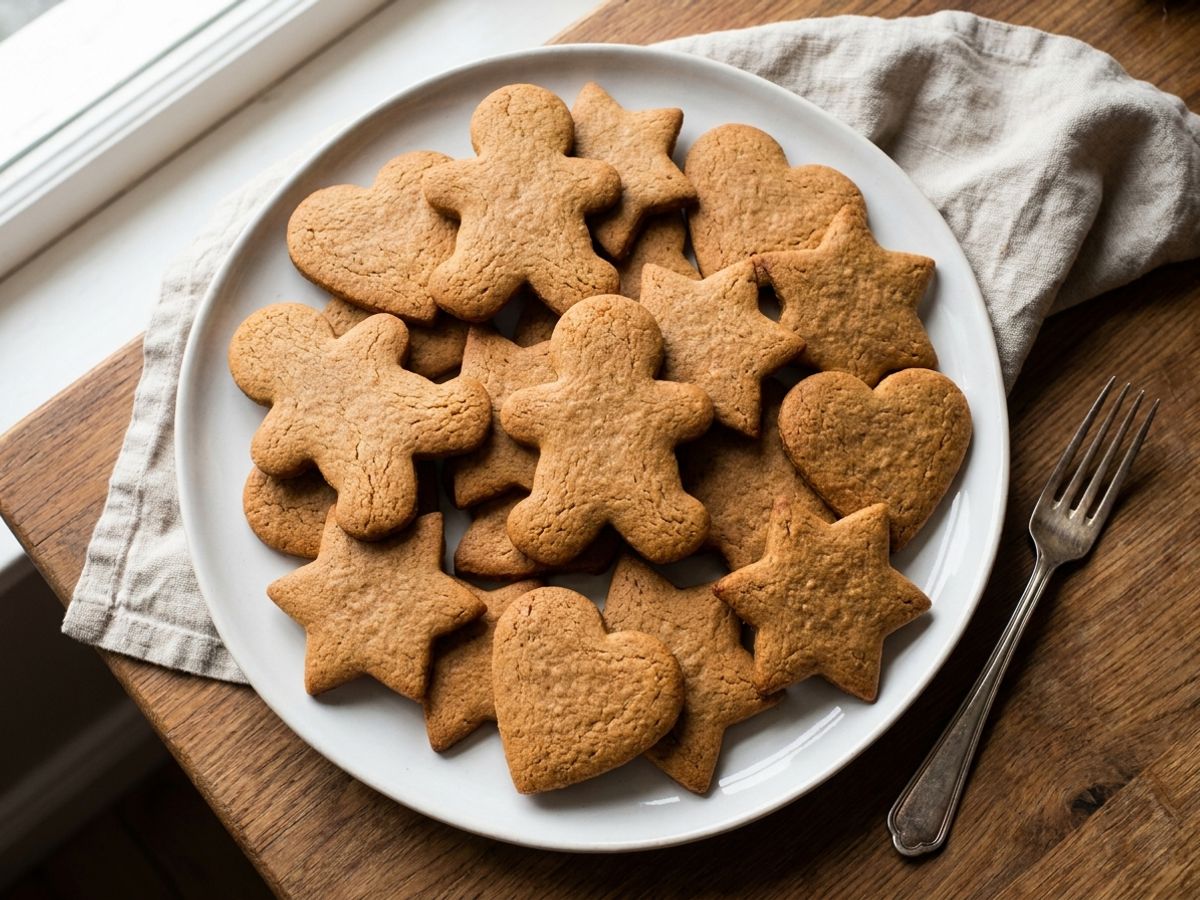
Low FODMAP gingerbread cookies made with a gluten-free flour blend, butter, brown sugar, measured molasses, ginger, cinnamon, and cloves.
Ingredients
Cookies
- 420 g (about 3 to 3 1/2 cups, depending on blend) gluten-free flour blend, with no inulin or chicory root
- 1 teaspoon baking soda
- 1/2 teaspoon fine salt
- 1 tablespoon ground ginger
- 1 1/2 teaspoons ground cinnamon
- 1/2 teaspoon ground cloves
- 1/2 teaspoon ground allspice
- 1/4 teaspoon freshly grated nutmeg
- 3/4 cup (170 g) unsalted butter, softened
- 3/4 cup (150 g) packed light or dark brown sugar
- 1 large egg, room temperature
- 120 g unsulphured molasses (a generous 1/3 cup; weigh it, see Tips for the serving size)
- 1 teaspoon pure vanilla extract
- 1 teaspoon finely grated fresh ginger (optional)
Royal Icing (Optional)
- 2 cups (240 g) powdered sugar, sifted
- 1 tablespoon meringue powder plus 2 tablespoons warm water, or 1 pasteurized egg white (the icing is not cooked)
- 1/2 teaspoon pure vanilla extract
- Sprinkles, for decorating (check the label, see Tips)
Makes about 24 cookies with a 3-inch cutter. One serving is 1 cookie, which holds the molasses to about 5 g. If your cutter is bigger and you get fewer cookies, each one carries more molasses, so cut smaller or count a large cookie as more than one serving.
Instructions
Mix the Dough
- Whisk the flour blend, baking soda, salt, ground ginger, cinnamon, cloves, allspice, and nutmeg in a medium bowl.
- Beat the butter and brown sugar in a large bowl with a hand or stand mixer on medium speed for 2 to 3 minutes, until pale and fluffy.
- Beat in the egg, molasses, vanilla, and fresh ginger, scraping the bowl once. The mixture will look glossy and slightly loose. That's normal.
- Turn the mixer to low and add the flour mixture in two additions. Stop as soon as the dough comes together into a stiff, uniform dough.
- Divide the dough in half, shape each half into a 1-inch-thick disk, and wrap in plastic. Chill for at least 2 hours or up to 2 days. Chill the dough well. Molasses makes it softer than a plain sugar cookie.
Roll and Cut
- Heat the oven to 350°F (175°C). Line two baking sheets with parchment.
- Roll one disk between two sheets of parchment to a scant 1/4 inch thick. Work quickly so the dough stays cold.
- Cut shapes with floured cutters and lift them to the sheets with a thin spatula, spacing them 1 inch apart. Gather scraps, re-chill for 15 minutes, and re-roll once.
- Slide the cut sheet into the freezer for 5 to 10 minutes before baking. Cold dough keeps the edges sharp and prevents spreading.
Bake
- Bake one sheet at a time on the middle rack for 8 to 10 minutes, rotating halfway. The edges should look set and slightly darker; the centers will still feel soft. They firm up as they cool.
- Let the cookies cool on the sheet for 5 minutes before moving them to a rack to cool completely before icing.
Icing (Optional)
- Whisk the powdered sugar with the meringue powder and water (or pasteurized egg white) and vanilla in a medium bowl for 2 to 3 minutes, until glossy and smooth.
- Thin with a few drops of water for flood consistency, or leave stiff for piping outlines and details. Decorate fully cooled cookies and finish with sprinkles.
- Let iced cookies dry uncovered for at least 4 hours or overnight before stacking.
Tips & Substitutions
- Measure the molasses. Monash lists molasses as low FODMAP at about 1 teaspoon (7mL) per serving, and larger amounts are moderate or high. The 120 g in this batch comes to about 5 g per cookie, so keep it to 1 cookie per sitting.
- Use unsulphured molasses, not blackstrap. Standard unsulphured (light or dark) gives the classic flavor. Blackstrap is more concentrated and bitter.
- Don't swap in honey or agave. Honey is low only at about ½ teaspoon (4g), and agave is high FODMAP, so neither works at baking amounts. This recipe is portioned around molasses.
- Chill well and roll to a scant 1/4 inch. Molasses dough stays softer than sugar-cookie dough, so slide the sheet back into the fridge if shapes soften. Thinner cookies burn before the centers set.
- Check your sprinkles. Most standard sprinkles and nonpareils are sugar-based. Skip "sugar-free" or keto sprinkles that list sorbitol, mannitol, xylitol, maltitol, or isomalt.
- Dairy-free version. A 1:1 vegan butter stick works; check the label for cashews, inulin, and chicory root. Soft tub spreads hold too much water for rolled dough.
 Join the waitlist
We're building a Low FODMAP Recipes app. Add your email and we'll let you know when it launches.
Why This Works
Molasses, measured. Molasses is the one ingredient in gingerbread with a small low FODMAP serve. Dividing 120 g across 24 cookies keeps each one at about 1 teaspoon while keeping the dark, warm flavor.
Butter, brown sugar, and egg. These are low FODMAP at the amounts used here, so the dough needs no other swaps.
Warm spices. Ground ginger, cinnamon, cloves, allspice, nutmeg, and fresh ginger are low FODMAP in the amounts used, so the usual gingerbread spice mix stays in.
Gluten-free flour and icing. The gluten-free flour blend already contains xanthan gum, so the dough rolls and holds shapes without wheat. The royal icing is powdered sugar and meringue powder, both low FODMAP.
Storage
Store cooled, un-iced cookies in an airtight container at room temperature for up to 5 days, with parchment between layers. Iced cookies keep 3 to 4 days once the icing has fully dried. Freeze un-iced cookies in a zip-top bag for up to 3 months and thaw at room temperature before decorating. The wrapped dough disks also freeze well for up to 2 months; thaw in the fridge overnight before rolling.
Not sure about an ingredient?
Our low FODMAP food list rates 600+ foods low, moderate or high, with the serving size behind each rating, so you can check any ingredient or swap in this recipe before you make it.
For educational purposes only. Not medical advice. Consult a healthcare professional for personal guidance.
References
- Sugar & Sweeteners on the Low FODMAP Diet — FODMAP Everyday
- Low FODMAP Gingerbread Cookies — FODMAP Everyday
- Decorated Sugar Cookies with Royal Icing (Low FODMAP & Gluten-Free) — FODMAP Everyday