

Egg Muffins (Frittata Cups)
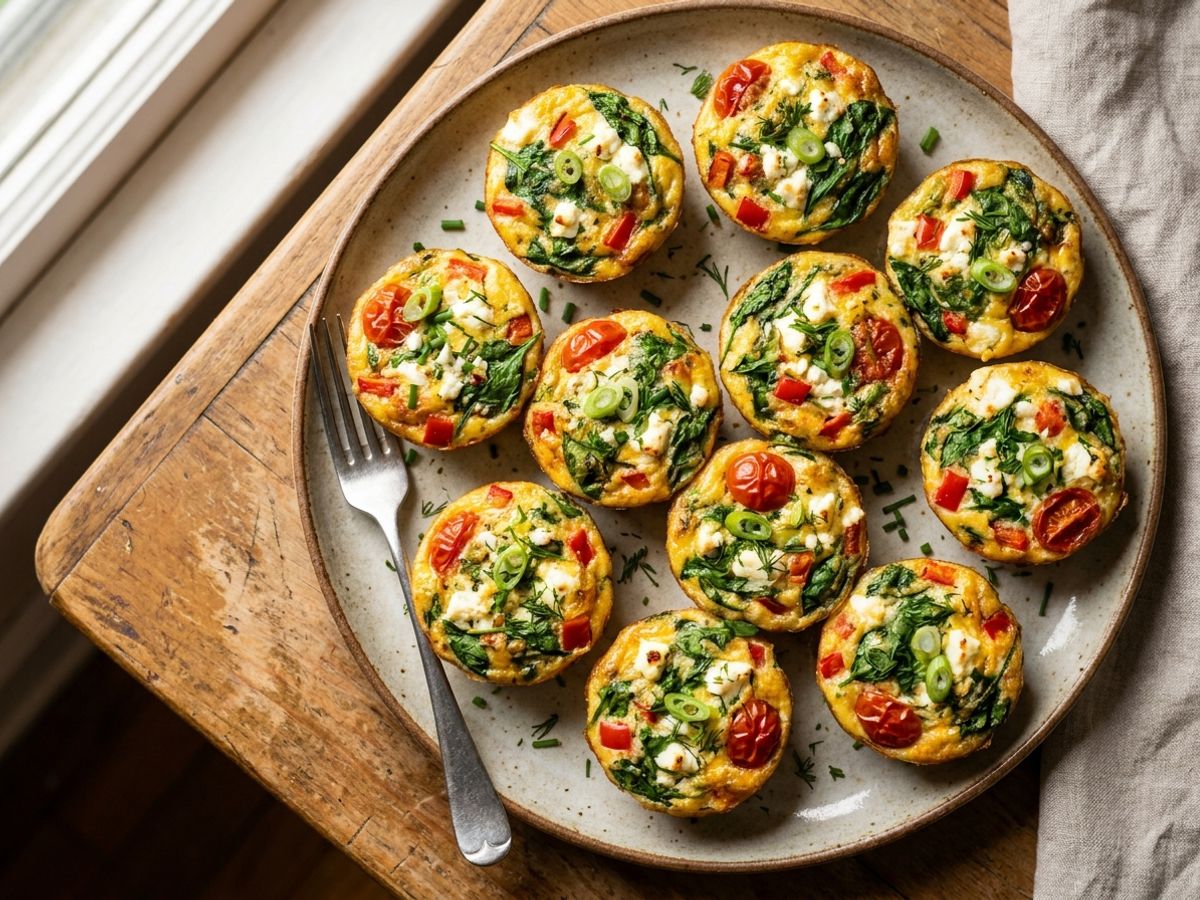
Low FODMAP egg muffins baked with baby spinach, feta, cherry tomatoes, red bell pepper, and scallion greens.
Ingredients
- 10 large eggs
- 150 g baby spinach (about 5 cups loosely packed)
- 120 g feta, crumbled
- 150 g red bell pepper (about 1 small), small-dice
- 18 cherry tomatoes (about 270 g), halved
- 4 scallions, green tops only, thinly sliced
- 2 tablespoons garlic-infused olive oil, divided
- 1/4 cup lactose-free milk or water
- 2 tablespoons chopped fresh chives, dill, or parsley
- 1 teaspoon kosher salt
- Freshly ground black pepper
Instructions
Prep the Pan and Oven
- Heat the oven to 375°F (190°C). Brush a standard 12-cup muffin tin generously with 1 tablespoon of the garlic-infused oil, getting into the corners of each well. Parchment liners work too, but silicone or a well-greased metal pan releases best.
- Rinse and dry the spinach, bell pepper, cherry tomatoes, and scallion greens.
Wilt the Spinach and Peppers
- Heat the remaining 1 tablespoon garlic-infused oil in a large nonstick skillet over medium heat.
- Add the bell pepper and a pinch of salt. Toss for 3 to 4 minutes until it softens slightly.
- Add the spinach in handfuls, tossing until each batch collapses. Cook for another 1 to 2 minutes until the pan is mostly dry. Transfer to a plate, press out any excess liquid with the back of a spoon, and let it cool for 5 minutes.
Whisk the Eggs
- Crack the eggs into a large bowl. Add the milk or water, kosher salt, and several grinds of pepper. Whisk until fully blended with no streaks of white.
- Stir in the cooled spinach and peppers, two-thirds of the feta, and the scallion greens.
Fill and Bake
- Divide the mixture evenly among the 12 muffin wells; each should be about three-quarters full. A 1/3-cup measure gets you close in a single scoop.
- Top each cup with 3 cherry tomato halves (cut-side up) and the remaining feta.
- Bake for 20 to 25 minutes, until the tops are set and lightly golden and a muffin springs back when pressed. A toothpick should come out clean.
- Let the muffins rest in the pan for 5 minutes so they firm up, then run a thin knife or offset spatula around each well and lift them out. Scatter the fresh herbs over the top.
Tips & Substitutions
- Grease the pan well. Egg muffins stick harder than regular muffins. Brush every well with oil, bottom and sides, or use parchment liners. Silicone muffin pans release cleanest.
- Dairy-free swap. Skip the feta, use water instead of the milk, and add an extra pinch of salt plus a squeeze of lemon before serving. For a low-lactose cheese instead, aged parmesan or cheddar work at the same weight.
- Add bacon or ham. Fold in 6 strips cooked chopped bacon or 115 g diced ham (the muffins are then no longer vegetarian). Choose plain meat with no onion or garlic powder, honey, inulin, or chicory root on the label.
- Vegetable swaps. Green bell pepper can replace some or all of the red pepper; keep the total at 150 g so the muffins still set.
- Muffin size matters. A standard 12-cup tin makes muffins sized so two equal one serving. Mini tins bake in 12 to 14 minutes; jumbo tins take about 28 minutes, and one is a serving.
- Skip onion and garlic. The infused oil and scallion greens carry the allium flavor. Don't add onion, shallot, scallion whites, garlic cloves, or garlic powder.
 Join the waitlist
We're building a Low FODMAP Recipes app. Add your email and we'll let you know when it launches.
Why This Works
Portable portions. Ten eggs across 12 cups gives two-muffin servings you can eat cold, warm, or in a low FODMAP breakfast sandwich.
Vegetables within their serves. Each serving has about 25 g baby spinach (low at 75 g), 25 g red bell pepper (low at 43 g), and 3 cherry tomatoes (low at 3, or 45 g).
Feta. Feta is low in lactose, and each serving has about 20 g, under the 40 g low FODMAP serve.
Garlic-infused oil. Fructans do not dissolve in oil, so strained garlic-infused oil carries the garlic flavor without them. Homemade oil keeps 4 days in the fridge.
Storage
Cool the muffins to room temperature within an hour of baking, then transfer them to an airtight container. Refrigerate for up to 4 days at 40°F (4°C) or below. Reheat two muffins in a 300°F (150°C) oven for 8 to 10 minutes, or in 20-second bursts in the microwave, until the centers reach 165°F (74°C). You can also freeze individual muffins wrapped in parchment and foil for up to 2 months; thaw overnight in the fridge before reheating. The texture holds better if you freeze the muffins without the cherry tomato tops and add fresh ones after reheating.
Not sure about an ingredient?
Our low FODMAP food list rates 600+ foods low, moderate or high, with the serving size behind each rating, so you can check any ingredient or swap in this recipe before you make it.
For educational purposes only. Not medical advice. Consult a healthcare professional for personal guidance.
References
- Meat, Seafood, Eggs and Cooking Fats: Low FODMAP? — Monash University FODMAP
- Is Cheese Low FODMAP? — FODMAP Everyday
- Gluten Free Bread and the Low FODMAP Diet — A Little Bit Yummy