

Breakfast Sandwich (Egg & Cheese)
A low FODMAP breakfast sandwich of a fried egg, sharp cheddar, and bacon on a sourdough spelt or gluten-free English muffin.
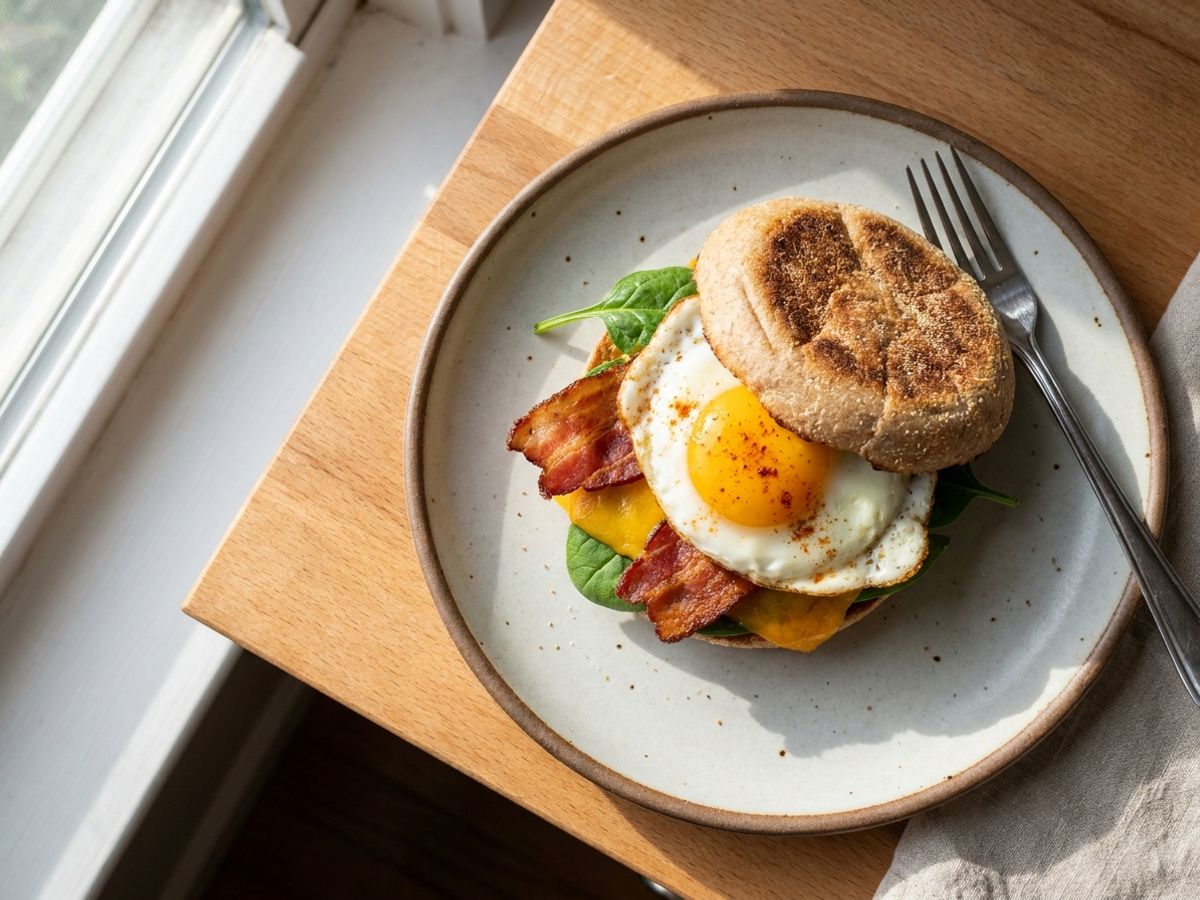
Ingredients
Per Sandwich
- 1 gluten-free English muffin, certified low FODMAP or label-checked (no inulin, chicory root, apple fiber, fruit concentrates, honey, or sugar alcohols), or our homemade English muffins
- 1 large egg
- 40 g (about 1/3 cup) shredded sharp cheddar, or 1 slice American cheese
- 2 slices plain pork bacon OR 2 slices plain deli ham (label-checked: no garlic, onion, inulin, chicory root, or honey glaze)
- 1 teaspoon butter, plus more for the muffin
- Salt and freshly ground black pepper
Optional
- 1 teaspoon garlic-infused olive oil for the pan
- Pinch of smoked paprika on the egg
- A few spinach leaves (baby spinach is low-FODMAP at 1 cup)
Instructions
Crisp the Bacon
- Heat a nonstick skillet over medium heat. Lay the bacon flat and cook for 4 to 6 minutes, flipping once, until the edges curl and the fat renders. (If using ham, skip this step; warm the ham in the pan for 30 seconds per side just before assembly.)
- Transfer the bacon to a paper-towel-lined plate. Pour off all but about a teaspoon of the rendered fat, or wipe the pan clean if you prefer to cook the egg in butter or garlic-infused oil.
Toast the Muffin
- Split the English muffin with a fork (fork-split gives you more nooks than a knife cut). Toast both halves cut-side up in a toaster or under the broiler for 2 to 3 minutes until golden.
- Butter both halves while warm so it melts in.
Fry the Egg
- Lower the heat to medium. Add 1 teaspoon butter (or garlic-infused oil) to the skillet.
- Crack the egg in. For a classic diner-style sandwich, break the yolk with the edge of your spatula and flatten the egg into a rough muffin-sized round. Season with salt and pepper.
- Cook for about 90 seconds, flip, top immediately with the cheddar, and cook another 30 to 60 seconds until the cheese melts and the whites are fully set. If you prefer a runny yolk, skip the break-and-flatten step and cook sunny-side up for about 2 minutes, covered, until the whites set but the yolk stays loose.
Assemble
- Place the cheese-topped egg on the bottom muffin half.
- Stack the bacon (or warmed ham) on the egg.
- Add spinach if using, then cap with the top muffin half. Press gently. Slice in half or eat whole.
Tips & Substitutions
- Check your English muffin ingredient list. Traditional wheat English muffins are typically high in fructans at a full-muffin serve. Two more reliable paths: a certified low-FODMAP muffin (Monash or FODMAP Friendly), or a gluten-free English muffin whose label skips inulin, chicory root fiber, oligofructose, Jerusalem artichoke, apple fiber, and pear fiber; those replace wheat fructans with other high-FODMAP additions. A true long-fermented sourdough spelt muffin can also work if you've tested your tolerance, but "sourdough" on a label doesn't guarantee long fermentation. Brands reformulate often, so re-read the ingredient list each time you buy.
- American cheese is fine, but keep it to one slice. Deli-sliced American (Kraft Singles, Boar's Head) is low in lactose at a single-slice serve. If you're very lactose-sensitive, sharp cheddar, Swiss, or lactose-free cheese is a safer bet than processed slices.
- Ham instead of bacon; read the package. Plain deli ham is low FODMAP; honey-glazed ham needs a label and portion check. Watch for garlic powder and onion powder in the seasoning blend on deli meats; they show up often. Look for a short ingredient list (pork, water, salt, spices) with no garlic, onion, or unnamed seasoning blend, whatever the ham is called.
- Check bacon seasoning too. Most plain pork bacon is fine, but some brands add garlic powder, onion powder, or "natural flavors" to the cure. Scan the ingredient list for a short pork-salt-sugar-smoke list.
- Skip sausage patties unless the label is clean. Most commercial breakfast sausage (Jimmy Dean, Bob Evans, store-brand patties) lists onion powder, garlic powder, or both in the seasoning. Those are high-FODMAP. If you want sausage, buy plain ground pork and season with salt, pepper, fennel seed, sage, and a pinch of maple sugar.
- Don't add tomato or avocado without measuring. A slice of tomato is fine at around 75 g total; avocado is low-FODMAP up to about 60 g. Beyond those serves, polyols and fructose climb. The sandwich works without either.
- Make a plain-pork sausage version. Brown a 60 g patty of plain ground pork seasoned with salt, pepper, 1/4 teaspoon fennel seed, a pinch of sage, and a small pinch of maple sugar. Cook for 3 minutes per side. Swap it in for the bacon.
 Join the waitlist
We're building a Low FODMAP Recipes app. Add your email and we'll let you know when it launches.
Why This Works
Eggs and cheese carry the protein. Eggs are low FODMAP, and sharp cheddar is low FODMAP at 40 g per serve because aging leaves very little lactose. Together they put roughly 18 grams of protein in the sandwich, which is why egg-and-cheese handhelds keep you full longer than a pastry breakfast of the same calorie count.
The bread is where most breakfast sandwiches fail. A standard wheat English muffin is typically high in fructans at a full-muffin serve. Certified low-FODMAP muffins are the most reliable swap, with gluten-free muffins (no inulin, chicory root, or apple fiber on the label) a close second. Some true long-fermented sourdough spelt muffins test low-FODMAP at modest serves because the extended ferment breaks fructans down; but "sourdough" on a label doesn't guarantee long fermentation, and product-level testing matters more than loaf-level testing.
Plain pork products sidestep the hidden garlic and onion. Fast-food breakfast meats and most commercial breakfast sausages list onion powder or garlic powder in the seasoning blend. Use bacon or ham whose ingredient list has no garlic, onion, or other high FODMAP additions.
Garlic-infused oil is the optional flavor boost. The fructans in garlic are water-soluble, not oil-soluble, so properly strained infused oil gives the savory, griddle-style depth of a fast-food breakfast sandwich without the fructans. It's the same move that makes the breakfast burrito and most savory low-FODMAP recipes on this site work.
Storage
Breakfast sandwiches are best eaten right off the pan; the egg firms up and the muffin toughens in the fridge. If you want to meal-prep, cook the bacon and eggs ahead, store them separately in the fridge for up to 3 days, and toast the muffin fresh each morning. For a freezer version, assemble fully cooked sandwiches, wrap tightly in parchment then foil, and freeze for up to 2 months. Reheat from frozen: microwave wrapped in a damp paper towel (foil off) for 60 to 90 seconds, then crisp in a dry skillet for 1 minute per side.
Not sure about an ingredient?
Our low FODMAP food list rates 600+ foods low, moderate or high, with the serving size behind each rating, so you can check any ingredient or swap in this recipe before you make it.
For educational purposes only. Not medical advice. Consult a healthcare professional for personal guidance.
References
- Meat, Seafood, Eggs and Cooking Fats: Low FODMAP? — Monash University FODMAP
- The Low FODMAP Diet is Not Dairy Free — Kate Scarlata, RDN
- Sourdough Processing and FODMAPs — Monash University FODMAP Blog
- All about onion, garlic and infused oils on the Low FODMAP Diet — Monash University FODMAP Blog