

Cornbread
Low FODMAP cornbread made with cornmeal, a gluten-free 1:1 flour blend, lactose-free milk soured with lemon, eggs, and butter.
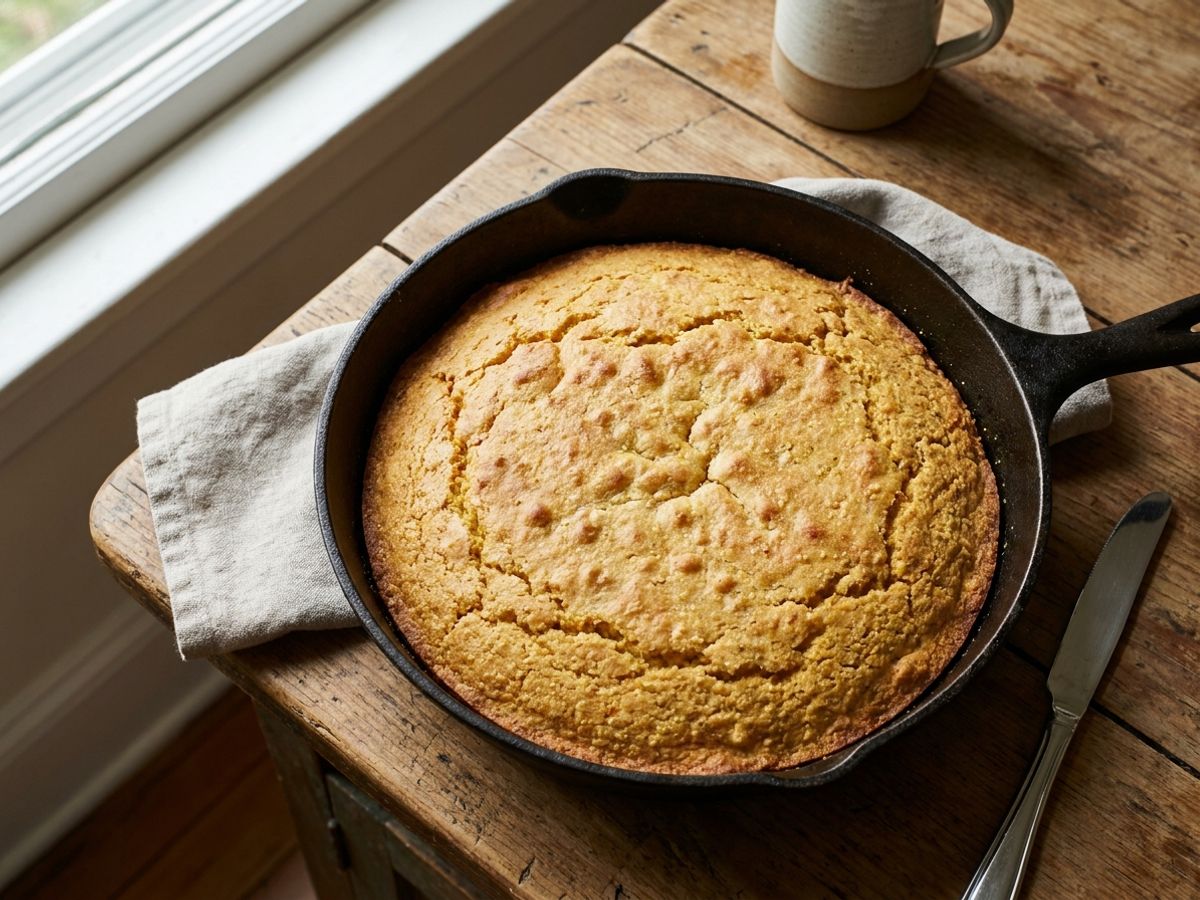
Ingredients
- 1 cup (150g) medium-grind cornmeal (polenta), check the label for a plain gluten-free product
- 1 cup (150g) gluten-free 1:1 flour blend
- 2 tablespoons (25g) white sugar (or 2 tablespoons maple syrup, added with the wet ingredients)
- 2 teaspoons gluten-free baking powder
- 1/2 teaspoon baking soda
- 3/4 teaspoon salt
- 1 cup (240ml) lactose-free milk
- 1 tablespoon lemon juice or white vinegar (to sour the milk)
- 2 large eggs
- 5 tablespoons (70g) unsalted butter, melted and slightly cooled, plus a little more for the pan
Instructions
Make the lactose-free buttermilk
- Stir the lemon juice (or vinegar) into the lactose-free milk. Let it sit for 10 minutes. It will thicken slightly and look lightly curdled, which is what you want.
Mix the batter
- Preheat the oven to 400F (200C). Grease an 8-inch square pan or a similar-sized cast iron skillet with butter.
- In a large bowl, whisk together the cornmeal, gluten-free flour blend, sugar, baking powder, baking soda, and salt until evenly combined.
- Whisk the eggs into the soured milk, then whisk in the melted butter (and the maple syrup, if using it instead of sugar).
- Pour the wet mixture into the dry ingredients and stir with a spatula until just combined. A few small lumps are fine. Do not overmix.
Bake
- Scrape the batter into the prepared pan and smooth the top. Bake for 20 to 25 minutes, until the top is golden and a toothpick inserted in the center comes out clean.
- Let the cornbread cool in the pan for 10 minutes, then cut into 9 squares and serve warm.
Tips & Substitutions
- Keep the cornmeal plain. Some seasoned cornbread mixes and "self-rising" cornmeal include onion or garlic powder, so read the ingredient list and use plain cornmeal or polenta.
- Dairy-free version. Swap the lactose-free milk for a low-FODMAP almond milk and use a neutral oil in place of the butter. The lemon still sours the milk for the buttermilk effect.
- Sweeten to taste. White or cane sugar and maple syrup both work. Honey is low FODMAP only at about 1 teaspoon per serving and agave is high FODMAP, so skip both, along with polyol "sugar-free" sweeteners like xylitol or sorbitol.
- Add a savory note. Fold in 2 tablespoons of chopped scallion green tops or a little chopped jalapeño. Use only the green part of the scallion, since the white bulb is high in fructans.
- Make it cheesy. Stir in 1/3 cup (about 40g) shredded aged cheddar. Hard, aged cheeses are naturally low in lactose.
- Watch the flour blend. Some gluten-free all-purpose blends add inulin or chicory root fiber, which is high in fructans. Choose a blend based on rice, corn, potato, or tapioca starch.
 Join the waitlist
We're building a Low FODMAP Recipes app. Add your email and we'll let you know when it launches.
Why This Works
- Cornmeal is a low-FODMAP grain. Plain cornmeal and polenta are tested as low-FODMAP by Monash, so cornmeal carries most of the structure here without wheat. Look up any ingredient in the FODMAP Foods app to see how its rating changes with portion size.
- Soured lactose-free milk stands in for buttermilk. Adding an acid to lactose-free milk gives you the tang and tender crumb of buttermilk while keeping lactose low.
- No wheat flour. A gluten-free 1:1 blend replaces the usual all-purpose flour, removing the fructans found in wheat.
- Butter and aged cheese are low in lactose. Butter contains very little lactose, and hard aged cheeses like cheddar are naturally low, so the optional cheese adds very little lactose per serving.
Storage
Store cooled cornbread in an airtight container at room temperature for up to 2 days, or in the fridge for up to 5 days. To freeze, wrap individual squares and freeze for up to 2 months, then thaw at room temperature. Reheat slices in a 300F (150C) oven or a toaster oven for a few minutes to bring back the crisp edges.
Not sure about an ingredient?
Our low FODMAP food list rates 600+ foods low, moderate or high, with the serving size behind each rating, so you can check any ingredient or swap in this recipe before you make it.
For educational purposes only. Not medical advice. Consult a healthcare professional for personal guidance.
References
- Lactose and dairy products on a low FODMAP diet — Monash University FODMAP Blog
- What Flours & Starches are Low FODMAP? — A Little Bit Yummy