

Chocolate Mousse
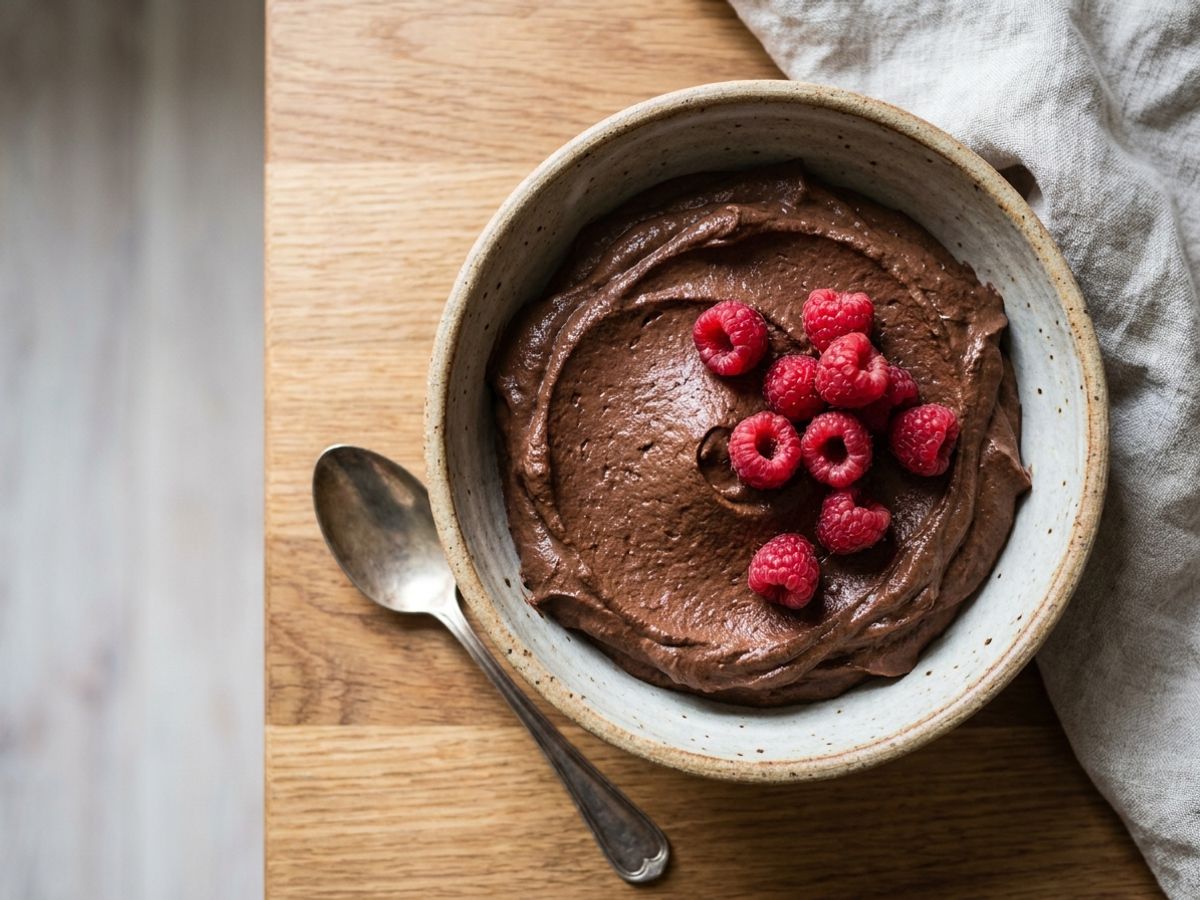
A low FODMAP chocolate mousse of melted dark chocolate folded into whipped coconut cream with maple syrup and vanilla.
Ingredients
- 100 g (3.5 oz) dark chocolate, 70% cocoa or higher, dairy-free, chopped (this works out to about 25 g per serving, under the 30 g dark chocolate cap)
- 1 can (400 ml / 13.5 oz) coconut cream, chilled overnight (scoop and measure 1 cup (240 ml) of the thick cream, about 1/4 cup per serving; save any extra for another use)
- 2 tbsp (30 ml) pure maple syrup, plus more to taste
- 1 tsp vanilla extract
- 1 tbsp (5 g) unsweetened cocoa powder, optional (hold to about 2 tsp per serving)
- Pinch of salt
- Optional topping: a few fresh raspberries or a small scatter of chopped walnuts
Instructions
Melt the chocolate
- Set the chopped chocolate in a heatproof bowl over a pan of just-simmering water, or use the microwave in short 20-second bursts, stirring between each.
- Once smooth, stir in the maple syrup, vanilla, cocoa powder (if using), and a pinch of salt.
- Let the mixture cool for a few minutes until barely warm to the touch. If it is too hot it will collapse the whipped cream, and if it is stone cold it will seize.
Whip the coconut cream
- Open the chilled can without shaking it and scoop out the thick, firm cream from the top and measure 1 cup (save any extra cream, and the thin watery liquid, for another use).
- Whip the cream with a hand mixer or whisk until it holds soft peaks, about 1 to 2 minutes.
Fold and chill
- Stir a spoonful of the whipped cream into the warm chocolate to loosen it, then pour the chocolate back into the rest of the cream.
- Fold gently with a spatula until no light streaks remain. Stop as soon as it looks even, so you keep the air in.
- Divide between 4 small glasses or ramekins and chill for at least 2 hours before serving. Add the raspberries or walnuts just before eating.
Tips & Substitutions
- Aquafaba for a lighter mousse. Whip about 1/2 cup of the liquid drained from canned chickpeas to stiff peaks and fold it into the melted chocolate for an airier, coconut-free version. Use the whipped liquid only, not the chickpeas themselves.
- Dairy option. If you tolerate it, whipped lactose-free cream can replace the coconut cream. Keep each serving small, and look it up in the FODMAP Foods app to see how the rating changes with portion size.
- Hold the chocolate cap. Stick to 70% or higher dark chocolate and keep each serving to 30 g. Milk chocolate adds lactose, and larger dark chocolate portions become moderate FODMAP.
- Sweeten with maple, not honey. Maple syrup stays low FODMAP at 1 tablespoon, while honey and agave add excess fructose.
- Skip sugar-free chocolate. Maltitol, sorbitol, and xylitol are high FODMAP polyols, so choose a bar sweetened with cane sugar.
- Cocoa powder is optional and small. If you want a deeper flavor, keep added cocoa to about 2 teaspoons per serving to stay under the tested limit.
 Join the waitlist
We're building a Low FODMAP Recipes app. Add your email and we'll let you know when it launches.
Why This Works
- Dark chocolate in small servings. A 30 g portion of dark chocolate tests low FODMAP, and each ramekin here stays under that amount.
- Coconut cream capped at 1/4 cup. Coconut cream is low FODMAP at about 1/4 cup per serving. Larger scoops bring in sorbitol, which is why the measured 1 cup is split across four small portions.
- Maple instead of honey. Maple syrup carries the sweetness without the excess free fructose found in honey and agave.
- No dairy, no lactose. Basing the mousse on coconut cream (or aquafaba) keeps it lactose-free from the start, so there is no dairy portion to watch.
Storage
Cover and refrigerate for up to 3 days. The mousse can be made ahead, since the chill time sets the texture. Freezing is not recommended because the coconut cream turns grainy on thawing. Keep to one small ramekin per serving so the dark chocolate and coconut cream both stay within tested amounts.
Not sure about an ingredient?
Our low FODMAP food list rates 600+ foods low, moderate or high, with the serving size behind each rating, so you can check any ingredient or swap in this recipe before you make it.
For educational purposes only. Not medical advice. Consult a healthcare professional for personal guidance.
References
- Sweeteners and the Low FODMAP Diet — Monash University FODMAP Blog
- 13 Low FODMAP Ingredient Swaps & Alternatives (incl. milk alternatives) — Gourmend Foods