

Chicken Tikka Masala
Low FODMAP chicken tikka masala with lactose-free yogurt marinated thighs in a garam masala, ginger, crushed tomato, and coconut cream sauce.
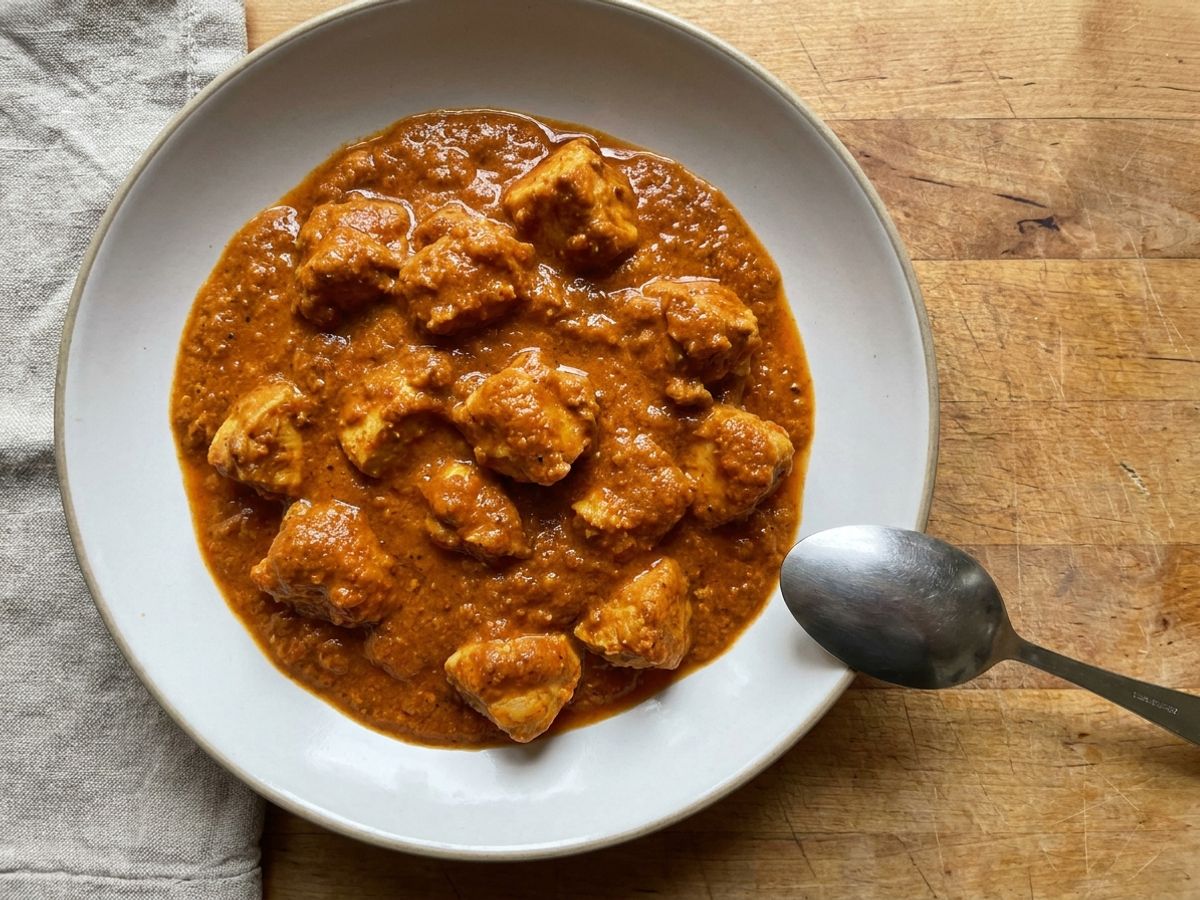
Tikka masala usually starts with a heavy base of onion and garlic, but the spices carry the dish here. Here the flavor comes from a yogurt-and-spice marinade, garlic-infused olive oil, fresh ginger, and the green tops of scallions. The canned tomato and coconut cream are measured so each serving stays inside tested limits.
Ingredients
For the chicken and marinade:
- 1 1/2 lb (680 g) boneless skinless chicken thighs, cut into 1 1/2-inch pieces
- 1/2 cup (120 g) plain lactose-free yogurt
- 2 tablespoons garlic-infused olive oil
- 1 tablespoon fresh ginger, finely grated
- 2 teaspoons garam masala (check the blend lists no onion or garlic)
- 1 teaspoon ground cumin
- 1 teaspoon ground coriander
- 1 teaspoon ground turmeric
- 1 teaspoon sweet paprika
- 1/2 teaspoon Kashmiri chili powder or cayenne, to taste (use pure chili, not a masala blend)
- 1 tablespoon lemon juice
- 3/4 teaspoon salt
For the sauce:
- 2 tablespoons garlic-infused olive oil
- Green tops of 4 scallions, thinly sliced (green part only)
- 1 tablespoon fresh ginger, finely grated
- 1 tablespoon tomato paste
- 2 teaspoons garam masala
- 1 teaspoon ground cumin
- 1 teaspoon ground coriander
- 1 teaspoon sweet paprika
- 1/2 teaspoon ground turmeric
- 1 1/2 cups (about 375 g) canned crushed tomatoes (about 95 g per serving, under the 100 g cap)
- 1/2 cup (120 ml) water
- 1/2 cup (120 ml) canned coconut cream or lactose-free heavy cream (about 30 ml per serving, well under the cap)
- 1 teaspoon white sugar or maple syrup, to balance the acidity
- 3/4 teaspoon salt, or to taste
- Chopped fresh cilantro, to garnish
- Cooked white rice, to serve
Instructions
Marinate the chicken
- In a bowl, stir together the yogurt, garlic-infused oil, ginger, garam masala, cumin, coriander, turmeric, paprika, chili powder, lemon juice, and salt.
- Add the chicken and turn to coat every piece. Cover and refrigerate for at least 30 minutes, or up to overnight for deeper flavor.
Sear the chicken
- Heat a large skillet or heavy pan over medium-high heat. Lift the chicken from the marinade, letting excess drip off, and add it to the dry hot pan in a single layer. Work in two batches if needed to avoid crowding.
- Sear for 3 to 4 minutes per side until browned and mostly cooked. Transfer to a plate. The chicken finishes in the sauce, so it does not need to be cooked through yet.
Build the sauce
- Lower the heat to medium and add the 2 tablespoons of garlic-infused oil to the same pan. Add the scallion green tops and ginger and cook for 1 minute until fragrant.
- Stir in the tomato paste, garam masala, cumin, coriander, paprika, and turmeric. Cook for about 1 minute to bloom the spices, stirring so they do not scorch.
- Add the crushed tomatoes and water. Simmer for 8 to 10 minutes, stirring now and then, until the sauce darkens and thickens slightly.
Simmer and finish
- Return the chicken and any resting juices to the pan. Simmer for 6 to 8 minutes until the chicken is cooked through to an internal temperature of 165 degrees F (74 degrees C).
- Stir in the coconut cream and the sugar or maple syrup. Warm through for 2 minutes without hard boiling, then taste and adjust the salt.
- Garnish with cilantro and serve over rice.
Tips & Substitutions
- Marinate ahead. An overnight rest in the yogurt marinade tenderizes the chicken and lets the spices set in, which matters more here since there is no allium base.
- Read the garam masala label. Many blends are just spices, but some add onion or garlic powder. Buy a plain blend or mix your own from cardamom, cumin, coriander, cinnamon, cloves, and pepper.
- Keep the chili pure. Kashmiri chili powder or cayenne adds color and heat without alliums. Skip pre-mixed "curry powder" or "tikka" pastes, which usually carry onion and garlic.
- Dairy-free route. Swap the yogurt for a plain coconut yogurt without inulin, chicory root or FOS, and use coconut cream in the sauce. Keep the coconut cream serving small, since larger amounts move it higher in FODMAPs.
- Boneless breast works too. Use chicken breast if you prefer, but cut it slightly larger and watch the simmer time so it does not dry out.
- Portions shift with testing. Serving sizes for canned tomato and cream are tested amounts, so look them up in the FODMAP Foods app to see how their ratings change with portion size before scaling the batch up.
 Join the waitlist
We're building a Low FODMAP Recipes app. Add your email and we'll let you know when it launches.
Why This Works
- Oil carries the garlic flavor, not the fructans. Garlic's FODMAPs are water-soluble rather than oil-soluble, so garlic-infused oil delivers the taste without the fructans found in garlic.
- Green tops replace the bulb. The green part of scallions is low FODMAP, while the white base holds the fructans, so slicing off only the greens keeps the aromatic layer low FODMAP at this serving.
- Tomato stays under the cap. Canned tomatoes are low FODMAP in moderate amounts. Holding the dish to about 95 g of crushed tomato per serving keeps it inside the tested limit, and the tomato paste stays small.
- Lactose-free dairy or coconut cream. Lactose-free yogurt and cream remove the lactose that makes standard dairy a problem, and a small serving of coconut cream keeps the richness within range.
Storage
Cool leftovers quickly and refrigerate in an airtight container for up to 3 days. Reheat on the stovetop or in the microwave to 165°F (74°C), adding a splash of water if the sauce has thickened. This freezes well for up to 2 months; portion it before freezing so each serving keeps its tested amount of tomato and cream, then thaw overnight in the fridge before reheating.
Not sure about an ingredient?
Our low FODMAP food list rates 600+ foods low, moderate or high, with the serving size behind each rating, so you can check any ingredient or swap in this recipe before you make it.
For educational purposes only. Not medical advice. Consult a healthcare professional for personal guidance.
References
- All about onion, garlic and infused oils on the Low FODMAP Diet — Monash University FODMAP Blog
- Are Tomatoes & Tomato Products Low FODMAP? — FODMAP Everyday
- Lactose and dairy products on a low FODMAP diet — Monash University FODMAP Blog