Is Sourdough Low FODMAP? The Fermentation Exception
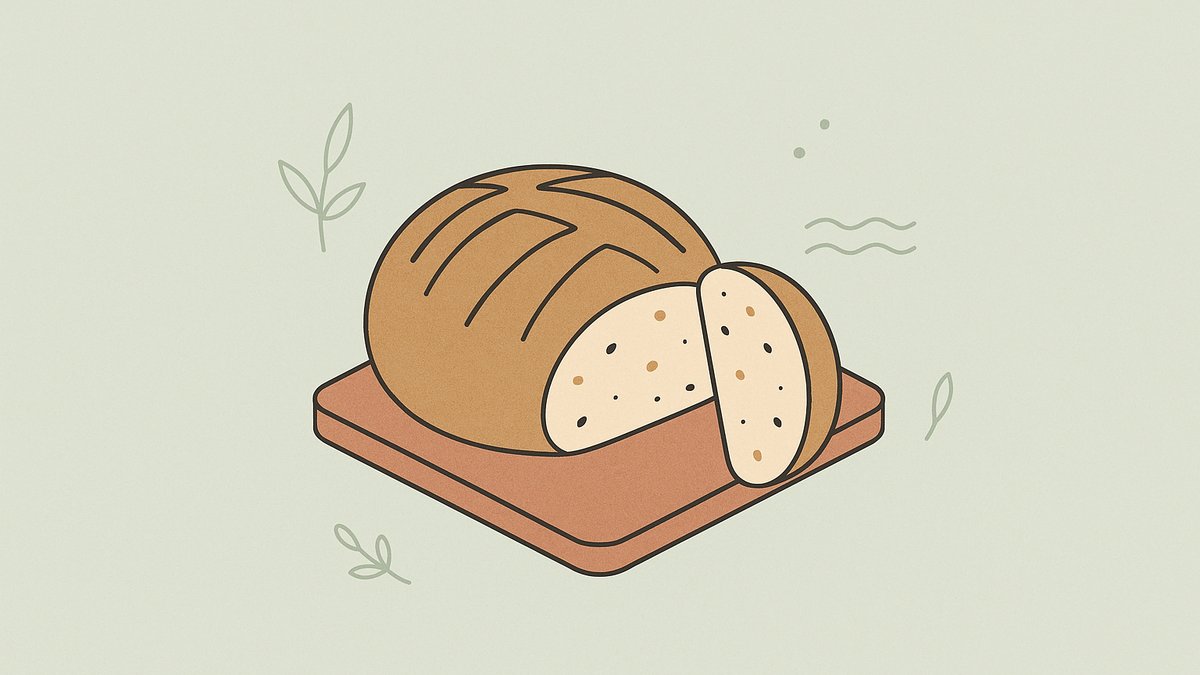
Real long-fermented sourdough is low FODMAP at a typical 2-slice serve, even though wheat itself is high in fructans. Monash has tested and cleared specific wheat and spelt sourdough breads, which makes sourdough one of the few exceptions to the usual "avoid wheat" rule during elimination.
The catch is that not every loaf labeled "sourdough" qualifies. Most grocery-store sourdough is regular yeasted bread with some starter thrown in for flavor, which doesn't do the work that makes real sourdough low FODMAP. The distinction is the thing most articles skip.
The short answer
Monash has tested specific wheat and spelt sourdough breads and cleared them as low FODMAP at around a 2-slice serve (give or take, depending on slice weight). Monash's sourdough explainer covers the mechanism.
Fast-rise "sourdough" from the grocery aisle, with commercial yeast doing the real leavening and a short prove time, usually hasn't had time for that process to occur. It can still be labeled sourdough. It's closer to regular wheat bread than to the traditionally fermented loaves Monash tested.
Why wheat is high FODMAP to start with
Wheat contains fructans, a type of oligosaccharide the small intestine can't break down. Regular wheat bread is usually limited to small serves during elimination, and bigger portions push over threshold fast, which is why most wheat breads are broadly on the avoid list. For how wheat flour compares to rice, oat, and other alternatives in baking, see the low-FODMAP flours guide.
For a refresher on the whole framework, see what are FODMAPs. If you're wondering whether this is a gluten issue in disguise, it usually isn't, see FODMAPs vs gluten sensitivity.
 Get the free Beginner's Guide to the Low FODMAP Diet
Learn what FODMAPs are, which foods to watch, and how to start finding your personal triggers. Plus practical tips and new recipes by email.
The fermentation exception
Long fermentation changes the math. When wheat flour sits in a wet, acidic starter for many hours, naturally occurring lactobacilli and wild yeasts feed on the fructans in the flour. Fructans are the bacteria's food source. Given enough time, the bugs eat a large chunk of the fructan content before the loaf ever hits the oven.
The research backs this up. Boakye and colleagues (2022) found that extended sourdough fermentation cut fructan content in wheat dough by roughly two-thirds. A review by Loponen and Gänzle on sourdough in low-FODMAP baking notes that conventional sourdoughs typically reduce fructans substantially, and that specific lactobacilli strains can push reductions even higher. The broader literature lands in the same general zone: the longer the ferment and the more active the starter, the more fructan gets broken down.
Exact percentages vary by strain, hydration, temperature, and flour, so treat any specific number you see as ballpark rather than gospel. The direction of the effect is the consistent finding.
What counts as "real" sourdough
This is the part that trips people up. The word "sourdough" is not regulated in most countries, so any bread with a hint of tang can be labeled sourdough even if it was made in a few hours with commercial yeast.
A few rules of thumb for spotting the real thing:
Long ferment. The single most important signal. Traditional sourdough is typically proved for twelve hours or longer, often overnight or split across two days. That's the window where the bacteria break down the fructans. You can't confirm fermentation time from a label, but an artisan bakery will usually tell you if you ask. Mass-produced supermarket "sourdough" rarely ferments this long.
Short, recognizable ingredient list. The purest versions are just flour, water, starter (or "sourdough culture"), and salt. Plenty of legitimate sourdough also includes seeds, whole grains, or a bit of malted flour, and that's fine. What you're scanning for is the absence of dough conditioners, preservatives, and industrial additives, those signal a fast commercial process, not a long ferment.
Starter as the leavening, not just the flavor. Some hybrid breads use a starter plus a small amount of commercial yeast. These can still get meaningful fructan reduction if the ferment is long enough, but at the grocery scale, "yeast" on the label usually means a short prove with a starter added for tang. Ferment time matters more than the presence or absence of yeast; it's just harder to verify.
Ask the bakery. The reliable move at an unfamiliar bakery is to ask how long the dough ferments and whether it's a long cold ferment. "18-hour cold ferment" is what you want to hear.
Spelt vs wheat
Spelt is an older wheat variety. It has less fructan than modern wheat to start with, and it also ferments well. Spelt sourdough tends to land more comfortably in low-FODMAP territory for the same serving size as wheat sourdough. If both are available, spelt sourdough is often the safer default, particularly early in elimination.
Important: spelt still contains gluten. This isn't a celiac or gluten-free option. The point is fructan content, not gluten.
Serving size matters
Monash's tested low-FODMAP serves for wheat and spelt sourdough land in the range of roughly two standard slices, but the official guidance is measured in grams, not slices, and exact gram counts drift by product. A typical tested serve is on the order of 90 to 110 grams of bread. Bigger serves push the fructan load up proportionally and will cross over into high-FODMAP territory somewhere beyond the tested window.
Slice weights vary a lot by bakery. A thick-cut slice from a dense country loaf can easily weigh two to three times what a thin commercial slice does. If your loaf is cut thick, one thick slice may already be around the tested serve, check the weight of your actual bread rather than counting slices blindly. Weighing a slice is the cleanest way to pin this down.
The general point: the tested window is modest. A couple of slices with lunch is the intended zone. A sandwich plus toast in the morning plus bread with dinner is a different category of portion, even with real sourdough.
FODMAP stacking
Bread rarely gets eaten alone. A sourdough sandwich with hummus, avocado, and onion can easily stack past threshold even though the bread itself is clear. Each of those other foods has its own fructan or GOS load, and they add up across a meal.
This is the single most common reason people say the diet "stopped working", they're treating per-food limits as if they were independent, when in reality FODMAPs stack. More on that in FODMAP stacking. Checking each item on the plate one at a time is what catches this fast.
Brand picks
Specific brand availability shifts constantly, and what's Monash-certified in Australia often isn't sold in the US (and vice versa). A few general leads:
- Monash-certified options. Look for the Monash Low FODMAP Certified logo on the packaging. In the US and UK, availability is limited. In Australia, Naturis spelt sourdough is one widely cited certified option.
- Local artisan bakeries. Often a better bet than the grocery aisle. Ask whether they use a long cold ferment and whether any commercial yeast is added. If the answer is "18-hour cold ferment, just flour, water, starter, and salt," you're in good shape.
- What to avoid. Chain bakeries and sandwich shops calling something "sourdough" when the ingredient list includes yeast, sugar, and conditioners. This is not the same bread the research is talking about.
The certified logo is the highest confidence signal, but real artisan sourdough from a bakery that takes fermentation seriously is usually fine even without certification. The ingredient list and the ferment time are the actual tests. For a broader look at packaged options, see the roundup of low-FODMAP bread brands.
Several recipes on this site are built on long-fermented sourdough spelt: breakfast sandwich, french toast, pizza, meatballs, and sourdough spelt stuffing.
What about during reintroduction?
The elimination phase is temporary. After two to six weeks, reintroduction tests each FODMAP group separately. Fructans, the group wheat belongs to, is one of the standard challenges.
Most people tolerate more fructan than they think, and some tolerate regular wheat bread in limited quantities. Sourdough sits in an easier zone because the fructan load is already lower per slice, so it's often one of the first breads people successfully add back in moderate portions. For the fructan context, see is garlic low FODMAP, garlic is the other major fructan food, and the two behave differently during testing.
Bottom line
Monash has tested specific long-fermented wheat and spelt sourdough breads and cleared them at modest serves. Fermentation does the work of breaking down fructans; the grain itself is still high-fructan, which is why the ferment has to be real.
Grocery-aisle fast-rise sourdough is usually not doing the same thing. Look for a genuinely long ferment, a clean-looking ingredient list, and where possible a Monash-certified brand or a local bakery that can tell you their ferment time. Watch your serving size against the tested gram weight, not just a slice count. Scan a loaf, its barcode, or ingredient label with FODMAP Foods, or search the low FODMAP list, to check a bread in seconds before it goes in the basket.
Get the free Beginner's Guide to the Low FODMAP Diet
Learn what FODMAPs are, which foods to watch, and how to start finding your personal triggers. Plus practical tips and new recipes by email.
Scan any food, search 1,000+ FODMAP ratings, and know your safe portion with FODMAP Foods.


Related articles




For educational purposes only. Not medical advice. Consult a healthcare professional for personal guidance.
References
- Sourdough processing & FODMAPs — Monash FODMAP
- Naturis Low FODMAP spelt sourdough breads — Monash FODMAP
- What Sourdough Bread is Low FODMAP? — A Little Bit Yummy
- How Fermentation Affects the FODMAP Content in Sourdough Bread — FODMAP Everyday
- Use of Sourdough in Low FODMAP Baking — Loponen & Gänzle (2018)
- Impact of sourdough fermentation on FODMAPs and amylase-trypsin inhibitor levels in wheat dough — Boakye et al. (2022)