

Blueberry Muffins
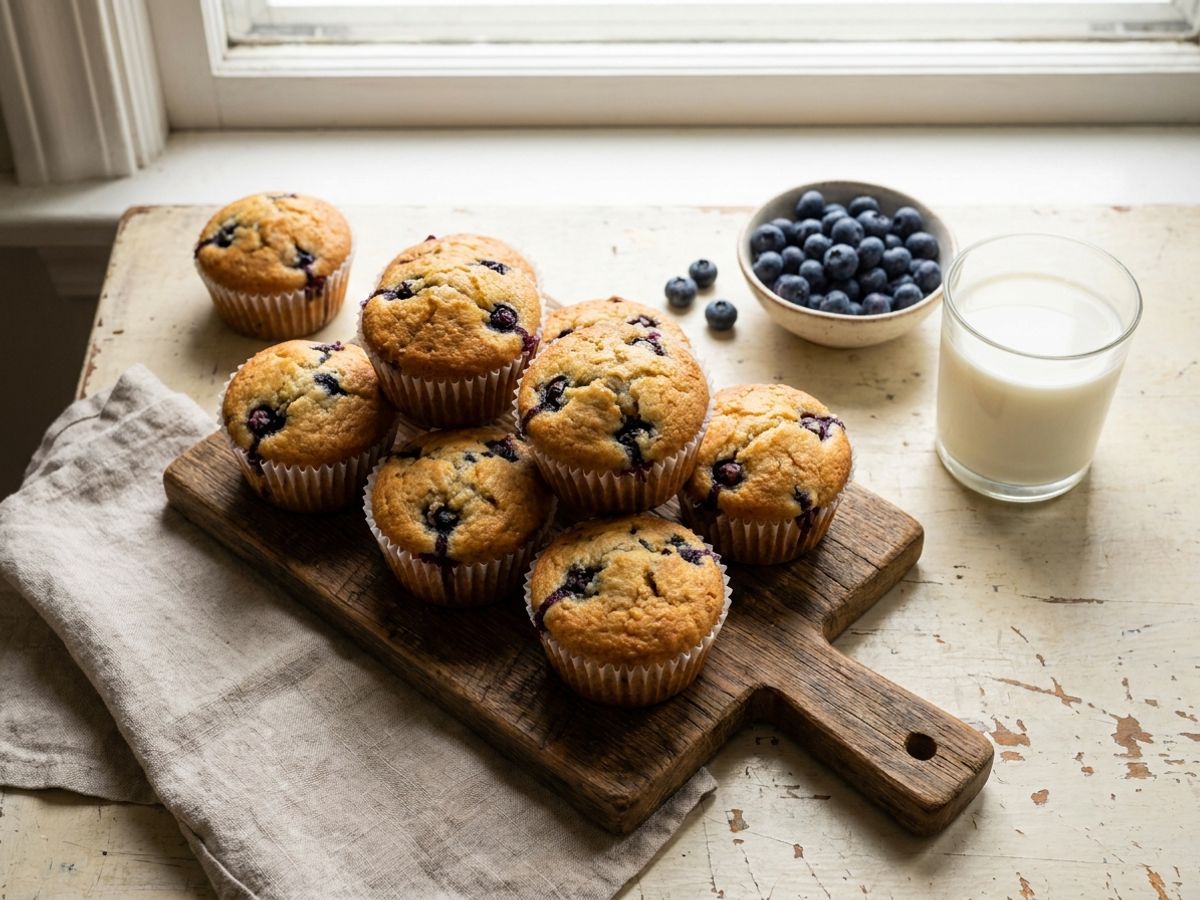
Low FODMAP blueberry muffins made with a gluten-free 1:1 flour blend, butter, eggs, lactose-free milk, lemon zest, and fresh blueberries.
Ingredients
- 2 cups (280 g) low-FODMAP gluten-free 1:1 flour blend
- 2 teaspoons baking powder
- 1/2 teaspoon salt
- 2 large eggs, at room temperature
- 3/4 cup (150 g) granulated sugar
- 1/2 cup (113 g) unsalted butter, melted and slightly cooled (or 1/2 cup neutral oil)
- 3/4 cup (180 ml) lactose-free milk or unsweetened almond milk
- 2 teaspoons vanilla extract
- 1 teaspoon finely grated lemon zest (optional but recommended)
- 1 cup (140 g) fresh blueberries
- 1 tablespoon granulated sugar, for sprinkling (optional)
Instructions
Prep
- Heat the oven to 375°F (190°C). Line a 12-cup muffin tin with paper liners or grease each cup well.
- In a medium bowl, whisk together the flour blend, baking powder, and salt. Set aside.
Mix the Batter
- In a large bowl, whisk the eggs and sugar together for about a minute, until pale and slightly thickened.
- Whisk in the melted butter, milk, vanilla, and lemon zest until smooth.
- Add the dry ingredients and stir with a spatula just until no dry streaks remain. The batter will be thick; do not overmix.
- Toss the blueberries with a teaspoon of the flour blend (pulled from your measured total, or an extra pinch) to keep them from sinking, then fold them in with two or three gentle strokes.
Bake
- Divide the batter evenly among the 12 muffin cups; they will be nearly full. Each muffin should end up with about 5 to 8 blueberries.
- Sprinkle the tops with the extra tablespoon of sugar if you want a crackly top.
- Bake for 20 to 24 minutes, until the tops are golden and a toothpick inserted in the center comes out with a few moist crumbs (not wet batter).
- Cool in the pan for 5 minutes, then transfer the muffins to a rack. They firm up as they cool; the centers finish setting in the first 10 minutes out of the oven.
Tips & Substitutions
- Stick to fresh blueberries at the listed serving size. Monash lists fresh blueberries as low at 1 cup (125 g) per serving. A full cup (140 g) split across 12 muffins works out to roughly 5 to 8 berries per muffin, well under that limit. Keep the blueberries measured so the fruit per muffin stays low, especially if you plan to eat more than one in a sitting.
- Frozen blueberries work. Fold them in straight from the freezer without thawing, and add 2 to 3 minutes to the bake time. The batter may streak blue; the flavor is the same.
- Milk choices. Lactose-free cow's milk, unsweetened almond milk (up to 1 cup / 250 ml), macadamia, hemp, or rice milk all work. Skip oat milk unless the carton is certified at your serving size.
- Commercial flour blends. Bob's Red Mill 1-to-1 (blue bag) and King Arthur Measure for Measure both work here. Skip the red-bag Bob's Red Mill All-Purpose; it contains garbanzo and fava bean flour. Also skip blends that list inulin or chicory root fiber, which are concentrated fructan sources.
- Sweetener swaps. Granulated sugar is low-FODMAP in typical amounts. You can swap half the sugar for pure maple syrup (reduce the milk by 2 tablespoons), but skip honey and agave.
- Dairy-free. Use melted coconut oil or a neutral oil in place of the butter, and a plant milk from the list above.
- Egg-free. Replace each egg with 1 tablespoon of ground flaxseed whisked into 3 tablespoons of water; let it gel for 5 minutes. The crumb will be a touch denser but still tender.
 Join the waitlist
We're building a Low FODMAP Recipes app. Add your email and we'll let you know when it launches.
Why This Works
A 1:1 gluten-free blend carries the structure. Rice flour plus tapioca and potato starch (with a little xanthan) gives a crumb close to wheat flour and stays low FODMAP at a one-muffin serving. That is why a blend works here where a single flour like almond or coconut would not; those have their own serve-size limits and would change the texture.
Blueberries, measured. One cup of fresh blueberries divided across 12 muffins puts each muffin at about 5 to 8 berries, roughly 12 g of fruit. Monash lists blueberries as low at 1 cup (125 g) per serving, so even two muffins are well under that.
Lactose-free milk keeps the dairy low. Regular cow's milk brings lactose. Lactose-free milk or plain almond milk is low FODMAP at 1 cup, and this batch uses only 3/4 cup across 12 muffins.
Butter and sugar are usually fine on a low-FODMAP diet. Butter is nearly lactose-free by weight and tests low at standard serves. Granulated sugar (sucrose) is a 1:1 glucose-fructose match, so it is not the same as honey or agave.
Storage
Store cooled muffins in an airtight container at room temperature for up to 2 days, or in the fridge for up to 5 days at 40°F (4°C) or below. To freeze, cool completely, wrap individually, and bag for up to 2 months. Reheat from frozen in a 300°F (150°C) oven for 10 to 12 minutes, or microwave for 30 to 45 seconds. Gluten-free baked goods stale faster than wheat; if you are not eating them within 2 days, freeze the extras right away and they will taste fresh on reheat.
Not sure about an ingredient?
Our low FODMAP food list rates 600+ foods low, moderate or high, with the serving size behind each rating, so you can check any ingredient or swap in this recipe before you make it.
For educational purposes only. Not medical advice. Consult a healthcare professional for personal guidance.
References
- Low FODMAP Blueberry Crumble Slice — A Little Bit Yummy
- The BEST Low FODMAP Blueberry Muffins — FODMAP Everyday
- Gluten Free + Low FODMAP Blueberry Cake — Kate Scarlata, RDN