Are Chickpeas Low FODMAP? Canned vs. Dried Makes All the Difference
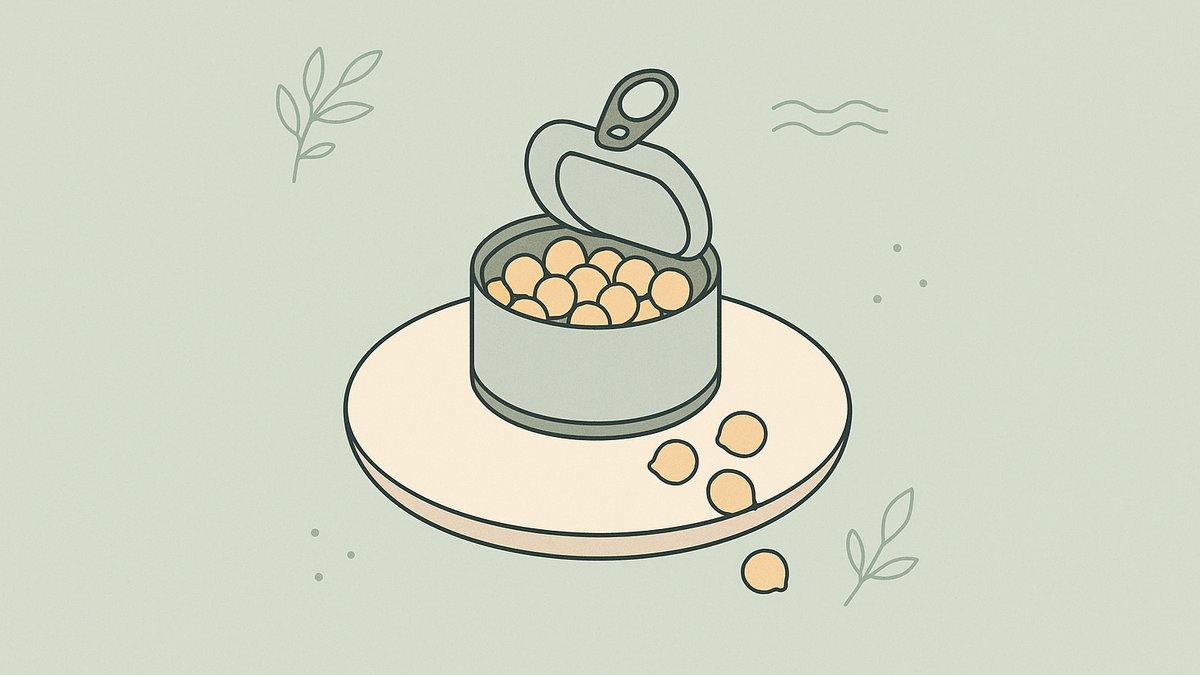
Chickpeas are one of the most confusing foods on the low-FODMAP diet, and lentils sit in the same awkward spot for the same reason. Half the articles you read call them safe. The other half call them a trigger. Both are right, because "chickpeas" isn't one food. A canned chickpea that's been drained and rinsed and a chickpea soaked and boiled from dried are two different ingredients from a FODMAP perspective.
The short version: canned chickpeas, drained and rinsed well, have a tested low-FODMAP serve. Chickpeas cooked from dried at home don't share the same serve and are generally treated as higher GOS at the same volume. That single distinction explains most of the confusion.
The short answer
Monash lists canned chickpeas, drained and rinsed, as low FODMAP at about 1/4 cup (roughly 42 g) per serving. That's the number used in reputable low-FODMAP hummus, salad, and curry recipes. At 1/2 cup (86.5 g) canned chickpeas test high, mainly for fructans with a trace of GOS. Chickpeas cooked from dried contain more galacto-oligosaccharides (GOS) at the same volume and don't share that serve. Roasted chickpeas sit somewhere in between, with their own caveats. Aquafaba, the canning liquid itself, is where some of the leached FODMAPs ended up, so treat it as higher FODMAP than the drained beans.
Why chickpeas are a FODMAP problem in the first place
Chickpeas are legumes, and legumes are among the highest-GOS foods in a normal diet. GOS is a type of FODMAP in the oligosaccharide family, the same family as the fructans in garlic, wheat, and onion.
GOS ferments in the large intestine. It feeds gut bacteria, produces gas, and pulls water into the gut. For people with IBS, that combination is what produces bloating, cramping, and urgency after a bean-heavy meal. Tolerance varies person to person, which is why elimination-phase portions are deliberately conservative.
The useful thing about GOS, and the reason canned chickpeas work on the diet, is that it's water-soluble.
 Get the free Beginner's Guide to the Low FODMAP Diet
Learn what FODMAPs are, which foods to watch, and how to start finding your personal triggers. Plus practical tips and new recipes by email.
Canned vs. dried: the whole trick
GOS dissolves in water. When chickpeas sit in canning liquid for long enough, a meaningful portion of their GOS leaches out of the beans and into the brine. Draining the can and rinsing the chickpeas pours most of that GOS down the drain. That's why the drained-and-rinsed chickpea has a tested low-FODMAP portion and the raw dried chickpea does not.
The rinse matters. A quick shake isn't enough. Rinse under cold running water for at least 30 seconds, ideally until the water runs clear. The foam you see is mostly starches and saponins rather than a direct FODMAP indicator, but a thorough rinse is what washes residual canning-liquid GOS off the beans.
Dried chickpeas soaked and boiled at home are a different situation. A home soak pulls some GOS into the soaking water (dump that water, never cook in it), and boiling pulls out more. The process isn't the same as an industrial can, though. Home-cooked chickpeas retain significantly more GOS than commercially canned ones at the same volume, and Monash hasn't given them the same green-light portion.
Practical translation: for elimination phase, use canned.
The tested serve: 1/4 cup, 42 grams
The number to memorize for canned, drained, rinsed chickpeas is 1/4 cup (roughly 42 g) per serving. About two heaped tablespoons of whole beans. Enough to scatter across a salad, fold into a curry, or blend into a batch of hummus, but a small serve compared to how most people default to eating chickpeas. Doubling it to 1/2 cup (86.5 g) tests high, mainly for fructans with a trace of GOS, which is why the 1/4 cup guideline is the anchor for elimination-phase recipes. Treat grams as approximate, since Monash retests foods and serves can shift.
This is also where FODMAP stacking comes in. If a single meal has 1/4 cup of chickpeas plus other oligosaccharide sources (regular wheat pita, oat milk, onion-containing bread), the total GOS and fructan load can push you over threshold even though every component looks fine on its own. During elimination, keep chickpeas as the only GOS-heavy item on the plate.
Roasted chickpeas
Roasted chickpeas get asked about a lot because they've become a popular crunchy snack. Short answer: they can work, but the serve is small and the math is trickier than you'd expect.
FODMAP Everyday's low-FODMAP roasted chickpea recipe notes that roasting dries the beans out and shrinks them, so a 1/4 cup measure after roasting is a few more chickpeas by count than a 1/4 cup measure straight out of the can. They recommend starting at 1/4 cup of the roasted product, or 3 tablespoons for anyone especially sensitive to GOS.
The other catch: a bag of roasted chickpeas is deeply snackable. A "small handful" is rarely 1/4 cup. Portion them into a bowl rather than eating from the bag. And roasted chickpeas are still GOS, so don't pair them with a hummus-heavy meal on the same day. See the low-FODMAP roasted chickpeas recipe for a portioned version.
Aquafaba
Aquafaba, the liquid in the can, is useful for egg-free baking and vegan meringues. It's also the water that the leached GOS ended up in. That's the mechanism that makes drained chickpeas low FODMAP.
During elimination, treat aquafaba as higher FODMAP than the drained beans. Without a tested serving, the prudent default is to skip it as a broth, skip vegan baked goods that lean on it as a binder, and revisit during GOS reintroduction.
Chickpea flour, falafel, and hummus
Chickpea flour (besan, gram flour) is made from ground dried chickpeas, so it keeps its GOS. Treat it as portion-sensitive during elimination: small amounts folded into a recipe may be tolerated, but chickpea-flour flatbreads or pancakes eaten as a main are an easy way to overshoot.
Falafel is almost always made from soaked dried chickpeas (cooked only by frying or baking the formed balls), so the GOS load per ball is higher than an equivalent canned-chickpea recipe. Restaurant versions also add onion and garlic. Skip it during elimination unless the recipe is specifically low-FODMAP tested.
Hummus is the one chickpea product with a clearly mapped low-FODMAP path, but the portion is small and the garlic issue is significant. Our full hummus breakdown covers why most commercial tubs are off the table, and the low-FODMAP hummus recipe shows the compliant version in practice.
How to eat chickpeas during elimination
A workable pattern for elimination phase:
- Buy canned, plain (water and salt, no garlic or onion in the brine). Drain in a colander, then rinse under cold water for at least 30 seconds.
- Measure the serve: 1/4 cup (42 g) per person, per meal. Use an actual measuring cup the first few times.
- Don't stack GOS sources. If chickpeas are on the plate, skip other legumes, skip onion-containing products, go easy on wheat, and watch for oat milk or almond milk in drinks.
- Pair with non-oligosaccharide foods. Chickpeas fold well into salads with carrots, cucumber, bell pepper, and other items from the low-FODMAP vegetable list. Add garlic-infused olive oil instead of fresh garlic.
- Skip the aquafaba for now. Pour it down the drain with the rinse water.
During reintroduction, GOS and fructans are both standard challenge groups, and many people tolerate larger chickpea portions than elimination allows. Since the larger canned serve is mostly fructans, the fructan result matters here too. Our GOS challenge protocol walks through how that test runs. A 1/4 cup serve isn't forever; it's the baseline for figuring out an actual limit.
The takeaway
Chickpeas aren't banned, but "chickpeas are low FODMAP" is too loose to be useful. What qualifies as low FODMAP is 1/4 cup of canned chickpeas, drained and rinsed well, without a pile of other oligosaccharide sources on the same plate. Home-cooked from dried, roasted by the handful, or blended into aquafaba-heavy recipes, the math shifts.
Get the canned-and-rinsed version locked in first. The rest is a reintroduction question. FODMAP Foods lets you scan a can, label, or barcode, or search the low FODMAP food list, so you can check chickpeas and other GOS sources in seconds.
Get the free Beginner's Guide to the Low FODMAP Diet
Learn what FODMAPs are, which foods to watch, and how to start finding your personal triggers. Plus practical tips and new recipes by email.
Scan any food, search 1,000+ FODMAP ratings, and know your safe portion with FODMAP Foods.


Related articles
For educational purposes only. Not medical advice. Consult a healthcare professional for personal guidance.
References
- Including legumes on a low FODMAP diet — Monash FODMAP
- FODMAP Ingredients: Canned Chickpeas — A Little Bit Yummy
- Canned Foods & FODMAPs: What's the Story? — A Little Bit Yummy
- Roasted Chickpeas recipe — FODMAP Everyday