

Virgin Eggnog (Lactose-Free)
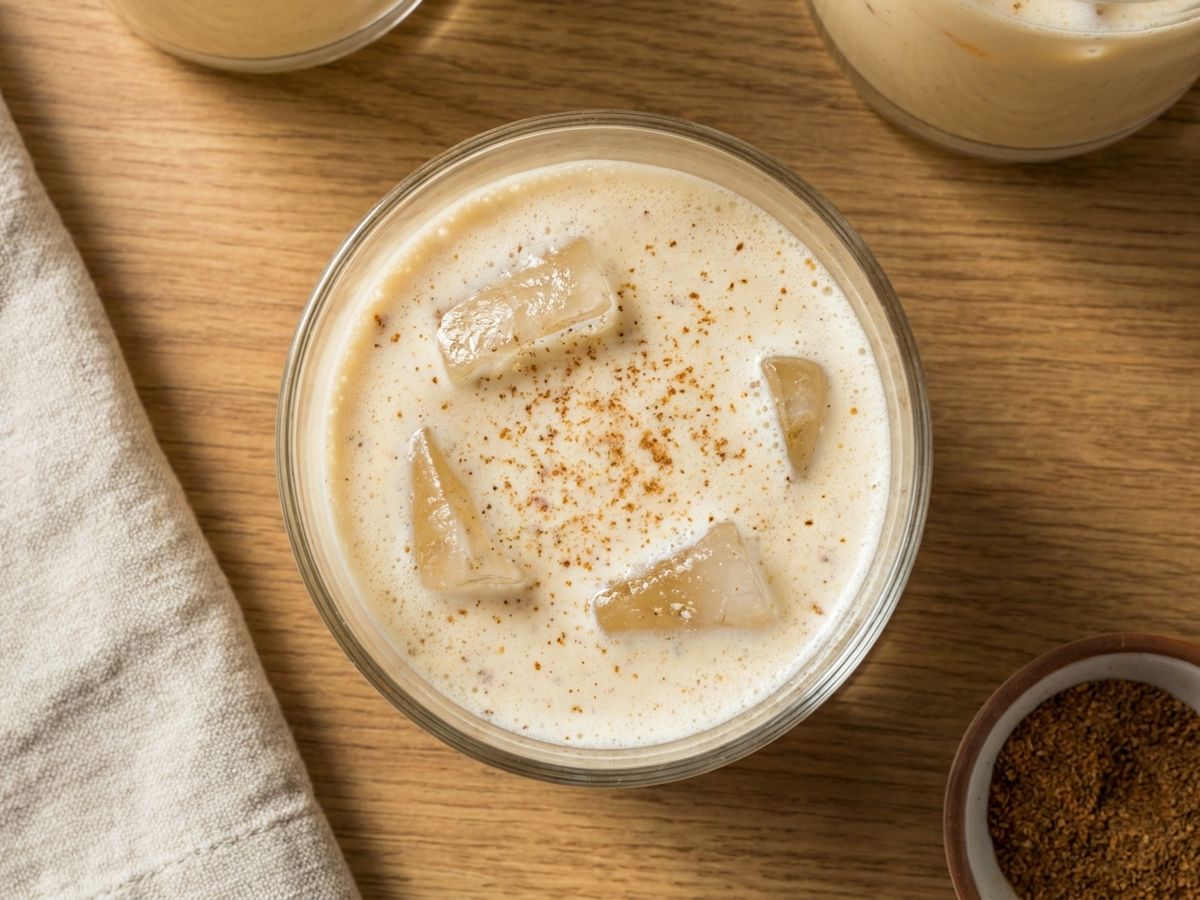
A low FODMAP virgin eggnog of pasteurized eggs, lactose-free milk and cream, maple syrup, nutmeg, cinnamon, and vanilla.
Ingredients
- 4 large pasteurized eggs, separated
- 1/4 cup pure maple syrup (or 1/4 cup cane sugar), divided
- 2 cups lactose-free whole milk
- 1 cup lactose-free heavy cream
- 1 teaspoon pure vanilla extract
- 1/2 teaspoon ground nutmeg, plus more for garnish
- 1/4 teaspoon ground cinnamon
- Pinch of fine sea salt
- Ice, for serving (optional)
Instructions
Warm the Dairy
- In a medium saucepan, combine the lactose-free milk, cream, cinnamon, nutmeg, and salt.
- Set over medium-low heat and warm until steaming and just barely bubbling at the edges, about 5 to 7 minutes. Do not let it boil.
- Remove from the heat and set aside.
Temper the Yolks
- In a medium bowl, whisk the egg yolks with 3 tablespoons of the maple syrup (or sugar) until pale and thickened, about 1 minute.
- Slowly pour about 1 cup of the warm milk mixture into the yolks in a thin stream, whisking constantly. This tempers the eggs so they don't scramble.
- Pour the tempered yolk mixture back into the saucepan with the remaining warm milk.
Cook Gently
- Return the saucepan to low heat. Cook, stirring constantly with a wooden spoon or silicone spatula, until the mixture thickens enough to coat the back of the spoon and reaches 160°F (71°C) on an instant-read thermometer, about 3 to 5 minutes.
- Immediately remove from the heat and stir in the vanilla extract. Strain through a fine-mesh sieve into a large bowl or pitcher to catch any cooked egg bits.
Cool, Then Whip and Fold (Optional)
- Let the custard cool to room temperature, or at least below 90°F (32°C), so the whites don't deflate on contact.
- In a clean bowl, whisk the egg whites with the remaining sweetener until soft peaks form, about 2 to 3 minutes by hand or 1 minute with an electric mixer.
- Gently fold the whipped whites into the cooled custard base until just combined. The eggnog will look frothy and light. (Skip this step entirely for a fully cooked, thinner version; see Tips.)
Chill and Serve
- Cover and refrigerate for at least 2 hours, or until fully chilled.
- Stir well before serving. Pour into small glasses or mugs, over ice if desired, and dust the top with extra nutmeg.
Tips & Substitutions
- Use pasteurized eggs for the raw whites. The yolks get cooked to 160°F (71°C) in this recipe, but the whipped whites are folded in raw. Use in-shell eggs labeled pasteurized, since you need to separate them. Do not use unpasteurized eggs for the raw whites, especially for kids, pregnant people, and anyone immunocompromised.
- Skip the whites for a cooked-through version. If raw whites make you nervous even with pasteurized eggs, leave them out entirely. The drink is thinner and less frothy, and every drop has been cooked to 160°F (71°C).
- Spike it at the glass. For guests who want the full cocktail, stir 1 ounce (30 ml) of bourbon or whiskey into individual glasses. Rum is not low-FODMAP in Monash testing, so leave it out.
- Maple syrup vs. cane sugar. Both are low-FODMAP at these amounts. Maple syrup gives a richer, slightly caramelized flavor; cane sugar keeps the color paler and the flavor more neutral. Skip honey and agave: honey is only low at about ½ teaspoon (4g), and agave is high in excess fructose.
- Thicker eggnog. Refrigerate overnight for a thicker, more custard-like texture. The egg custard and cream fat continue to set as it sits.
- Dairy-free version. Replace the milk and cream with 2 cups unsweetened almond milk plus 1 cup canned coconut milk (with no inulin). That is 1/4 cup coconut milk per glass, the Monash low-FODMAP serve. Check your coconut milk label with the FODMAP Foods app. Texture is looser but the flavor holds.
 Join the waitlist
We're building a Low FODMAP Recipes app. Add your email and we'll let you know when it launches.
Why This Works
Lactose-free milk is low-FODMAP at this serve. Monash lists lactose-free cow's milk as low-FODMAP at 1 cup (250 ml); each glass here has 1/2 cup (125 ml). Regular heavy cream tests low only at about 2 tablespoons (40g), so the 1/4 cup per glass here is lactose-free cream.
Eggs contain no FODMAPs. Eggs have no fermentable carbohydrates and are unrestricted on the low-FODMAP diet. They're one of the few ingredients you can use without weighing portions.
Maple syrup is low-FODMAP at this portion. Pure maple syrup is low-FODMAP at 1 tablespoon per serve. At 1/4 cup across 4 servings, each glass gets about 1 tablespoon, right at that serve.
Homemade sidesteps the carton pitfalls. Many store-bought eggnogs use regular milk, and some add high-fructose corn syrup, inulin or chicory root fiber. The nutmeg, cinnamon and vanilla here are used in low-FODMAP amounts and carry most of the holiday flavor.
Storage
Keep eggnog sealed in the fridge at 40°F (4°C) or below: up to 3 days for the fully cooked version, 1 to 2 days if you folded in raw whites. Stir or shake before each pour, since it separates. Do not leave it at room temperature for more than 2 hours, and do not freeze it.
Not sure about an ingredient?
Our low FODMAP food list rates 600+ foods low, moderate or high, with the serving size behind each rating, so you can check any ingredient or swap in this recipe before you make it.
For educational purposes only. Not medical advice. Consult a healthcare professional for personal guidance.
References
- Starting the low FODMAP diet — Monash University FODMAP
- FODMAPs Checklist (Sweeteners, Drinks & More) — Kate Scarlata, RDN
- Safe Handling of Eggs — USDA Food Safety and Inspection Service
- Thanksgiving & Christmas Low FODMAP Drinks: Cocktails, Mocktails & More — FODMAP Everyday