

Teriyaki Sauce
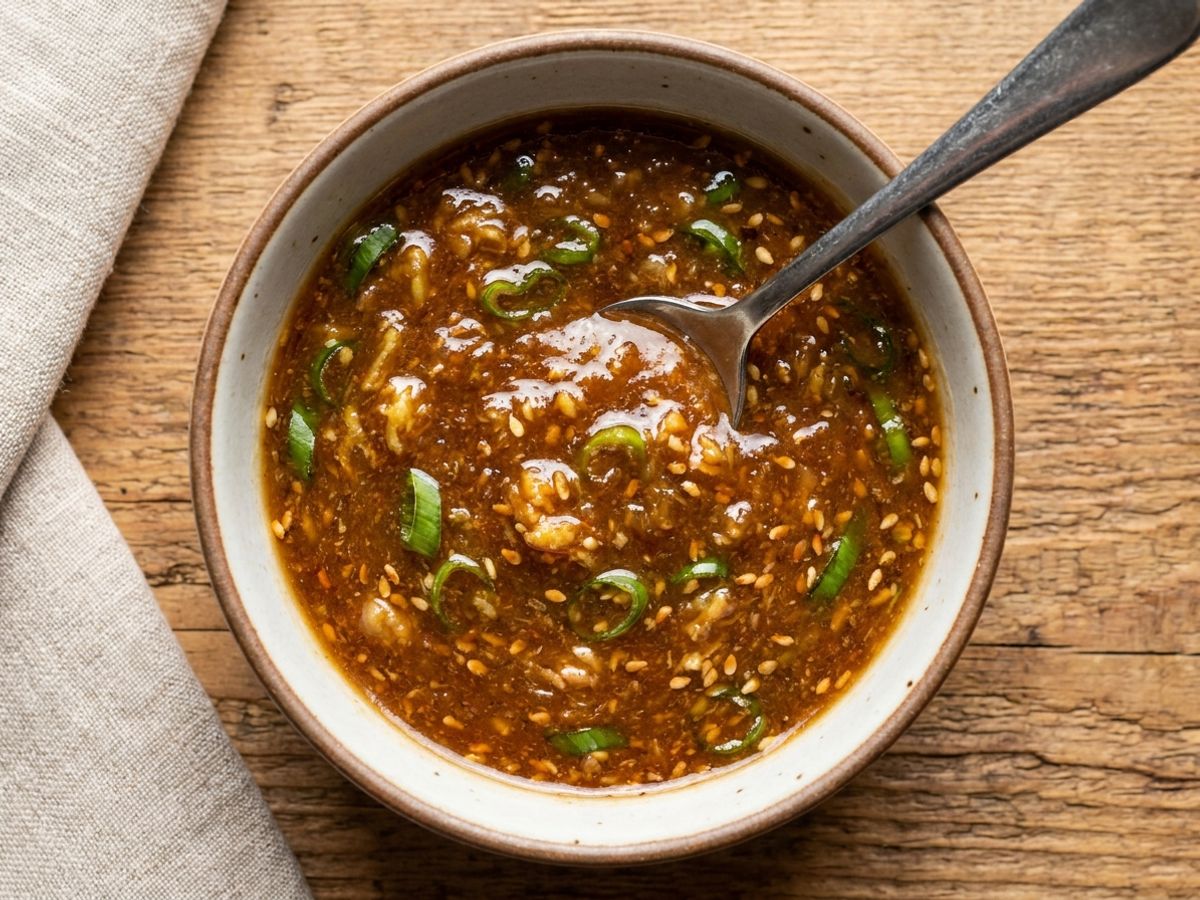
A low FODMAP teriyaki sauce of gluten-free tamari, maple syrup, rice vinegar, fresh ginger, and sesame oil.
Ingredients
- 1/2 cup (120 ml) water
- 1/4 cup (60 ml) gluten-free tamari
- 3 tablespoons pure maple syrup (or packed brown sugar)
- 2 tablespoons rice vinegar
- 1 tablespoon freshly grated ginger (from a 1-inch knob)
- 1 teaspoon toasted sesame oil
- 1 tablespoon cornstarch
- 2 tablespoons cold water (for the slurry)
- 1 tablespoon thinly sliced scallion greens, for finishing
- 1 teaspoon toasted sesame seeds, for finishing (optional)
- Optional: 1 teaspoon garlic-infused olive oil for a more savory flavor
Instructions
Simmer
- In a small saucepan, whisk the water, tamari, maple syrup, rice vinegar, grated ginger, and sesame oil.
- Bring to a gentle simmer over medium heat, then reduce to medium-low. Cook for 3 to 4 minutes so the ginger infuses and the raw vinegar edge softens.
Thicken
- In a small bowl, stir the cornstarch into 2 tablespoons cold water until smooth with no lumps.
- Whisk the slurry into the simmering sauce in a slow stream. Cook for 1 to 2 minutes, whisking constantly, until glossy and thick enough to coat the back of a spoon.
- Pull off the heat. If using, stir in the garlic-infused oil.
Finish
- Taste and adjust: more tamari for salt, more maple for sweetness, a splash more vinegar for brightness.
- Transfer to a jar or small pitcher. Scatter scallion greens and sesame seeds over whatever you're saucing right before serving.
Tips & Substitutions
- Use gluten-free tamari, not regular soy sauce. Monash lists gluten-free tamari as low-FODMAP at 2 tablespoons per serve; wheat-based soy sauces are also low FODMAP in small amounts, but they contain gluten. Use gluten-free tamari when the sauce also needs to be gluten-free.
- Use rice vinegar plus maple syrup instead of bottled mirin. Many supermarket "mirin-style" seasonings contain added sweeteners like high-fructose corn syrup, and some list onion or garlic flavoring. The rice vinegar plus maple combo gives you the same sweet-and-tangy balance without the fructans. Check labels if you want to use a true mirin.
- Brown sugar works if you're out of maple. Both are low-FODMAP at typical amounts. Maple syrup gives a rounder flavor; brown sugar gives a more classic teriyaki sweetness. Honey is low FODMAP only at 1 teaspoon per serve and agave is high FODMAP at recipe amounts, so neither is a good swap here.
- Fresh ginger only. Ground ginger tastes flat and dusty in teriyaki. A microplane or fine grater on a knob of fresh ginger is quick and makes a real difference here.
- Green tops of scallions, not white bulbs. The white and light-green parts contain fructans; the dark green tops are low-FODMAP and carry plenty of flavor for finishing.
- Thicker for glaze, thinner for a bowl sauce. Cook the slurried sauce 30 seconds longer for a sticky chicken-teriyaki glaze, or whisk in a tablespoon of water for a pourable sauce over rice bowls and salmon.
 Join the waitlist
We're building a Low FODMAP Recipes app. Add your email and we'll let you know when it launches.
Why This Works
Tamari instead of soy sauce. Gluten-free tamari is brewed from soybeans without wheat, so it's naturally gluten-free and Monash lists it as low FODMAP at 2 tablespoons per serve. Split across 8 servings, this recipe comes in at 1 1/2 teaspoons of tamari per portion, well under that amount.
Fresh ginger has no listed serving limit on Monash. A generous tablespoon grated into the pot is fine, and it's what gives teriyaki its signature warmth.
Cornstarch slurry, not reduction. Reducing teriyaki concentrates the tamari and can push the salt past what you want. A slurry gives you the same glossy thickness in under two minutes without boiling off volume or intensifying the salt.
No commercial teriyaki bottles. Many supermarket teriyaki sauces list garlic, onion, or high-fructose corn syrup, so check the label if you buy one. Making it from a few whisked-together ingredients takes about as long as reading the label.
Storage
Refrigerate in a clean jar for up to 2 weeks. The sauce thickens further as it chills; loosen with a teaspoon of warm water if you want it pourable again. Freeze in 1/4-cup portions for up to 3 months; thaw overnight in the fridge and whisk before using. Flavor deepens after a day, so sauce made ahead glazes better than sauce used right off the stove.
Not sure about an ingredient?
Our low FODMAP food list rates 600+ foods low, moderate or high, with the serving size behind each rating, so you can check any ingredient or swap in this recipe before you make it.
For educational purposes only. Not medical advice. Consult a healthcare professional for personal guidance.
References
- Low FODMAP Asian Condiments, Sauces and Seasonings (incl. Soy Sauce & Tamari) — Monash University FODMAP Blog
- All about onion, garlic and infused oils on the Low FODMAP Diet — Monash University FODMAP Blog
- Find the Hidden FODMAPs (Sugar Alcohols & Sweeteners) — Kate Scarlata, RDN
- Low FODMAP Homemade Teriyaki Sauce — Monash University FODMAP