

Strawberry Basil Lemonade
Low FODMAP strawberry basil lemonade made with fresh strawberries, lemon juice, cane sugar, and muddled basil.
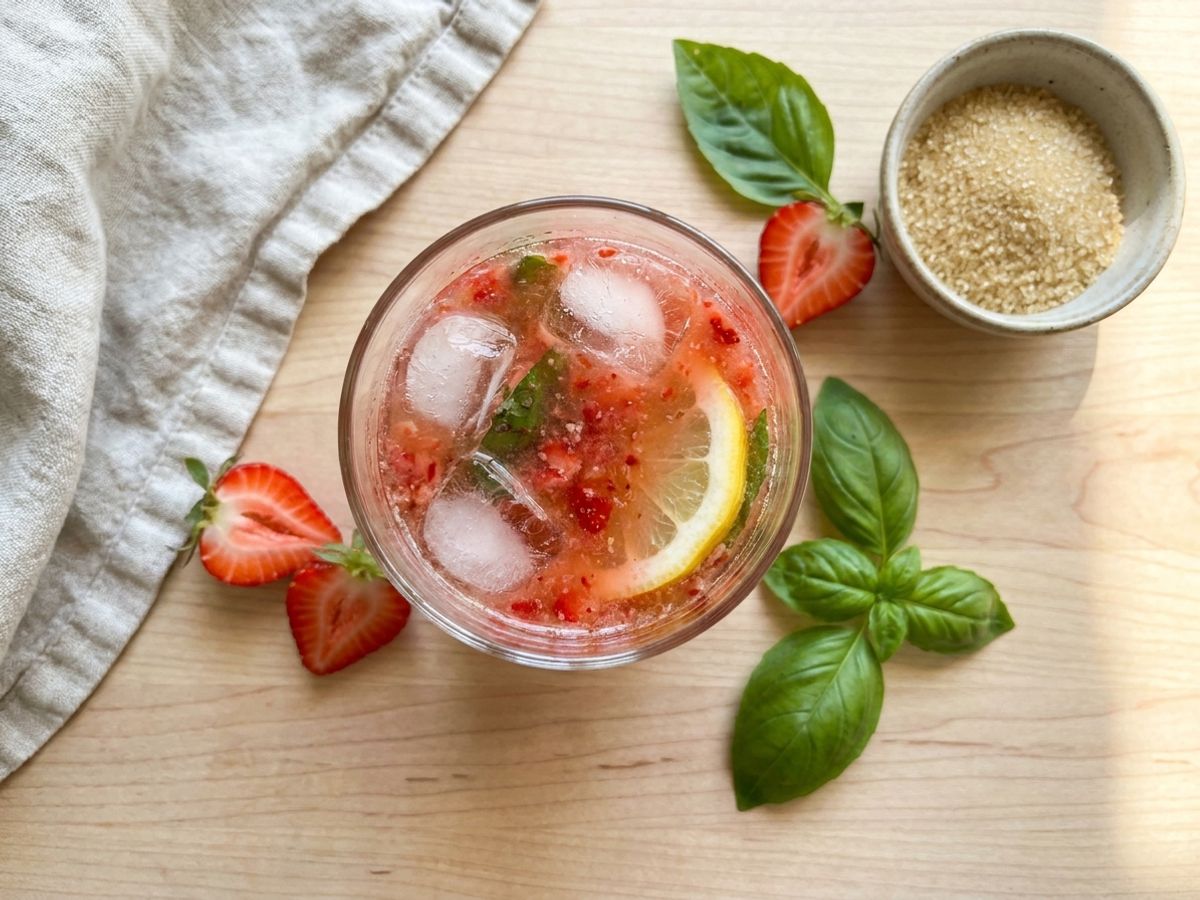
Ingredients
- 2 cups (300 g) fresh strawberries, hulled and halved
- 1/2 cup (120 ml) fresh lemon juice (from about 3 lemons)
- 1/2 cup (100 g) cane sugar
- 1/2 cup (120 ml) water (for simple syrup)
- 1/4 cup (about 15 to 20) fresh basil leaves, plus sprigs for garnish
- 3 cups (720 ml) cold water
- Ice cubes
- Optional: 1 to 2 cups plain sparkling water, to top
- Lemon slices and extra strawberries, for garnish
Instructions
Simple syrup
- In a small saucepan, combine the cane sugar and 1/2 cup water. Bring to a low simmer over medium heat, stirring until the sugar fully dissolves, about 3 to 4 minutes.
- Remove from heat and let cool for at least 10 minutes. This is the only cooking step, and it helps the sugar dissolve so the lemonade isn't gritty.
Strawberry base
- Add the hulled strawberries to a blender or food processor. Pulse until you have a smooth puree, about 20 to 30 seconds.
- For a clearer lemonade, pour the puree through a fine-mesh strainer into a large pitcher, pressing with a spatula to extract the juice. For a fuller, pulpier drink, skip the strain and pour the puree straight in.
Muddle basil
- Add the basil leaves to the pitcher. Muddle gently for 10 to 15 seconds. Press and twist to bruise the leaves and release the oils. Stop before the leaves shred; you want fragrant, not pulverized.
Build the pitcher
- Set aside 2 tablespoons of the simple syrup. Pour the lemon juice, the rest of the cooled syrup, and the 3 cups cold water into the pitcher. Stir well to combine.
- Taste and adjust: stir in some of the reserved syrup if you want it sweeter, another splash of lemon if you want it sharper.
- Refrigerate for at least 30 minutes if you have the time. A cold pitcher keeps the ice from melting fast and diluting the drink.
Serve
- Fill 6 tall glasses with ice.
- Pour the lemonade over the ice, leaving an inch at the top if you plan to top with sparkling water.
- Add a splash of plain sparkling water to each glass for fizz, if using.
- Garnish with a lemon slice, a halved strawberry, and a basil sprig.
Tips & Substitutions
- Swap sugar for pure maple syrup. Use about 1/3 cup maple syrup in place of the simple syrup. It dissolves in cold liquid, so you can skip the saucepan, and it tastes a little deeper than cane sugar.
- Stick to plain sparkling water. On flavored seltzer labels, watch for apple, pear, or mango juice concentrate, inulin or chicory root fiber, honey or agave, high-fructose corn syrup, and polyols like sorbitol or xylitol. Plain sparkling water, club soda, or soda water are all fine.
- Use cane sugar or maple syrup instead of honey or agave. Honey is only low-FODMAP at about ½ teaspoon (4g) and agave is high in excess fructose, so neither suits a sweetened pitcher. Cane sugar, simple syrup, and pure maple syrup are the low-FODMAP sweeteners.
- If you're tracking serves, here's the strawberry amount per glass. Monash puts the low-FODMAP serve of strawberries at 5 medium (65 g). This pitcher uses 300 g across 6 glasses, or 50 g per glass, under that serve.
- Make it ahead. The full pitcher (minus ice and sparkling water) holds in the fridge for up to 24 hours. Stir before pouring, since the strawberry pulp will settle.
- Frozen version. Blend 2 cups of the finished lemonade with 2 cups of ice for 2 slushies. Serve immediately in chilled glasses.
- If some people want alcohol. The base pairs cleanly with 1 ounce (30 ml) of vodka or gin per glass; rum is not low-FODMAP in Monash testing. Add the alcohol to individual glasses, then top with lemonade.
 Join the waitlist
We're building a Low FODMAP Recipes app. Add your email and we'll let you know when it launches.
Why This Works
Strawberries are low-FODMAP in a typical serve. Monash lists fresh strawberries as low-FODMAP at 5 medium (65 g). This recipe spreads 300 g across 6 glasses, so each pour holds 50 g.
Lemon juice is low-FODMAP at this amount. Each glass holds about 20 ml of fresh lemon juice, its low-FODMAP serve.
Cane sugar keeps the sweetener simple. Cane sugar is low-FODMAP, and the 1/2 cup in this pitcher works out to under 1.5 tablespoons per glass.
Fresh basil adds the top note. The few basil leaves in each glass are a low-FODMAP amount, and they are what separates this from a plain strawberry lemonade.
Storage
The finished pitcher keeps in the fridge for up to 24 hours at 40°F (4°C) or below. The strawberry pulp will settle, so stir before pouring. Hold off on the ice and any sparkling water until serving so the lemonade doesn't get watered down, and the sparkling water stays fizzy. Simple syrup on its own keeps in a sealed jar in the fridge for about 2 weeks.
Not sure about an ingredient?
Our low FODMAP food list rates 600+ foods low, moderate or high, with the serving size behind each rating, so you can check any ingredient or swap in this recipe before you make it.
For educational purposes only. Not medical advice. Consult a healthcare professional for personal guidance.
References
- Starting the low FODMAP diet — Monash University FODMAP
- FODMAPs Checklist (Sweeteners, Drinks & More) — Kate Scarlata, RDN
- All About Low FODMAP Alcohol, Cocktails and Mocktails — FODMAP Everyday