

Spaghetti Bolognese
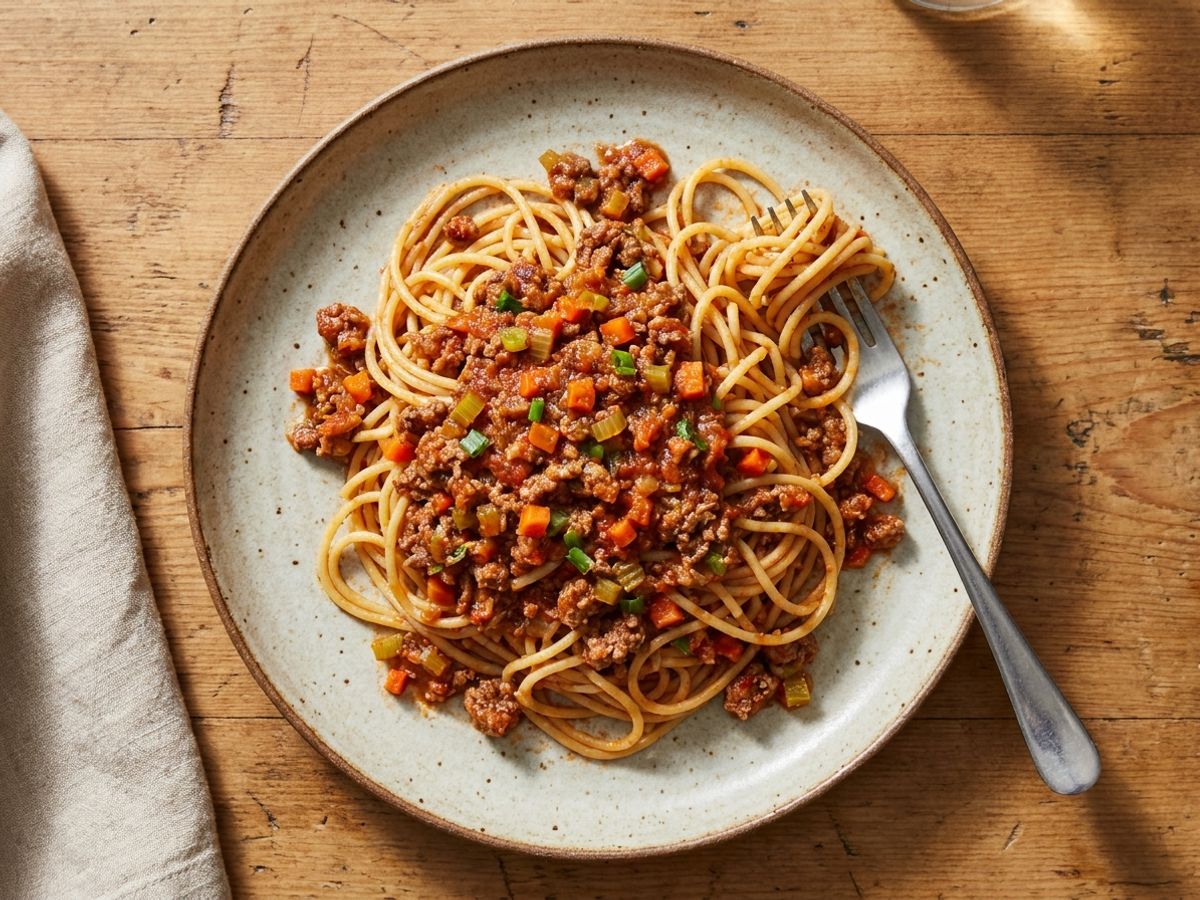
A low FODMAP bolognese of ground beef and pork, carrots, celery, red wine, and low FODMAP marinara over gluten-free spaghetti.
Ingredients
Sauce
- 3 tablespoons garlic-infused olive oil
- 1/2 cup scallion greens, thinly sliced (green tops only)
- 2 medium carrots, finely diced (about 1 cup)
- 1 small stalk celery, finely diced (about 75 g total, about 12 g per serving)
- 1 pound (450 g) ground beef (85/15)
- 1/2 pound (225 g) ground pork
- 1 teaspoon salt, plus more to taste
- 1/2 teaspoon freshly ground black pepper
- 2 tablespoons tomato paste
- 1/4 cup dry red wine (optional)
- 3 cups low-FODMAP marinara sauce (about 1 batch)
- 1/2 cup water
- 1 bay leaf
- 1 teaspoon dried oregano
- 1/2 teaspoon dried thyme
To Serve
- 12 oz (340 g) gluten-free spaghetti (Tinkyada, Jovial, or Barilla Gluten Free)
- 2 tablespoons fresh basil, torn
- 1/2 cup (about 40 g total) grated Parmesan, to finish
Instructions
Brown the Meat
- Warm the garlic-infused oil in a large Dutch oven or heavy skillet over medium heat.
- Add the scallion greens, carrots, and celery. Cook, stirring often, for 5 to 6 minutes, until the vegetables soften.
- Push the vegetables to one side. Add the ground beef and pork to the open space and break them apart with a wooden spoon.
- Season with salt and pepper. Cook, stirring occasionally, for 8 to 10 minutes, until the meat is browned and any liquid has cooked off.
Build the Sauce
- Stir in the tomato paste and cook for 1 to 2 minutes, until it darkens and coats the meat.
- Pour in the red wine (if using) and scrape up any browned bits from the bottom of the pan. Let it reduce for 1 minute.
- Add the marinara, water, bay leaf, oregano, and thyme. Stir to combine.
Simmer
- Bring to a gentle simmer, then reduce the heat to low. Cook uncovered for 40 to 45 minutes, stirring every 10 minutes or so, until the sauce thickens and the flavors meld.
- Fish out the bay leaf. Taste and adjust salt and pepper.
Serve
- While the sauce finishes, bring a large pot of salted water to a boil. Cook the gluten-free spaghetti according to the package directions, usually 1 to 2 minutes less than the box says for al dente. Drain, reserving 1/2 cup of pasta water.
- Toss the drained pasta with a ladle of sauce and a splash of pasta water to loosen. Divide into 6 bowls, top with more sauce, then finish with torn basil and grated Parmesan.
Tips & Substitutions
- Keep the meat split between beef and pork. The pork adds fat and a rounder flavor; straight ground beef works if that's what you have. Plain unseasoned beef and pork are low-FODMAP in typical serving sizes. Pre-seasoned blends and sausage meat often contain onion or garlic powder, so stick with plain ground.
- Avoid legume-based pasta. Chickpea, lentil, and bean pastas (Banza, Barilla Red Lentil) are high-FODMAP at standard serves. Rice, corn, and rice-quinoa blends are good gluten-free options here. Tinkyada brown rice, Jovial, and Barilla Gluten Free all work well.
- Keep the celery modest. Monash lists celery as low FODMAP at about 1 stalk (50g) per serve. One small stalk across 6 servings is about 12 g each, so there is room, but it adds mannitol if you stack it with mushrooms.
- Red wine is low-FODMAP at a splash. A 1/4 cup for the whole pot is about 2 teaspoons per serve. Swap in extra water or a low-FODMAP broth if you prefer.
- Check the label if you swap the marinara. Jarred pasta sauces often contain onion, garlic, inulin or chicory root, honey, or apple-juice concentrate. The linked recipe keeps it clean.
- If fat bothers your IBS, lean out the meat. 90/10 ground beef with a smaller pork share (or none) reduces the fat load. Fat isn't a FODMAP; this is only if you already know rich food bothers you.
- Simmer longer if you have time. 40 minutes is the minimum; an hour deepens the flavor. Add a splash of water if it tightens too much.
- Double the batch and freeze. The sauce freezes cleanly in 2-cup portions, so it's worth making twice the quantity while you have the pot out.
 Join the waitlist
We're building a Low FODMAP Recipes app. Add your email and we'll let you know when it launches.
Why This Works
Marinara and infused oil carry the aromatics. The low-FODMAP marinara already uses garlic-infused olive oil and scallion greens, and the bolognese layers the same aromatics on top. That covers the garlic-and-onion base of a classic ragu without the fructans.
Plain meat avoids hidden seasonings. Plain ground beef and plain ground pork are low-FODMAP in typical serving sizes. Pre-seasoned blends and most sausage meat carry onion or garlic powder, so start from plain and season the pot yourself.
Gluten-free spaghetti at about 1 cup cooked. Standard wheat pasta is high-FODMAP at normal serves because of fructans. Rice- and corn-based gluten-free spaghetti is low-FODMAP at about 1 cup cooked per serving.
Carrots and scallion greens fill in the mirepoix. Carrots are low-FODMAP in typical serves and pull their weight for sweetness. Scallion greens plus a small stalk of celery round out the usual onion-carrot-celery base.
Storage
Refrigerate the sauce in a sealed container for up to 4 days. Freeze in 2-cup portions for up to 3 months; thaw overnight in the fridge or reheat straight from frozen over low heat with a splash of water. Cook the pasta fresh each time. Leftover pasta gets gummy on the reheat.
Not sure about an ingredient?
Our low FODMAP food list rates 600+ foods low, moderate or high, with the serving size behind each rating, so you can check any ingredient or swap in this recipe before you make it.
For educational purposes only. Not medical advice. Consult a healthcare professional for personal guidance.
References
- All about onion, garlic and infused oils on the Low FODMAP Diet — Monash University FODMAP Blog
- Low FODMAP Spaghetti Bolognese — A Little Bit Yummy
- Low FODMAP Bolognese Sauce — FODMAP Everyday
- Low FODMAP Grocery List — Kate Scarlata, RDN