

Scrambled Eggs with Spinach and Feta
Low FODMAP scrambled eggs with baby spinach, feta, garlic-infused olive oil, fresh herbs, and lemon zest.
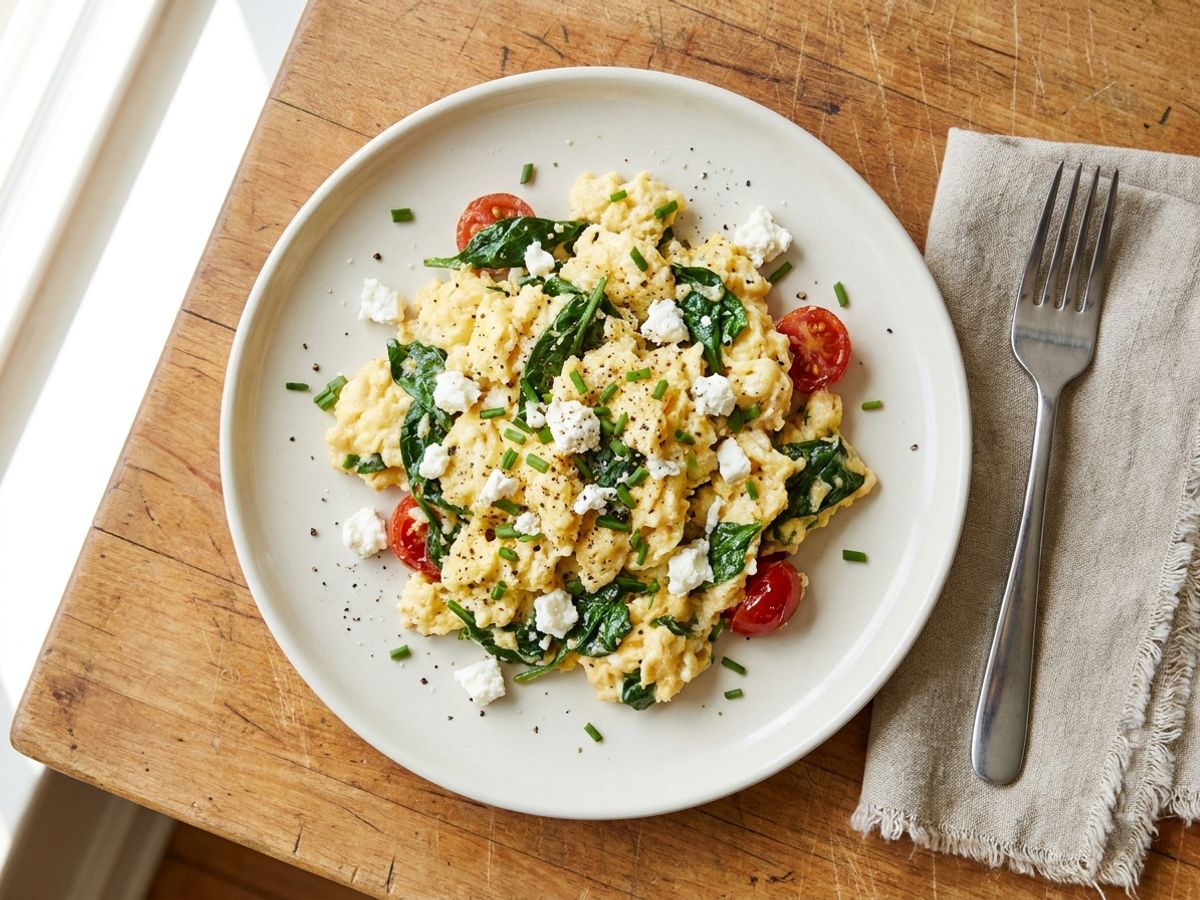
Ingredients
- 4 large eggs
- 3 cups (150 g) baby spinach, loosely packed
- 1/2 cup (80 g) crumbled feta, divided
- 1 tablespoon garlic-infused olive oil or unsalted butter
- 1 tablespoon lactose-free milk or water (optional)
- 1 tablespoon chopped fresh chives, dill, or parsley
- 1/4 teaspoon finely grated lemon zest (optional)
- Salt and freshly ground black pepper
- 6 cherry tomatoes, halved (optional)
Instructions
Prep the Base
- Crack the eggs into a bowl. Add the milk or water if using, a pinch of salt, and a few grinds of pepper. Whisk until fully blended with no streaks of white.
- Rinse and dry the spinach. Pat the cherry tomatoes dry if using.
Wilt the Spinach
- Heat the garlic-infused oil or butter in a nonstick skillet over medium heat.
- Add the spinach and a pinch of salt. Toss for 30 to 60 seconds, just until the leaves collapse and turn glossy. Push the wilted spinach to one side of the pan.
Soft-Scramble the Eggs
- Turn the heat to medium-low. Pour the eggs into the empty side of the pan.
- Let them sit for 15 seconds, then pull a silicone spatula across the bottom in slow folds. Keep folding every few seconds.
- When the eggs are about 80 percent set but still glossy, fold in the spinach and half the feta. Remove from the heat; residual warmth finishes them.
Finish and Serve
- Divide between two plates. Scatter the remaining feta, the fresh herbs, and the lemon zest over the top.
- Add the halved cherry tomatoes on the side if using. Eat right away while the curds are still soft.
Tips & Substitutions
- Sheet-pan version. For a pan version, see the sheet-pan eggs, which are scaled for a 9x13 pan.
- Dairy-free swap. Skip the feta entirely and finish with a pinch of flaky salt and extra lemon zest. If you just want less lactose rather than no dairy, a small crumble of aged parmesan or cheddar works instead of feta. Look up your cheese in the FODMAP Foods app to see how its rating changes with portion size.
- Protein variation. Swap two of the whole eggs for four egg whites to make it lighter, or fold in 2 ounces (60 g) of chopped cooked bacon, prosciutto, or plain rotisserie chicken (check the label for onion, garlic, inulin, and unnamed seasoning blends).
- Watch the spinach serve. Monash tests baby spinach as low-FODMAP up to 1.5 cups (75 g) per person. Three cups across two servings stays under that limit. English (mature) spinach also tests low and wilts down more, so you can use it interchangeably.
- Tomato serving size. Keep cherry tomatoes to a small serve: 3 tomatoes (about 45g) per person is low FODMAP, and 5 is already high. Six halved across two plates works. Common tomatoes (Roma, vine) also have a small low-FODMAP serving, so keep the portion modest.
- Skip onion and garlic. The infused oil adds the garlic flavor. Don't add chopped onion, shallot, or raw garlic; all high-FODMAP in typical amounts.
 Join the waitlist
We're building a Low FODMAP Recipes app. Add your email and we'll let you know when it launches.
Why This Works
Eggs make this filling. Eggs have no FODMAPs and no serve cap, so they work well for low-FODMAP breakfasts. Two eggs per person gives you around 12 grams of protein before the feta, which tends to keep you full longer than toast or cereal alone.
Spinach serve. Baby spinach is low-FODMAP at 1.5 cups (75 g) per person. Above that it can add up on FODMAPs, so keep the pan to 3 cups total for two servings. If you're cooking for one, halve the recipe rather than doubling the greens.
Feta is a low-lactose cheese. Feta tests low-FODMAP at 40 g per serve, roughly a quarter cup crumbled. It's naturally lower in lactose than fresh cheeses because most of it drains off in the brine. Other low-lactose options that play the same role: aged cheddar, parmesan, brie, camembert, and lactose-free goat cheese.
Garlic-infused oil. Fructans in garlic are water-soluble, not oil-soluble, so strained garlic-infused oil carries the flavor without them. Use your own infused oil or a store-bought Monash-certified version. If using homemade, strain out every piece of garlic, refrigerate, and use within 4 days, or buy a commercial acidified product for pantry storage.
Storage
Scrambled eggs are best eaten right away. They get rubbery in the fridge. If you need to make ahead, use the sheet-pan version and store squares in an airtight container for up to 3 days at 40°F (4°C) or below. Reheat in a 300°F (150°C) oven for 5 to 7 minutes, or in 20-second bursts in the microwave. Don't freeze.
Not sure about an ingredient?
Our low FODMAP food list rates 600+ foods low, moderate or high, with the serving size behind each rating, so you can check any ingredient or swap in this recipe before you make it.
For educational purposes only. Not medical advice. Consult a healthcare professional for personal guidance.
References
- Meat, Seafood, Eggs and Cooking Fats: Low FODMAP? — Monash University FODMAP
- Is Cheese Low FODMAP? — FODMAP Everyday
- Gluten Free Bread and the Low FODMAP Diet — A Little Bit Yummy