

Scalloped Potatoes
Low FODMAP scalloped potatoes baked in lactose-free heavy cream with Gruyère, fresh thyme, nutmeg, and garlic-infused olive oil.
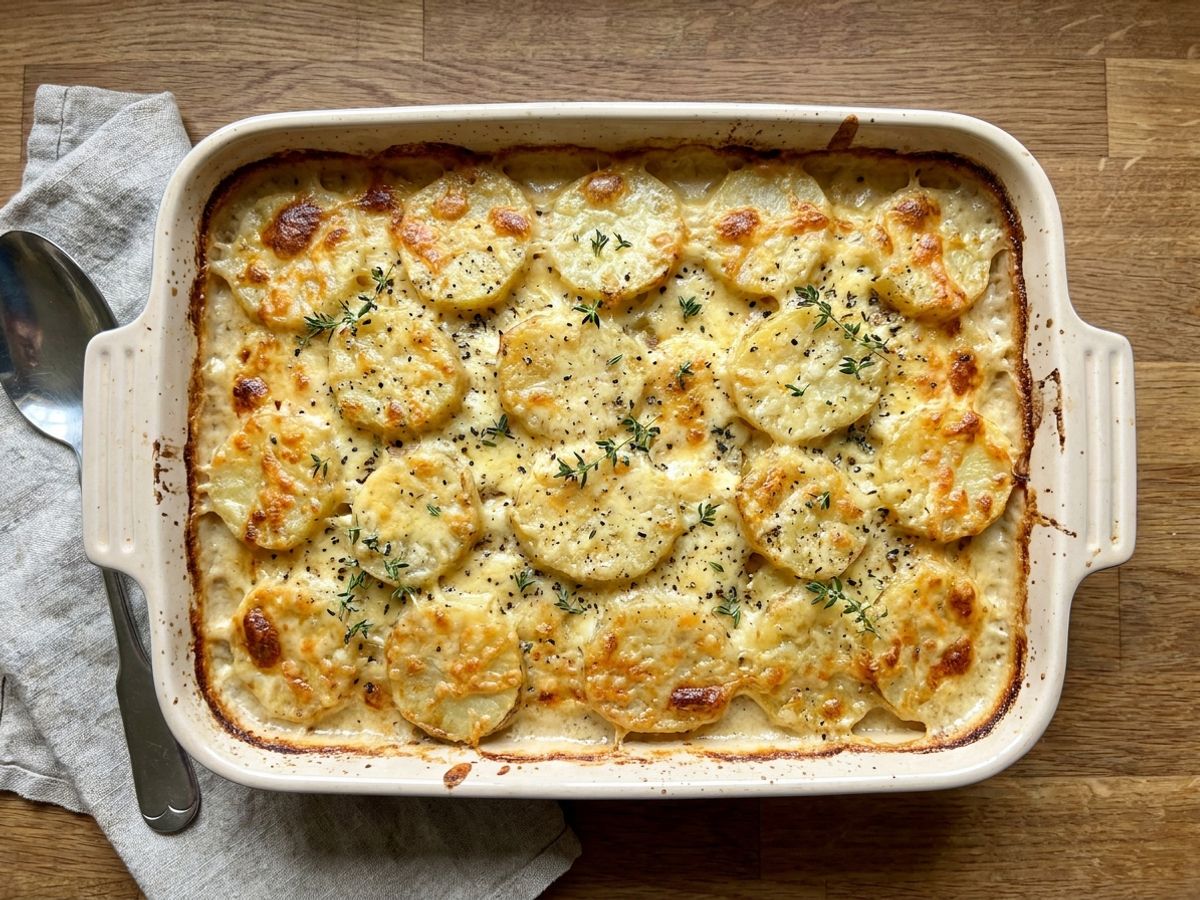
Ingredients
- 3 lb (1.35 kg) Yukon Gold or russet potatoes, peeled
- 2 tablespoons garlic-infused olive oil
- 1/4 teaspoon gluten-free asafoetida (hing), optional
- 4 cups (960 ml) lactose-free heavy cream
- 2 teaspoons fresh thyme leaves, plus a few sprigs for the top
- 1/8 teaspoon freshly grated nutmeg
- 1 1/2 teaspoons fine salt, plus more to taste
- 1/2 teaspoon freshly ground black pepper
- 11 oz (320 g) Gruyère or sharp cheddar, grated (about 3 cups loosely packed)
- 2 tablespoons unsalted butter, for greasing the dish
Instructions
Prep the Dish and Potatoes
- Heat the oven to 375°F (190°C). Rub a 9x13-inch (3-quart) baking dish generously with the butter, getting the corners and up the sides.
- Slice the peeled potatoes into rounds about 1/8 inch (3 mm) thick. A mandoline gives the most even slices. A sharp knife works if you keep a steady hand. Don't rinse the slices. The starch helps the sauce thicken and cling.
Infuse the Cream
- In a large saucepan, warm the garlic-infused oil over medium-low heat for 30 seconds. Sprinkle in the asafoetida if using and let it bloom for 10 seconds until fragrant.
- Pour in the heavy cream. Add the thyme leaves, nutmeg, salt, and pepper. Bring to a bare simmer, then turn off the heat. Don't let it boil or the cream can break.
- Add the potato slices to the warm cream, stirring gently to separate any stuck-together rounds and coat each slice. Let them sit in the cream for 5 minutes.
Layer and Bake
- Transfer about a third of the potatoes to the buttered dish with a slotted spoon, shingling them in overlapping rows. Spoon over enough cream to come halfway up the layer. Scatter with about a third of the cheese.
- Repeat for a second layer: potatoes, cream, cheese. Add the final layer of potatoes and pour the remaining cream evenly over the top until it comes up to just under the top layer (you may not need every drop; stop about 1/2 inch below the rim). Press the potatoes down so they're mostly submerged.
- Finish with the last of the cheese and tuck a few thyme sprigs into the top for color.
- Cover the dish tightly with foil (butter the underside if it'll touch cheese) and bake for 45 minutes.
Brown and Rest
- Remove the foil. Bake uncovered for another 25 to 30 minutes, until the top is deeply golden and a paring knife slides through the center with no resistance. The cream should be bubbling thickly around the edges.
- If the top hasn't browned to your liking, and your dish is broiler-safe (not glass), run it under the broiler for 1 to 2 minutes, watching it constantly.
- Let the gratin rest for 15 to 20 minutes before serving so it sets up. The cream thickens as it cools and the slices hold together cleanly. Cut too early and you get a soupy puddle on the plate.
Tips & Substitutions
- Use lactose-free heavy cream. Regular heavy cream is low FODMAP only in small amounts (about 1/4 cup per serve), and this dish has about 1/2 cup per serving. Lactose-free heavy cream bakes the same way; don't swap in light cream or half-and-half.
- Lighter dairy version. Replace the cream with 2 1/2 cups lactose-free whole milk plus 1/2 cup melted butter whisked together. It bakes up less rich and thick, so check the pan at the 45-minute mark.
- Gruyère or sharp cheddar. Both are aged, low-lactose cheeses listed as low FODMAP at 40 g, and 1/8 of the pan holds about 40 g. Use 1 1/4 teaspoons salt in the cream with cheddar, since it runs saltier.
- Asafoetida adds an onion-like flavor. A small pinch bloomed in the oil stands in for sliced onion layers. Use a gluten-free brand, since many are cut with wheat flour.
- Strain the garlic oil completely. Use garlic-infused oil with no garlic pieces in it, since the solids carry the fructans.
- Make ahead and slice evenly. Assemble up to a day ahead, refrigerate, and add 15 minutes to the covered bake. Keep slices 1/8 inch thick so they cook through and hold their shape.
 Join the waitlist
We're building a Low FODMAP Recipes app. Add your email and we'll let you know when it launches.
Why This Works
Potatoes are low FODMAP. Monash lists yellow and red potatoes as low FODMAP at typical serving sizes, so they can be the bulk of the dish.
Lactose-free cream keeps the sauce rich. At 1/2 cup per serving, regular heavy cream carries more lactose than its low FODMAP serve, so the lactose-free version is used.
Aged cheeses are low in lactose. Gruyère and sharp cheddar are low FODMAP at 40 g per serve, and their savory flavor does much of the work onion would.
Garlic-infused oil plus asafoetida replace the alliums. Garlic's fructans don't dissolve in oil, so strained garlic-infused oil adds garlic flavor, and asafoetida adds the onion-like note.
Storage
Refrigerate leftovers in a sealed container for up to 3 to 4 days at 40°F (4°C) or below. Reheat individual portions in the microwave covered, or rewarm a full pan covered with foil in a 325°F (165°C) oven for 20 to 25 minutes. A splash of extra cream or lactose-free milk over the top before reheating keeps it from drying out. Scalloped potatoes don't freeze well, since the cream separates and the potatoes turn grainy on thaw.
Not sure about an ingredient?
Our low FODMAP food list rates 600+ foods low, moderate or high, with the serving size behind each rating, so you can check any ingredient or swap in this recipe before you make it.
For educational purposes only. Not medical advice. Consult a healthcare professional for personal guidance.
References
- All About Cream & FODMAPs — FODMAP Everyday
- Lactose and dairy products on a low FODMAP diet — Monash University FODMAP Blog
- Is Cheese Low FODMAP? — FODMAP Everyday
- All About Onion, Garlic and Infused Oils on the Low FODMAP Diet — Monash University FODMAP Blog