

Salmon Rice Bowl
A low FODMAP salmon rice bowl of roasted salmon over jasmine rice with cucumber, carrot, avocado, nori, and a tamari ginger drizzle.
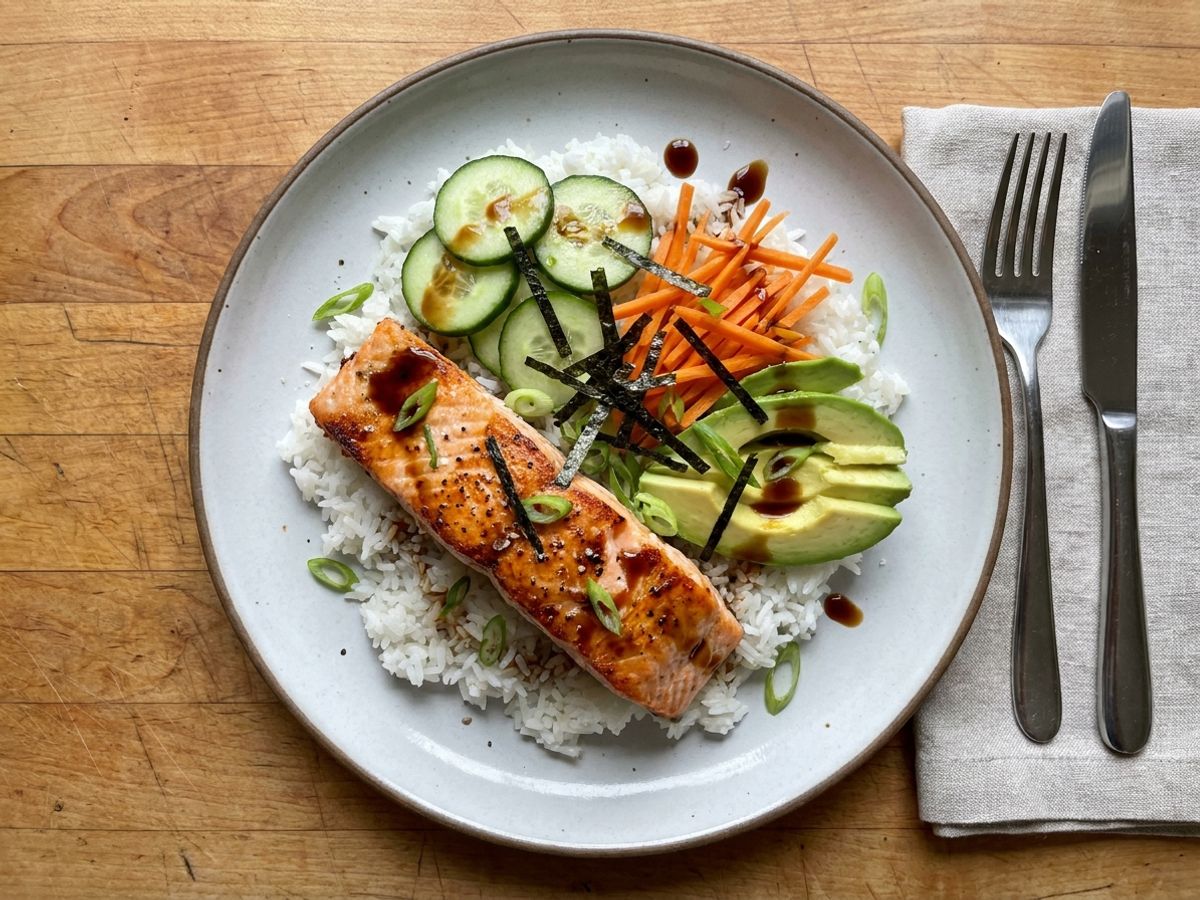
Ingredients
Salmon
- 2 salmon fillets (about 5 to 6 oz / 140 to 170 g each), skin on or off
- 1 tablespoon garlic-infused olive oil
- Pinch of salt
- Pinch of black pepper
Bowls
- 1 cup dry jasmine rice (makes about 3 cups cooked; 1 cup per serving)
- 1 cup cucumber, thinly sliced or diced
- 1 medium carrot, grated or cut into matchsticks
- 1/4 medium avocado, sliced (~15 g per bowl, 30 g total)
- 1 sheet nori, cut into thin strips with scissors
- 2 tablespoons scallion greens, thinly sliced
- 1 teaspoon sesame seeds or furikake (check the label)
Drizzle
- 2 tablespoons gluten-free tamari (1 tablespoon per serving)
- 1 tablespoon rice vinegar
- 2 teaspoons toasted sesame oil
- 1 teaspoon pure maple syrup
- 1 teaspoon fresh ginger, grated on a microplane
- Pinch of red pepper flakes or a few drops of chili oil (optional)
Instructions
Start the Rice and Heat the Oven
- Cook 1 cup dry jasmine rice according to package directions (usually 1 cup rice to 1 1/2 cups water, 15 minutes covered, 10 minutes off the heat). This yields about 3 cups cooked; you'll use 2 cups and save the rest.
- Heat the oven to 400°F (205°C) and line a small sheet pan with parchment.
Roast the Salmon
- Pat the salmon dry with a paper towel. Rub each fillet with garlic-infused oil on all sides and season with salt and pepper.
- Place the fillets skin-side down on the sheet pan and roast for 10 to 14 minutes depending on thickness, until the thickest part flakes with a fork. Cook to 145°F (63°C), the USDA target for fish.
- Let the salmon rest for 2 minutes, then break into large flakes with a fork. Discard the skin if you prefer.
Whisk the Drizzle
- Combine the tamari, rice vinegar, sesame oil, maple syrup, grated ginger, and pepper flakes in a small bowl. Whisk until the maple dissolves.
Assemble the Bowls
- Divide the warm jasmine rice between two bowls, about 1 cup per bowl.
- Arrange the cucumber, carrot, and avocado in neat piles on top of the rice.
- Top with flaked salmon.
- Scatter nori strips, scallion greens, and sesame seeds or furikake across the bowl.
- Divide the drizzle evenly between the two bowls.
Tips & Substitutions
- Swap proteins. Firm or extra-firm tofu (pressed and cubed, pan-fried in garlic-infused oil) works well for a vegetarian bowl. Monash tests firm tofu as low-FODMAP at 170 g per serving; tuna steak, cooked shrimp, or drained canned tuna or salmon also work.
- Keep the avocado measured. Avocado is low-FODMAP at 60 g, and this bowl uses about 15 g, so thin slices are plenty.
- Check your furikake. Most commercial furikake blends (sesame, nori, bonito flakes, sugar, salt) are fine, but a few add onion powder or garlic powder. Read the ingredient list. Bonito flakes themselves are low-FODMAP.
- Skip the sriracha. Huy Fong and most other sriracha brands contain garlic. Use chili oil (check for garlic on the label), red pepper flakes, or a dab of wasabi paste instead.
- Eat it cold or warm. The bowl works straight out of the oven or prepped ahead and eaten cold. If prepping ahead, keep the drizzle, avocado, and nori separate and combine at serving time so the nori stays crisp.
- Use brown rice or quinoa. Both are low-FODMAP at 1 cup cooked. Brown rice adds fiber and quinoa adds plant protein.
 Join the waitlist
We're building a Low FODMAP Recipes app. Add your email and we'll let you know when it launches.
Why This Works
Plain salmon has no FODMAP carbohydrates. In a fish bowl, FODMAPs usually come from the sauce, so keeping the drizzle homemade with tamari, ginger, and sesame oil keeps garlic and onion out of the bowl, which is the usual problem with bottled teriyaki and poke sauces.
Tamari instead of soy sauce. Soy sauce is brewed with wheat. Gluten-free tamari is made from soybeans without wheat and is low-FODMAP at about 1 tablespoon (20mL) per serve. Each bowl gets 1 tablespoon of tamari in its share of the drizzle; check the label for inulin or added sweeteners.
Serving sizes stay inside Monash ranges. Jasmine rice (1 cup cooked per serving), cucumber, carrot, nori, and scallion greens are all low-FODMAP at the portions used here. The 15 g of avocado per bowl is well under its 60 g serve.
Garlic-infused oil adds garlic flavor. Garlic's fructans don't dissolve in oil, so garlic-infused olive oil gives the salmon a roasted-garlic finish without the FODMAPs.
Storage
Refrigerate components separately in sealed containers for 2 to 3 days. The salmon, rice, and vegetables keep well; avocado and nori are best added fresh at serving time. The drizzle holds for up to a week in the fridge. Don't freeze it; the cucumber and avocado turn watery on the thaw. Reheat the salmon and rice to 165°F (74°C) if eating it warm.
Not sure about an ingredient?
Our low FODMAP food list rates 600+ foods low, moderate or high, with the serving size behind each rating, so you can check any ingredient or swap in this recipe before you make it.
For educational purposes only. Not medical advice. Consult a healthcare professional for personal guidance.
References
- All about onion, garlic and infused oils on the Low FODMAP Diet — Monash University FODMAP Blog
- Soy and the Low FODMAP Diet — Kate Scarlata, RDN
- Avocado and FODMAPs — Monash University FODMAP Blog