

Roasted Parsnips with Maple
Low FODMAP roasted parsnips glazed with maple syrup and garlic-infused olive oil with thyme and rosemary.
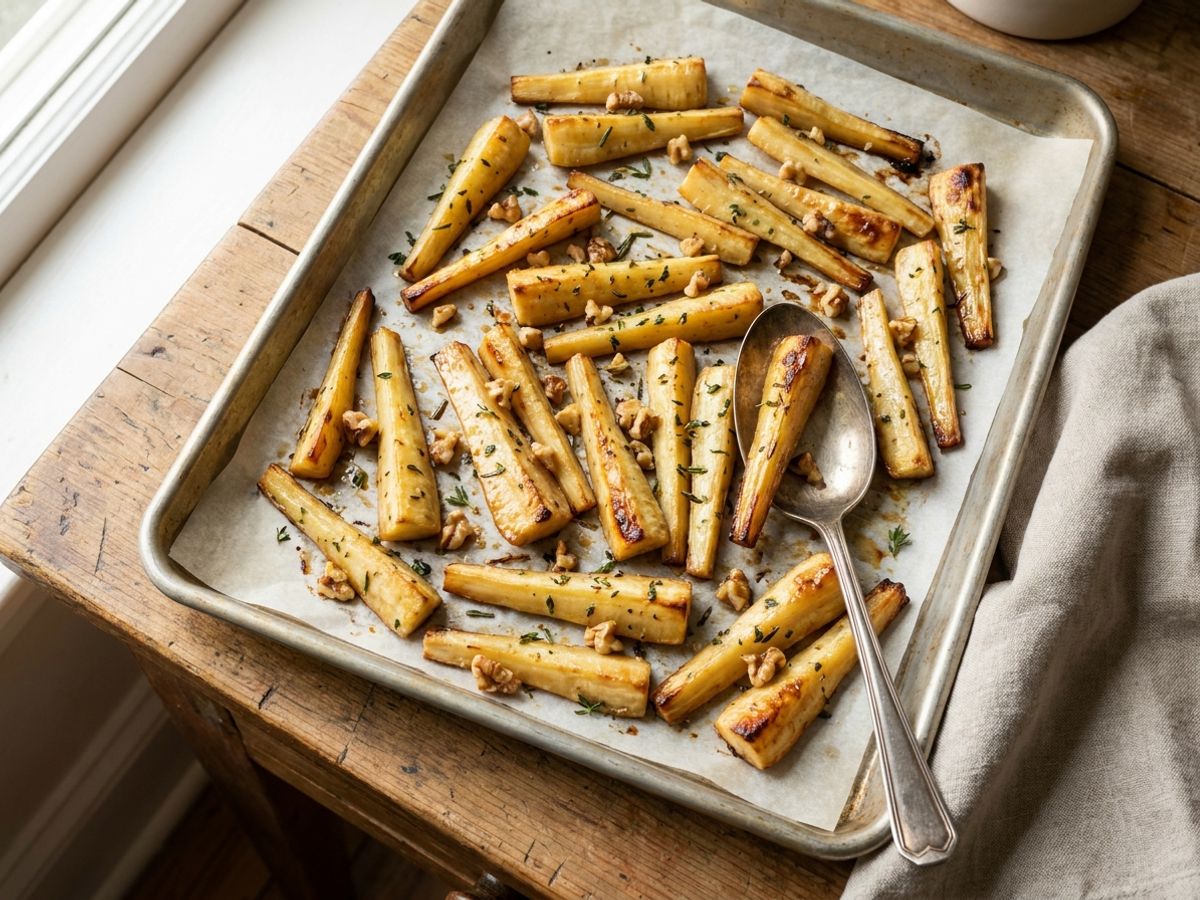
Ingredients
- 1 lb 5 oz (600 g) parsnips, peeled and trimmed
- 3 tablespoons garlic-infused olive oil
- 2 tablespoons pure maple syrup (no honey)
- 1 teaspoon fine salt
- Freshly ground black pepper
- 1 teaspoon fresh thyme leaves
- 1 teaspoon fresh rosemary, finely chopped
- Up to 240 g walnuts (30 g per serving), roughly chopped, optional
Instructions
Prep
- Heat the oven to 425°F (220°C). Line a rimmed sheet pan with parchment.
- Peel the parsnips. Cut into 2-inch batons about 1/2 inch thick. If the core is woody on older, thicker parsnips, halve each piece lengthwise and cut out the tough inner core. Aim for even thickness so the pieces cook at the same rate.
Roast
- Toss the parsnips on the sheet pan with the garlic-infused oil, salt, pepper, thyme, and rosemary until evenly coated.
- Spread in a single layer with space between pieces. Crowding steams them instead of roasting.
- Roast for 25 minutes, tossing once at the halfway mark.
- Drizzle the maple syrup over the parsnips and toss to coat. Return to the oven for 8 to 10 minutes, until the edges are deeply browned and a paring knife slides in easily.
Finish
- If using walnuts, scatter the chopped walnuts over the parsnips in the last 3 minutes of roasting so they warm and toast lightly without burning.
- Transfer to a serving dish and add a final grind of black pepper.
Tips & Substitutions
- Stick to the 75 g serving size. Monash lists parsnips as low-FODMAP at 75 g per serve, and larger servings can be higher-FODMAP. This recipe is sized for that serving: 600 g across 8 servings lands right at 75 g each. If you're keeping it low-FODMAP, don't serve bigger portions.
- Swap woody herbs freely. Sage or oregano work in place of the thyme and rosemary. Use about 1 teaspoon chopped fresh total. Add them before roasting so they crisp and release their oil.
- For a savory version, leave out the maple. The dish works without it; increase the salt by a pinch and add a squeeze of lemon at the end. Maple syrup is low-FODMAP at 1 tablespoon per serve, so the 2 tablespoons spread across 8 servings is well under the limit.
- Walnuts are optional. Monash lists walnuts as low-FODMAP at 30 g per serve, which is what this recipe targets. Leave them off for a nut-free version or if you're serving anyone with a tree-nut allergy.
- Don't substitute honey or agave. Honey is high-FODMAP at common serving sizes because of excess fructose and fructans, and agave is low only at about 1 teaspoon (5g), with excess fructose above that. Maple syrup is the clean swap.
- Don't use regular olive oil plus garlic powder. Garlic powder is concentrated fructans and high FODMAP at typical culinary amounts. Use garlic-infused oil instead.
 Join the waitlist
We're building a Low FODMAP Recipes app. Add your email and we'll let you know when it launches.
Why This Works
Parsnips are low-FODMAP at 75 g per serve. Sorbitol is the main FODMAP here, and bigger portions can be higher-FODMAP. At 75 g (about two-thirds of a medium parsnip), the serve stays in the green range. Going larger pushes into moderate or high territory, so portioning matters more here than with carrots or zucchini.
Maple syrup works well here. Pure maple syrup tests low FODMAP at 1 tablespoon per serve, while honey (low only at about ½ teaspoon) and agave are high FODMAP at the amount a glaze needs.
Garlic-infused oil adds depth without the fructans. Fructans aren't oil-soluble, so they stay with the solids when you strain the oil. That's what keeps the oil low-FODMAP. See the full method in the garlic-infused olive oil recipe.
Two-stage roasting prevents burnt sugar. Maple syrup added at the start will scorch before the parsnips cook through. Roasting plain first and glazing in the last 10 minutes lets the parsnips soften and brown, and keeps the thyme and rosemary aromatic without scorching.
Storage
Refrigerate in a sealed container for up to 4 days at 40°F (4°C) or below. Reheat in a 400°F oven or a hot skillet for a few minutes to recover the crisp edges; the microwave softens them but works in a pinch. Roasted parsnips don't freeze well. The texture turns mealy, so plan to eat them within a few days.
Not sure about an ingredient?
Our low FODMAP food list rates 600+ foods low, moderate or high, with the serving size behind each rating, so you can check any ingredient or swap in this recipe before you make it.
For educational purposes only. Not medical advice. Consult a healthcare professional for personal guidance.
References
- All about onion, garlic and infused oils on the Low FODMAP Diet — Monash University FODMAP Blog
- Low FODMAP Vegetables — Kate Scarlata, RDN