

Pulled Pork
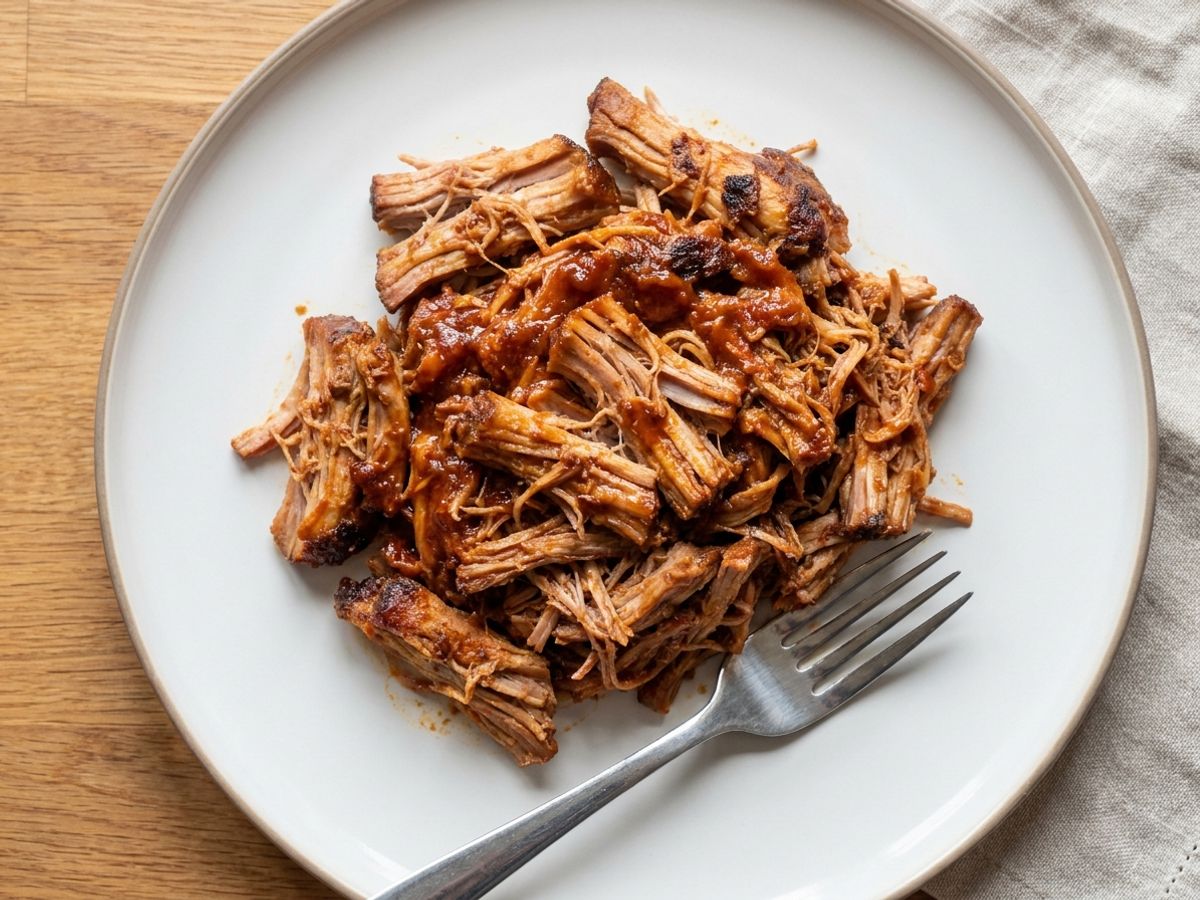
Low FODMAP slow-cooker pulled pork with a brown sugar, smoked paprika, and cumin rub and a scratch tomato BBQ sauce.
Ingredients
For the spice rub and pork
- 4 lb (1.8 kg) boneless pork shoulder (Boston butt), large fat cap trimmed
- 2 tbsp garlic-infused olive oil
- 2 tbsp light brown sugar
- 1 tbsp smoked paprika
- 2 tsp fine salt
- 1 tsp ground cumin
- 1 tsp mustard powder
- 1 tsp ground black pepper
- 1/2 tsp cayenne pepper (optional)
For braising
- 1/2 cup (120 ml) low-FODMAP chicken broth or water
- 2 tbsp apple cider vinegar
- Green tops of 2 scallions or 1 leek (green part only, for aroma)
For the BBQ sauce
- 1 cup (240 ml) canned crushed tomatoes or tomato passata
- 2 tbsp tomato paste (this is the Monash-tested low-FODMAP serving, so keep it to 2 tbsp for the whole batch)
- 3 tbsp light brown sugar
- 2 tbsp pure maple syrup
- 3 tbsp apple cider vinegar
- 1 tbsp garlic-infused olive oil
- 2 tsp yellow or Dijon mustard
- 1 tsp smoked paprika
- 1/2 tsp salt
- Black pepper to taste
Instructions
Season the pork
- Pat the pork dry with paper towels. Rub the garlic-infused oil over all surfaces.
- Stir together the brown sugar, smoked paprika, salt, cumin, mustard powder, black pepper, and cayenne. Press the rub evenly over the meat.
- For deeper flavor, cover and refrigerate for 1 hour or up to overnight. You can also cook right away.
Slow cook
- Scatter the scallion or leek greens across the bottom of the slow cooker and pour in the broth and apple cider vinegar. Set the pork on top, fat side up.
- Cover and cook on LOW for 8 hours (or HIGH for about 5 hours). The pork is safe once it reaches 145°F, but for meat that shreds you want it closer to 195 to 205°F, when the connective tissue has broken down.
- Lift the pork onto a board or tray and let it rest for 15 minutes. Fish out and discard the scallion or leek greens.
Make the sauce and shred
- While the pork rests, combine all the BBQ sauce ingredients in a small saucepan. Simmer over medium-low heat for 8 to 10 minutes, stirring, until slightly thickened. Taste and adjust salt or vinegar.
- Skim and discard most of the fat from the cooking liquid, reserving the lean juices underneath.
- Shred the pork with two forks, discarding any large pockets of fat. Moisten with a few spoonfuls of the reserved cooking juices, then toss with the BBQ sauce a little at a time until coated to your liking.
Tips & Substitutions
- No garlic or onion powder. The rub gets its savory depth from smoked paprika, cumin, and mustard, while the garlic note comes from garlic-infused oil, since the fructans in garlic are water-soluble and do not carry into oil.
- Oven or Dutch oven method. No slow cooker? Braise the seasoned pork covered in a Dutch oven at 300°F for 4 to 5 hours, checking that the liquid does not run dry.
- Skip bottled BBQ sauce. Most jarred versions list onion, garlic, and high-fructose corn syrup, so the scratch sauce here keeps it low-FODMAP.
- Onion flavor from greens only. Use the green tops of scallions or leeks for aroma and discard the white bulbs, which hold the fructans.
- Sweetener swaps. Maple syrup, brown sugar, or white sugar all work. Avoid honey, agave, and polyol "sugar-free" sauces sweetened with sorbitol or xylitol.
- Serving ideas. Pile it onto gluten-free buns, over rice, or with a cabbage slaw (common green or red cabbage is low FODMAP at about 75g per serve; savoy cabbage has a smaller serve).
 Join the waitlist
We're building a Low FODMAP Recipes app. Add your email and we'll let you know when it launches.
Why This Works
- Plain pork shoulder has no FODMAPs. Unseasoned meat is pure protein and fat, so the cut itself contributes nothing to worry about. The FODMAP risk lives entirely in the rub, sauce, and add-ins.
- Garlic-infused oil, not bulbs. Infusing oil captures garlic flavor while leaving the fructans behind, which is the standard low-FODMAP way to get that taste.
- A scratch tomato sauce keeps portions in check. Tomato products carry fructose, so capping the tomato paste at 2 tbsp for the whole batch and diluting the crushed tomatoes across 8 servings keeps each plate within tested amounts.
- Maple syrup and cane sugar instead of honey or HFCS. These sweeteners are low-FODMAP at the small amounts used here, unlike honey and high-fructose corn syrup, which are high in excess fructose.
Storage
Store cooled pulled pork in an airtight container in the fridge for up to 4 days, or freeze for up to 3 months. Reheat gently on the stovetop or in the microwave with a splash of broth or water to loosen it. Portion into single servings before freezing so you can thaw only what you need. If you plan to pair it with higher-FODMAP sides, look them up in the FODMAP Foods app to see how their ratings change with portion size.
Not sure about an ingredient?
Our low FODMAP food list rates 600+ foods low, moderate or high, with the serving size behind each rating, so you can check any ingredient or swap in this recipe before you make it.
For educational purposes only. Not medical advice. Consult a healthcare professional for personal guidance.
References
- All about onion, garlic and infused oils on the Low FODMAP Diet — Monash University FODMAP Blog
- Are Tomatoes & Tomato Products Low FODMAP? — FODMAP Everyday
- Safe Minimum Internal Temperature Chart — USDA Food Safety and Inspection Service