

Protein Smoothie (Whey Isolate)
A low FODMAP protein smoothie of whey protein isolate, blueberries, lactose-free or almond milk, maple syrup, and vanilla.
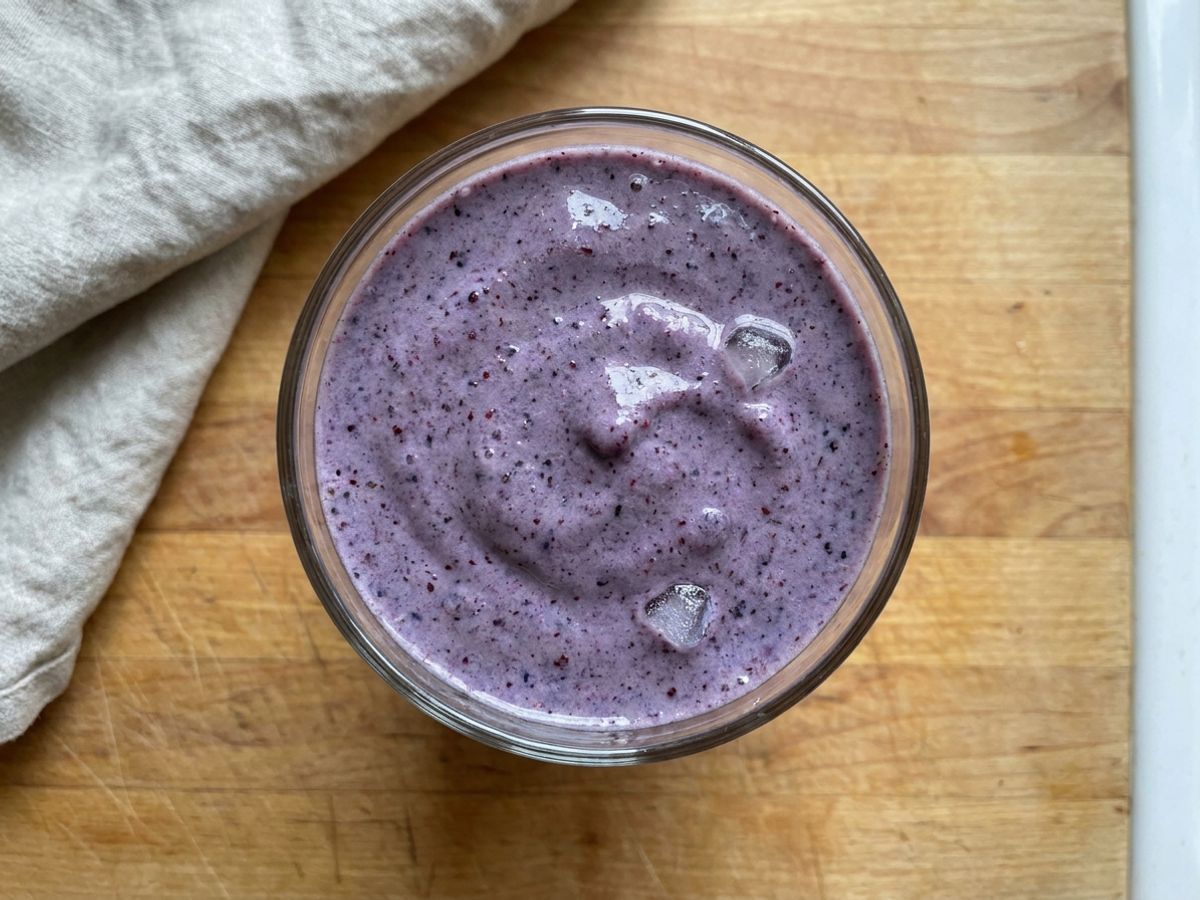
Ingredients
- 1 scoop (about 25 to 30 g) plain or vanilla whey protein isolate, with no inulin, chicory root, FOS, or polyol sweeteners (sorbitol, mannitol, xylitol, maltitol, isomalt)
- 1/2 cup (about 75 g) blueberries, fresh or frozen
- 1 cup (250 ml) lactose-free cow's milk or unsweetened almond milk
- 1/2 cup ice (skip if using frozen berries)
- 1 teaspoon pure maple syrup (optional)
- 1/2 teaspoon pure vanilla extract (optional, if using plain whey)
Instructions
Blend
- Add the milk to the blender first, then the whey isolate, blueberries, ice, maple syrup, and vanilla.
- Blend on high for 45 to 60 seconds, until fully smooth and no protein-powder clumps remain. Scrape down the sides once if needed.
- Pour into a glass and drink right away. Whey thickens as it sits and the texture gets chalky past about 10 minutes.
Tips & Substitutions
- Use whey isolate, not whey concentrate. Isolate is very low in lactose; concentrate carries more and needs a lactose-free label. Flavored tubs can add inulin, chicory root or polyol sweeteners, so read the label. Examples of whey isolate brands: Isopure, Naked Whey Isolate, and Now Sports Whey Isolate. Check the label; "whey protein" with no "isolate" qualifier is usually concentrate.
- Read plant-protein labels. Many plant-protein blends add inulin, chicory root fiber or polyol sweeteners like xylitol or sorbitol. If you need a non-whey option, choose a certified low FODMAP product.
- Chocolate peanut butter variation. Swap the blueberries for 2 tablespoons (about 32 g) pure peanut butter and 2 heaping teaspoons (about 8 g) unsweetened cocoa or cacao powder. Use chocolate whey isolate if you have it, plain otherwise.
- Green variation. Swap the blueberries for 1 cup spinach and half a firm-yellow banana (about 50 g). Add a kiwi for sweetness if you want it.
- Vanilla cinnamon variation. Skip the berries. Use vanilla whey isolate, add 1/4 teaspoon cinnamon, and blend with half a firm-yellow banana (about 50 g).
- Pick the milk. Lactose-free cow, unsweetened almond or macadamia (up to 1 cup / 250 ml), or rice milk (up to about 210 ml) all work. Oat milk is low only at about 100 ml and cashew milk is not low FODMAP; skip any milk with inulin, chicory root, or added "prebiotic fiber."
- Sweeten with maple. Honey is low FODMAP only at about ½ teaspoon (4g) and agave is high FODMAP at recipe amounts. A few drops of stevia or sucralose are fine if maple isn't your thing. Skip polyol sweeteners.
 Join the waitlist
We're building a Low FODMAP Recipes app. Add your email and we'll let you know when it launches.
Why This Works
Whey isolate is very low in lactose. Processing filters most of the lactose out, so a plain isolate fits a low FODMAP smoothie as long as nothing high FODMAP is added back in. Whey concentrate carries more lactose.
Protein-powder trap. Most plant-protein blends sold to gym and wellness shoppers contain inulin or chicory root fiber for fiber or sweetness. Both are high-FODMAP fructans, and they show up on labels of brands marketed as "clean" or "gut-healthy." Read the ingredient list every time, even on brands you trust.
Blueberry serve. Monash University testing puts blueberries at 1 cup (125 g) per serve, so half a cup sits comfortably inside it.
Milk matrix. Lactose is the FODMAP issue in regular cow's milk. Lactose-free milk and unsweetened almond milk are low FODMAP at 1 cup, which is the amount here.
Storage
Blend and drink right away; whey smoothies separate and turn chalky within an hour. If you need to hold one, cap it in a sealed container and refrigerate for up to 12 hours at 40°F (4°C) or below, then shake hard or re-blend before drinking. The frozen berries, maple, and dry whey can be portioned into a zip bag ahead of time; add the milk and ice at blend time.
Not sure about an ingredient?
Our low FODMAP food list rates 600+ foods low, moderate or high, with the serving size behind each rating, so you can check any ingredient or swap in this recipe before you make it.
For educational purposes only. Not medical advice. Consult a healthcare professional for personal guidance.
References
- Low FODMAP Protein Powders — FODMAP Everyday
- Low FODMAP Protein Powders — FODMAP Everyday
- 13 Low FODMAP Ingredient Swaps & Alternatives (incl. milk alternatives) — Gourmend Foods
- Blueberry — Monash University FODMAP
- Low FODMAP Blueberry Smoothie — A Little Bit Yummy