

Low-FODMAP Protein Bars (No-Bake, Clif-Style)
Low FODMAP no-bake protein bars made with rolled oats, puffed rice, whey or rice protein, cocoa, chia, peanut butter, maple syrup, and dark chocolate chips.
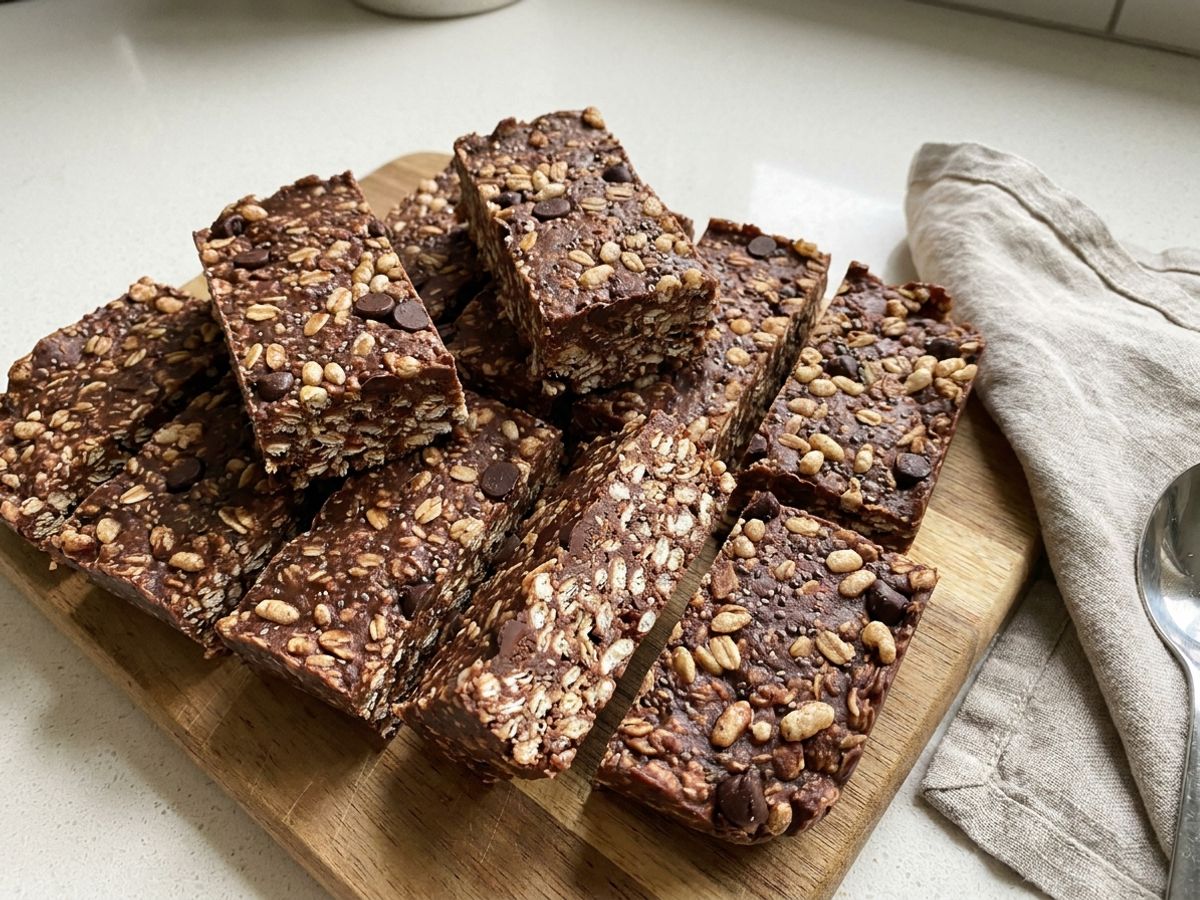
Ingredients
Makes 12 bars. Each bar comes out to roughly 1/4 cup dry oats, 1 1/3 tablespoons (about 22 g) peanut butter, and 2 teaspoons maple syrup when you cut the batch into 12 bars: all within typical Monash low serves for a single bar.
- 3 cups (270 g) rolled oats (not steel-cut; certified gluten-free if needed)
- 1 cup (30 g) unsweetened puffed rice cereal
- 3/4 cup (75 g) whey protein isolate or rice protein powder, unflavored or vanilla (no inulin, chicory root, FOS, agave, or polyol sweeteners such as sorbitol, mannitol, xylitol, maltitol, or isomalt)
- 1/4 cup (20 g) unsweetened cocoa powder
- 1/4 cup (24 g) chia seeds
- 1 cup (260 g) natural peanut butter, no honey or added sugar blends
- 1/2 cup (120 ml) pure maple syrup
- 1 teaspoon vanilla extract
- 1/2 teaspoon salt
- 1/2 cup (90 g) dark chocolate chips, no polyol sweeteners
Instructions
Mix the dry
- In a large bowl, whisk together the oats, puffed rice, protein powder, cocoa powder, chia seeds, and salt until no streaks of cocoa or protein remain.
Warm the wet
- In a small saucepan over low heat, stir the peanut butter and maple syrup together for 1 to 2 minutes until loose and pourable. Pull off the heat and stir in the vanilla. Don't simmer. You want it warm and pourable, not hot.
Combine and press
- Pour the wet mixture over the dry and fold with a silicone spatula until every oat is coated. The dough will be stiff; keep folding. If it looks dry, add 1 to 3 tablespoons of water (or a little more maple syrup) rather than more peanut butter; water helps the mix come together without adding more fat.
- Fold in the chocolate chips last so they don't melt into streaks.
- Line an 8-by-8-inch pan with parchment, leaving overhang on two sides. Scrape the dough in and press firmly with the back of a measuring cup or your palms (dampened with a little water) until the surface is flat and tightly packed. Loosely pressed bars crumble.
Chill
- Refrigerate the pan, uncovered, for at least 1 hour or until the slab is firm to the touch.
Cut
- Lift the slab out by the parchment overhang onto a cutting board. Trim the edges if you want clean sides, then cut into 12 bars (3 rows by 4 columns). A long, sharp knife pressed straight down works better than sawing.
Tips & Substitutions
- Start with one bar. Per bar, it's about 22 g oats, 22 g peanut butter (roughly 1 1/3 tablespoons), 10 ml maple syrup, 2 g chia, and under 2 g cocoa: all within typical Monash low-FODMAP serves. Two bars is a lot more fat and fiber at once; if you're not sure, stick with one first.
- Read the protein powder label carefully. The batch uses about 6 g of powder per bar. Whey protein isolate is very low in lactose; whey concentrate carries more. Avoid any powder with inulin, chicory root fiber, FOS, agave, crystalline fructose, polyol sweeteners, or "prebiotic fiber blend" in the ingredient list. Unflavored or vanilla is easiest to vet; chocolate blends sometimes sneak inulin in.
- Skip soy protein isolate unless the label is clean. Soy protein isolate is generally low-FODMAP, but many commercial bars use soy protein concentrate, which tests higher in FODMAPs. If the label just says "soy protein," treat it as uncertain.
- Don't use honey or agave. Honey is low FODMAP only at about ½ teaspoon (4g) and agave is high FODMAP at recipe amounts, and these bars need more sweetener than that. Brown rice syrup is the sweetener in most store-bought Clif-style bars; it's less of a direct FODMAP concern than honey, but commercial bars that use it almost always pair it with inulin, chicory root, or other fibers that are the real problem. Building your own with maple syrup keeps it simpler.
- Puffed rice is optional but worth it. Unsweetened puffed rice adds crunch and stretches the batch, and plain puffed rice is low FODMAP. Check the label: avoid cereals with inulin, chicory root fiber, honey, or "prebiotic fiber" blends. Plain puffed rice with no added sweetener is the target. If you skip it, bump the oats to 3 1/2 cups.
- Nut butter swaps. Almond butter has a smaller low FODMAP serve (about 1 tablespoon) than peanut butter, so it is not a 1:1 swap here; replace no more than half the peanut butter with it. Sunflower seed butter is not a straight nut-free swap: sunflower seeds are low FODMAP only at about 1 tablespoon, and a full cup across 12 bars is more than that per bar.
- Regular dark chocolate chips only. Plain dark chocolate is low-FODMAP at about 5 squares (25g). "Sugar-free" or keto chips sweetened with xylitol, sorbitol, maltitol, or isomalt are high FODMAP.
- Add-ins in small amounts. A tablespoon of chopped walnuts, pecans, or pumpkin seeds folded into the dough stays within serves. Dried cranberries work at 2 tablespoons across the whole batch; pick ones sweetened with cane sugar, not apple juice concentrate.
- Firmer bar. For a denser, chewier bar, stir in 2 tablespoons of oat flour or ground flaxseed with the dry ingredients.
 Join the waitlist
We're building a Low FODMAP Recipes app. Add your email and we'll let you know when it launches.
Why This Works
Oats per bar. Monash lists rolled oats as low FODMAP at 1/2 cup dry (52 g). This recipe spreads 3 cups (270 g) across 12 bars, about 22 g per bar.
Peanut butter is low-FODMAP in standard portions. Monash lists peanut butter as low at typical 1 to 2 tablespoon serves. The 1 cup across 12 bars puts each bar at roughly 1 1/3 tablespoons (about 22 g), well within that range. Labels matter more than the peanuts themselves; skip anything with honey, agave, or inulin in the ingredient list.
Maple syrup replaces the problem sweeteners. A standard Clif bar is built around brown rice syrup plus cane syrup, and the bars that market themselves as "gut-friendly" tend to pile on chicory root fiber and inulin on top. Maple syrup is low-FODMAP at 1 tablespoon, and splitting 1/2 cup across 12 bars keeps each bar well under that.
Chicory root fiber and inulin stay out. Most commercial "fiber-rich" protein bars use chicory root fiber or inulin to boost the fiber count on the label. Both are prebiotic fibers that are high-FODMAP at common bar-sized amounts. Building the fiber from oats, chia, and peanut butter keeps the bar compliant without them.
Whey isolate or rice protein keeps the protein cost low. Whey protein isolate is very low in lactose, and rice protein works for anyone avoiding dairy. At about 6 g per bar, either is a small amount; the label check is what matters. Either gets the bar to roughly 8 to 10 g of protein per serving without introducing the inulin that comes with most "gut-friendly" protein blends.
Chia and cocoa without pushing serves. 2 tablespoons of chia is a Monash low serve on its own, and spread across 12 bars each bar carries well under a teaspoon. Cocoa powder is low-FODMAP at 8 g per serve, and the 1/4 cup across the batch keeps each bar under 2 g.
Pressing and chilling does the work of baking. No-bake bars hold together through fat and moisture, not gluten. Warming the peanut butter with the maple syrup before mixing lets the wet coat every oat, and an hour in the fridge sets the fat so the slab cuts cleanly.
Storage
Wrap the cut bars individually in parchment or wax paper and store in an airtight container in the fridge for up to 1 week at 40°F (4°C) or below. For longer storage, freeze the wrapped bars in a freezer bag for up to 3 months. Thaw in the fridge the night before, or eat straight from the freezer for a firmer texture.
Not sure about an ingredient?
Our low FODMAP food list rates 600+ foods low, moderate or high, with the serving size behind each rating, so you can check any ingredient or swap in this recipe before you make it.
For educational purposes only. Not medical advice. Consult a healthcare professional for personal guidance.
References
- Low FODMAP grains (including oats) — Monash University FODMAP Blog
- Protein Powders and IBS — Monash University FODMAP Blog
- Low FODMAP Peanut Butter Granola — Kate Scarlata, RDN
- Sugar & Sweeteners on the Low FODMAP Diet — FODMAP Everyday