

Peanut Sauce
A low FODMAP peanut sauce of natural peanut butter, gluten-free tamari, lime, maple syrup, garlic-infused olive oil, sesame oil, and ginger.
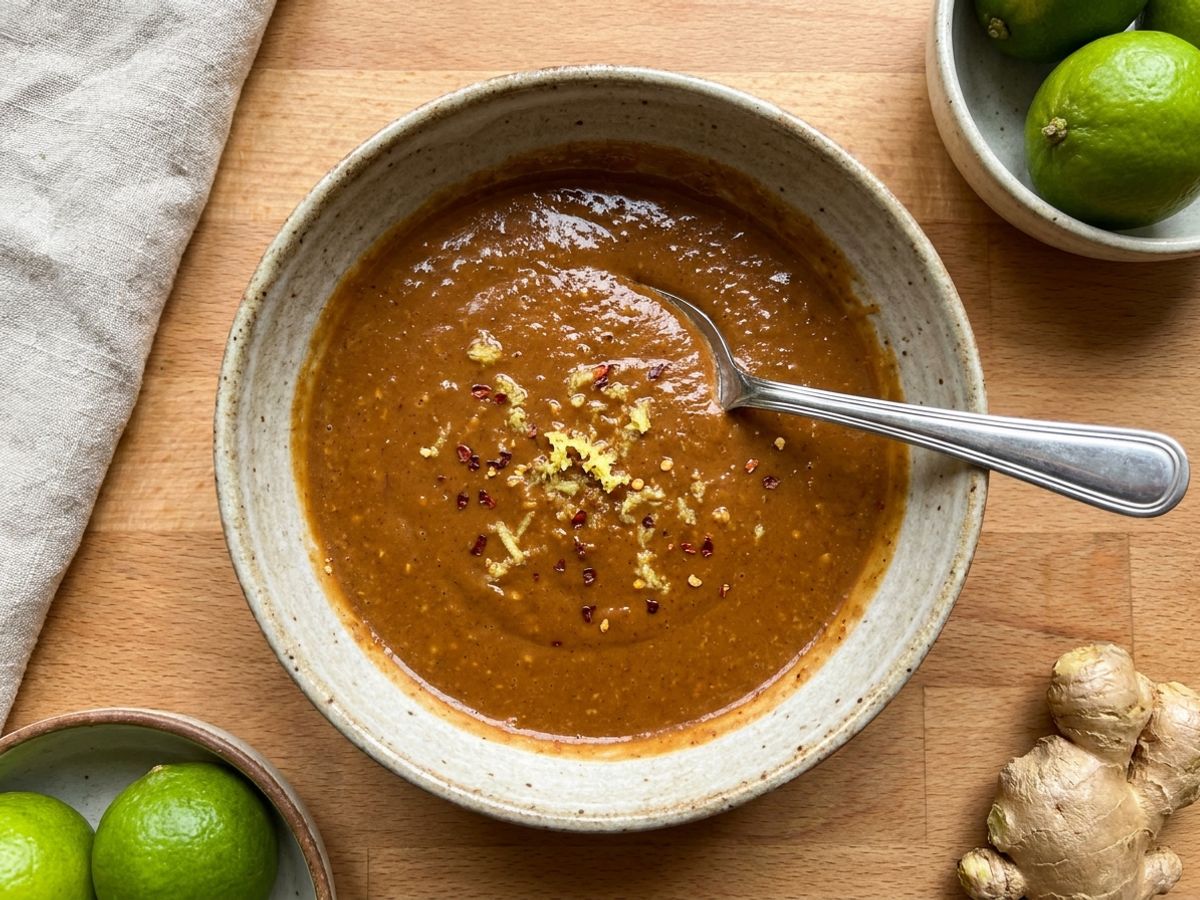
Ingredients
- 1/2 cup (130 g) natural smooth peanut butter (peanuts and salt only, no honey or high-fructose corn syrup). Monash lists peanut butter as low-FODMAP at 2 tbsp (50 g) per serving.
- 3 tbsp gluten-free tamari (low-FODMAP at about 1 tablespoon (20mL) per serving)
- 2 tbsp fresh lime juice (about 1 lime)
- 2 tbsp pure maple syrup (low FODMAP at 1 tbsp; this is about 1 tsp per serving)
- 1 tbsp garlic-infused olive oil
- 1 tbsp toasted sesame oil
- 1 tbsp finely grated fresh ginger
- 1 tbsp rice vinegar
- 1/4 to 1/2 tsp red pepper flakes, or 1 small fresh red chili, minced (optional)
- 4 to 6 tbsp warm water, to thin
- 2 tbsp scallion green tops, thinly sliced (green part only)
- 1 tbsp chopped roasted peanuts and a little lime zest, to finish (optional)
Instructions
Whisk the base
- In a medium bowl, combine the peanut butter, tamari, lime juice, and maple syrup. Whisk until the mixture looks smooth and slightly stiff.
- Add the garlic-infused oil, sesame oil, grated ginger, and rice vinegar. Whisk again until the sauce turns glossy.
Adjust the consistency
- Add the warm water 1 tablespoon at a time, whisking after each addition, until the sauce coats a spoon and pours in a slow ribbon. Use less water for a thick dip and more for a drizzle or noodle sauce.
- Stir in the red pepper flakes or fresh chili if using. Taste and balance: more lime for brightness, a little more maple for sweetness, a splash more tamari for salt.
Finish and serve
- Fold in half the scallion greens, then transfer the sauce to a serving bowl.
- Scatter the remaining scallion greens over the top with the chopped peanuts and lime zest. Serve over rice noodles, grilled chicken, tofu, or as a dip for cucumber and carrot sticks.
Tips & Substitutions
- Choose the right peanut butter. Look for a jar that lists only peanuts and maybe salt. Many spreads add honey, molasses, or high-fructose corn syrup, which raise the FODMAP load.
- Keep the garlic flavor, skip the fructans. The fructans in garlic are not oil-soluble, so garlic-infused oil carries the flavor without them. Use homemade garlic-infused olive oil or a commercial infused oil with no garlic pieces left in it.
- Use only the green tops. The green part of scallions is low in FODMAPs, while the white bulb holds the fructans, so slice it off and save it for something else.
- Mind the serving size. One-sixth of the batch holds about 22 g peanut butter, 1/2 tbsp tamari, and 1 tsp maple syrup, all under their low FODMAP serves (2 tbsp, 1 tbsp, and 1 tbsp). Look up peanut butter in the FODMAP Foods app to see how its rating changes with portion size.
- Try a different nut or seed butter. Almond butter (about 1 tbsp per serving) or sunflower seed butter work if peanuts are not for you. Tahini also works at up to about 1 tablespoon (20g) per serving.
- Turn it into a noodle or satay sauce. Thin with extra warm water for rice noodles, or leave it thick to brush over chicken skewers before grilling.
 Join the waitlist
We're building a Low FODMAP Recipes app. Add your email and we'll let you know when it launches.
Why This Works
- Garlic-infused oil, not the bulb. Fructans do not dissolve in oil, so strained garlic-infused oil carries the flavor without garlic pieces.
- Maple in place of honey. Honey is low FODMAP only at about ½ tsp, and larger amounts are high in excess fructose and fructans. Pure maple syrup is low FODMAP at 1 tbsp, and each serving here gets about 1 tsp.
- Green tops, not white bulb. Scallion greens give an oniony note while the fructan-heavy white base stays out of the bowl.
- Tamari keeps it gluten-free. Standard soy sauce is brewed with wheat, while gluten-free tamari gives the same salty depth. Tamari is low FODMAP at about 1 tablespoon (20mL) and soy sauce at about 2 tablespoons (40mL), both above the 1/2 tbsp per serving here.
Storage
Keep the sauce in an airtight jar in the fridge for up to 5 days (4 days if your garlic-infused oil is homemade). It thickens as it chills, so whisk in a tablespoon or two of warm water to loosen it before serving. Freezing is not recommended, since the emulsion tends to separate and turn grainy once thawed.
Not sure about an ingredient?
Our low FODMAP food list rates 600+ foods low, moderate or high, with the serving size behind each rating, so you can check any ingredient or swap in this recipe before you make it.
For educational purposes only. Not medical advice. Consult a healthcare professional for personal guidance.
References
- All about onion, garlic and infused oils on the Low FODMAP Diet — Monash University FODMAP Blog
- Sweeteners and the Low FODMAP Diet — Monash University FODMAP Blog
- How to Use Spring Onion (Green Onion) on the Low FODMAP Diet — A Little Bit Yummy