

Pad Thai
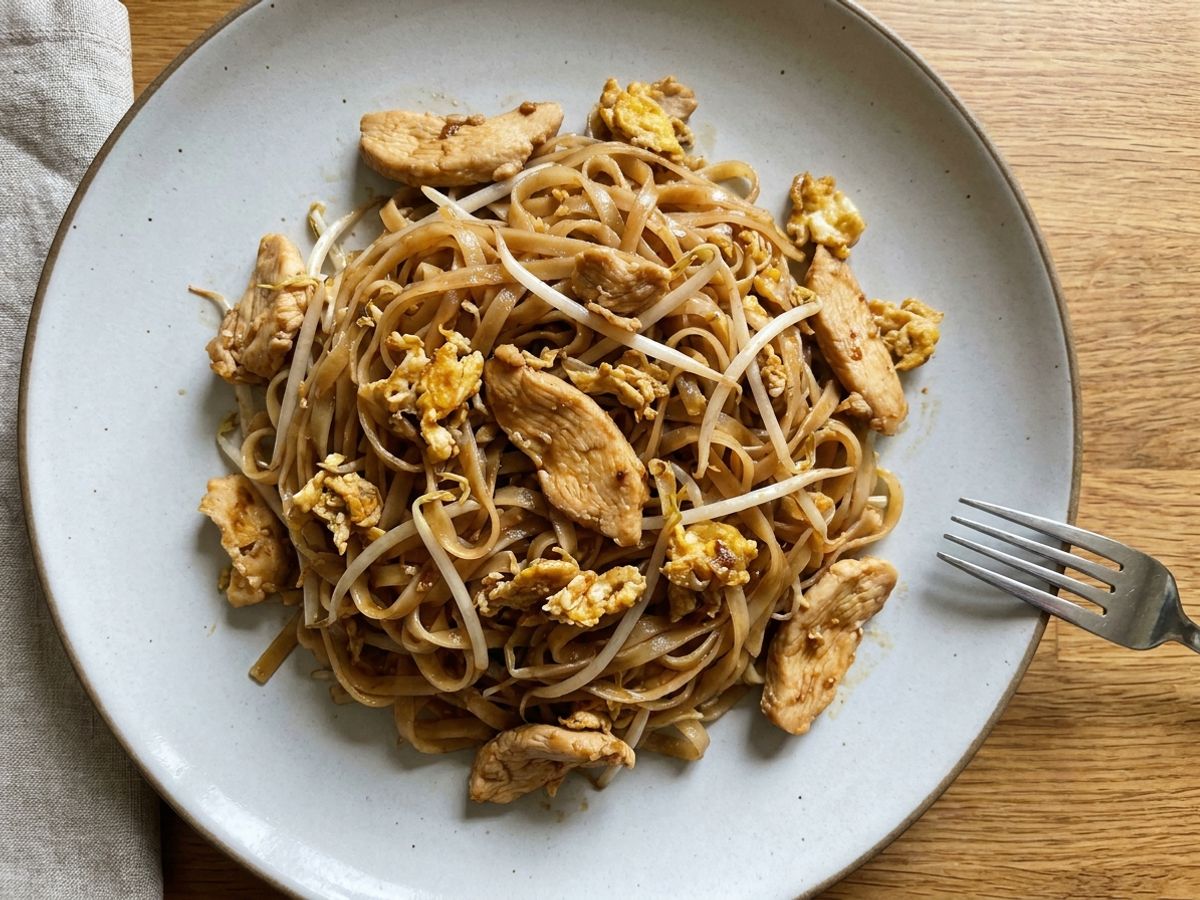
Low FODMAP pad thai with rice noodles, chicken, eggs, bean sprouts, peanuts, and a tamarind, tamari, and lime sauce.
Ingredients
Noodles
- 8 oz (225 g) flat rice noodles (pad thai width, about 1/4-inch)
Protein
- 1 lb (450 g) boneless skinless chicken breast or thigh, sliced thin against the grain
- 2 large eggs, lightly beaten
- Pinch of salt
Sauce
- 2 tablespoons pure tamarind paste (not concentrate, not "pad thai sauce")
- 3 tablespoons warm water
- 2 tablespoons gluten-free tamari
- 1 tablespoon garlic-free fish sauce (Red Boat is reliable)
- 2 tablespoons light brown sugar or palm sugar
- 1 tablespoon fresh lime juice
Stir-Fry
- 3 tablespoons garlic-infused olive oil, divided
- 1/2 cup scallion greens (~40 g), sliced into 1-inch pieces
- 2 cups fresh bean sprouts (~170 g, about 1/2 cup per serving)
To Serve
- 1/3 cup roasted unsalted peanuts, crushed (about 12 g per serving; Monash lists 32 peanuts, 28 g, as a low FODMAP serve)
- 1 lime, cut into wedges
- Extra scallion greens
- Fresh cilantro leaves (optional)
- Red pepper flakes or a pinch of ground Thai chili (optional)
Instructions
Soak the Noodles
- Place the rice noodles in a large bowl and cover with warm (not hot) water. Soak for 20 to 30 minutes, until pliable but still firm. They should bend easily around your finger but feel slightly chewy when bitten. They finish cooking in the pan. If your brand softens fast, check at 15 minutes.
- Drain and rinse with cool water to stop them from softening further. Set aside.
Mix the Sauce
- In a small bowl, stir the tamarind paste with the warm water until smooth and pourable.
- Whisk in the tamari, fish sauce, brown sugar, and lime juice until the sugar dissolves. Taste. It should taste sour first, then salty, then sweet. Adjust with a splash more lime or a pinch more sugar. Set aside.
Stir-Fry
- Heat 1 tablespoon garlic-infused oil in a large wok or wide skillet over high heat until it shimmers.
- Add the chicken with a pinch of salt. Spread in a single layer and let it sear for 1 minute, then stir and cook another 2 to 3 minutes until just cooked through (165°F / 74°C). Transfer to a plate.
- Add another tablespoon of oil. Pour in the beaten eggs, let them set for 10 seconds, then scramble quickly into soft curds. Slide onto the plate with the chicken.
- Add the final tablespoon of oil. Toss in the drained noodles and stir-fry for 30 seconds, separating them with tongs.
Finish
- Pour the sauce over the noodles. Toss constantly for 1 to 2 minutes until the noodles absorb the sauce and turn glossy and reddish-brown.
- Return the chicken and eggs to the pan. Add the scallion greens and half the bean sprouts. Toss for another 30 seconds. The sprouts should stay crisp.
- Divide among 4 plates. Top each with the remaining bean sprouts, crushed peanuts, a lime wedge, and cilantro or chili flakes if using. Serve immediately.
Tips & Substitutions
- Swap chicken for tofu or shrimp. Use 14 oz firm or extra-firm tofu, pressed and cubed, pan-fried in garlic-infused oil until golden on two sides before you cook the egg. For shrimp, use 1 lb peeled and deveined, and cook 1 to 2 minutes per side until pink, then remove. Silken tofu won't hold up to stir-frying. Stick with firm or extra-firm for a low-FODMAP swap.
- Use the sauce below instead of a bottled pad thai sauce. Most jarred "pad thai sauce" (including the widely distributed Thai Kitchen and Maesri versions) lists onion, garlic, or high-fructose corn syrup. The sauce in this recipe takes about 90 seconds to whisk. If you want to use a bottled version, check the label first.
- Peanut allergy. Swap the crushed peanuts for toasted pepitas (low FODMAP at about 3 tablespoons (30g) per serve) or sunflower seeds (1 tablespoon per serve). They give you a similar crunch. Avoid cashews and pistachios, which are high-FODMAP at small serves.
- Tamarind paste, not concentrate. Pure tamarind paste (sometimes labeled "tamarind puree" or "wet tamarind") is thick and fruity. Tamarind concentrate is reduced further and about twice as strong. If that's all you can find, use 1 tablespoon instead of 2 and add an extra tablespoon of water. Read the label either way: skip any tamarind product that lists onion, garlic, or high-fructose corn syrup.
- Make it spicier. Add a pinch of ground Thai chili or red pepper flakes to the sauce, or toss thin fresh chili slices in with the scallion greens. Avoid chili-garlic sauce and most sriracha-style blends; most contain garlic.
- Make it vegan. Use firm or extra-firm tofu, skip the eggs, and swap the fish sauce for an extra 1 teaspoon tamari plus a pinch of salt. Silken tofu won't hold up here.
 Join the waitlist
We're building a Low FODMAP Recipes app. Add your email and we'll let you know when it launches.
Why This Works
About bottled pad thai sauce. Walk the Asian aisle of any grocery store and you'll find five brands of pad thai sauce in squeeze bottles and jars. Read the labels and four of them list onion powder, garlic, or both, plus high-fructose corn syrup. This sauce uses tamarind, tamari, fish sauce, brown sugar, and lime. It's the usual base for pad thai, and it takes two minutes and a single bowl.
Garlic-free fish sauce. Fish sauce is naturally low-FODMAP (fermented anchovies and salt), but many supermarket brands now add garlic or onion extract. Red Boat is single-ingredient anchovy and salt and is the reliable pick. Check the label on any other brand. If it lists "flavoring" or "natural flavor," skip it.
Tamarind paste, not tamarind concentrate. Pure tamarind paste is low-FODMAP at 1/2 tablespoon per serve, which works out to 2 tablespoons across four plates. Tamarind concentrate (the syrupy kind in small plastic tubs) is reduced further and much more intense, so halve the volume if that's all you have. Avoid "pad thai tamarind sauce" in jars. Those are pre-sweetened and almost always contain onion.
Rice noodles and bean sprouts stay in portion. Flat rice noodles are low FODMAP at common cooked serves (around 1 cup per person), and each plate gets about 42 g of bean sprouts. Portioning into 4 plates at the pan (not the table) keeps each serving at those amounts.
Garlic-infused oil and scallion greens. Garlic's fructans don't dissolve in oil (when the oil is properly strained with no solid garlic pieces left in), and onion's fructans concentrate in the white bulb rather than the green tops. Garlic-infused olive oil and scallion greens carry the usual aromatic base without the FODMAP load. Commercially infused oil works, or strain homemade oil thoroughly.
Storage
Pad thai is at its crispest right after cooking; the noodles soften as they sit. If you have leftovers, refrigerate in a sealed container for up to 2 days. Reheat in a hot pan with a splash of water, not the microwave, and add fresh bean sprouts and peanuts at serving. Freezing isn't recommended, since the noodles turn gummy on the thaw.
Not sure about an ingredient?
Our low FODMAP food list rates 600+ foods low, moderate or high, with the serving size behind each rating, so you can check any ingredient or swap in this recipe before you make it.
For educational purposes only. Not medical advice. Consult a healthcare professional for personal guidance.
References
- All about onion, garlic and infused oils on the Low FODMAP Diet — Monash University FODMAP Blog
- Low FODMAP Pad See Ew (Thai Stir-Fried Noodles) — FODMAP Everyday
- Soy and the Low FODMAP Diet — Kate Scarlata, RDN
- The Ultimate Guide to Low FODMAP Condiments — FODMAP Everyday