

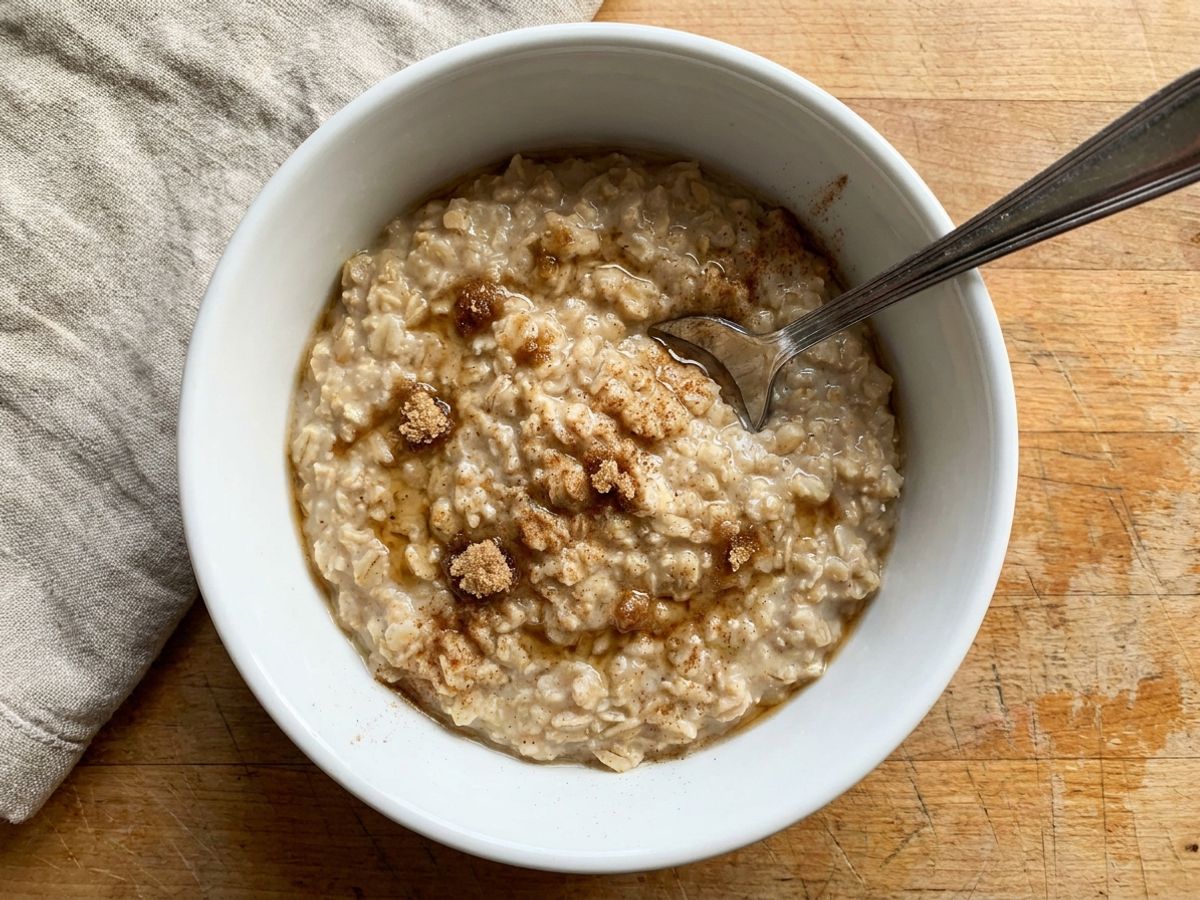
Maple Brown Sugar Oatmeal
Low FODMAP stovetop oatmeal made with rolled oats, lactose-free or almond milk, maple syrup, brown sugar, and cinnamon.
Ingredients
- 1/4 cup (26 g) rolled oats (not steel-cut); quick oats also work, measured to 1/4 cup (23 g)
- 1/2 cup (125 ml) lactose-free milk or unsweetened almond milk
- 1/4 cup (60 ml) water
- 1 teaspoon pure maple syrup
- 1 teaspoon brown sugar
- 1/4 teaspoon ground cinnamon (optional)
- 1/4 teaspoon vanilla extract (optional)
- Pinch of salt
- 1 teaspoon butter (optional, for richness)
Instructions
Simmer the Oats
- Combine the oats, milk, water, and salt in a small saucepan over medium heat.
- Bring to a gentle simmer, stirring occasionally so the bottom doesn't catch.
- Cook for 5 to 7 minutes for rolled oats (about 2 minutes for quick oats), until the liquid is mostly absorbed and the texture is creamy.
Sweeten and Finish
- Pull the pan off the heat. Stir in the maple syrup, brown sugar, cinnamon, vanilla, and butter if using.
- Let it sit for 1 minute so the oats thicken and the sugar melts into the bowl.
Serve
- Spoon into a bowl and add your topping of choice (see Variations).
- Splash in a little extra milk if the oatmeal tightens up as it cools.
Variations
- Classic maple-brown-sugar. Use just maple syrup and brown sugar on top, with a second drizzle of maple and an extra pinch of brown sugar. A pat of butter on top melts into the warm oats.
- Berry-pecan. Top with up to 1/2 cup blueberries (~75 g) or about 5 medium strawberries (~65 g, sliced) and up to 10 pecan halves (20 g). Frozen berries can go in during the last minute of cooking; fresh berries are best stirred in at the end.
- Peanut-butter banana. Stir 1 tablespoon of pure peanut butter into the finished oats and top with sliced banana. A firm yellow banana with no brown spots is low FODMAP up to 1 medium (100 g); once it is spotted, keep it to 1/3 of a banana (35 g), since ripe bananas carry more fructans.
 Join the waitlist
We're building a Low FODMAP Recipes app. Add your email and we'll let you know when it launches.
Tips & Substitutions
- Milk options. Lactose-free cow's milk, unsweetened almond milk (up to 1 cup / 250 ml), macadamia, or hemp milk all work. Rice milk is usually low-FODMAP in moderate serves; scan the carton with the FODMAP Foods app or pick a certified product. Oat milk varies heavily by brand; it is low FODMAP only at about 100 ml, so use 100 ml plus a splash of water in place of the 1/2 cup.
- Check plant-milk labels. Avoid inulin, chicory root fiber, or apple or pear juice concentrate, and pick unsweetened.
- Sweeten with maple or brown sugar. Honey is low FODMAP only at about ½ teaspoon (4g) and agave is high FODMAP at recipe amounts. Stevia and sucralose also work; skip polyol sweeteners like sorbitol and xylitol.
- Optional: add whey protein isolate. A scoop of plain whey protein isolate, which is very low in lactose, adds protein. Pick one with no inulin, chicory root or polyol sweeteners. Stir it in after the pan comes off the heat so it doesn't clump.
- Walnuts work too. Swap the pecans for 10 walnut halves: same low-FODMAP serve.
- Going gluten-free. Rolled oats are naturally gluten-free but are often cross-contaminated with wheat. If you have celiac disease, buy certified gluten-free oats.
Why This Works
Oats serve size. Monash lists rolled oats as low FODMAP at 1/2 cup dry (52 g) and quick oats at 1/4 cup (23 g). This bowl uses 26 g, so you can double the oats and liquid for a bigger breakfast and still stay within the rolled-oat serve.
Milk. Lactose-free milk and almond milk are low FODMAP at 1 cup. Oat milk is low only at about 100 ml, and cashew milk is not low FODMAP.
Sweetener rule. Pure maple syrup is low-FODMAP at 1 tablespoon, and brown sugar is low at 1 tablespoon. Honey is low only at about ½ teaspoon (4g) and agave is high FODMAP at recipe amounts, so maple and brown sugar are the easier picks.
Fruit stacking. Individual fruit serves are low, but stacking two or three in one bowl can tip you over. Pick one topping and keep it within its Monash serve: up to 1 cup blueberries (125g), about 5 medium strawberries (~65 g), a firm banana (up to 100 g), or up to 150 g peeled kiwifruit.
Storage
Oatmeal is best eaten the morning it's cooked; the texture turns gluey as it cools. If you want to make it ahead, cook the base without toppings, portion into jars, and refrigerate for up to 3 days at 40°F (4°C) or below. Reheat with a splash of milk on the stovetop or in the microwave until loose and creamy again, then add fresh toppings.
Not sure about an ingredient?
Our low FODMAP food list rates 600+ foods low, moderate or high, with the serving size behind each rating, so you can check any ingredient or swap in this recipe before you make it.
For educational purposes only. Not medical advice. Consult a healthcare professional for personal guidance.
References
- Let's Talk About Oats & The Low FODMAP Diet — A Little Bit Yummy
- Low FODMAP Overnight Oats & Chia — FODMAP Everyday