

Mashed Potatoes
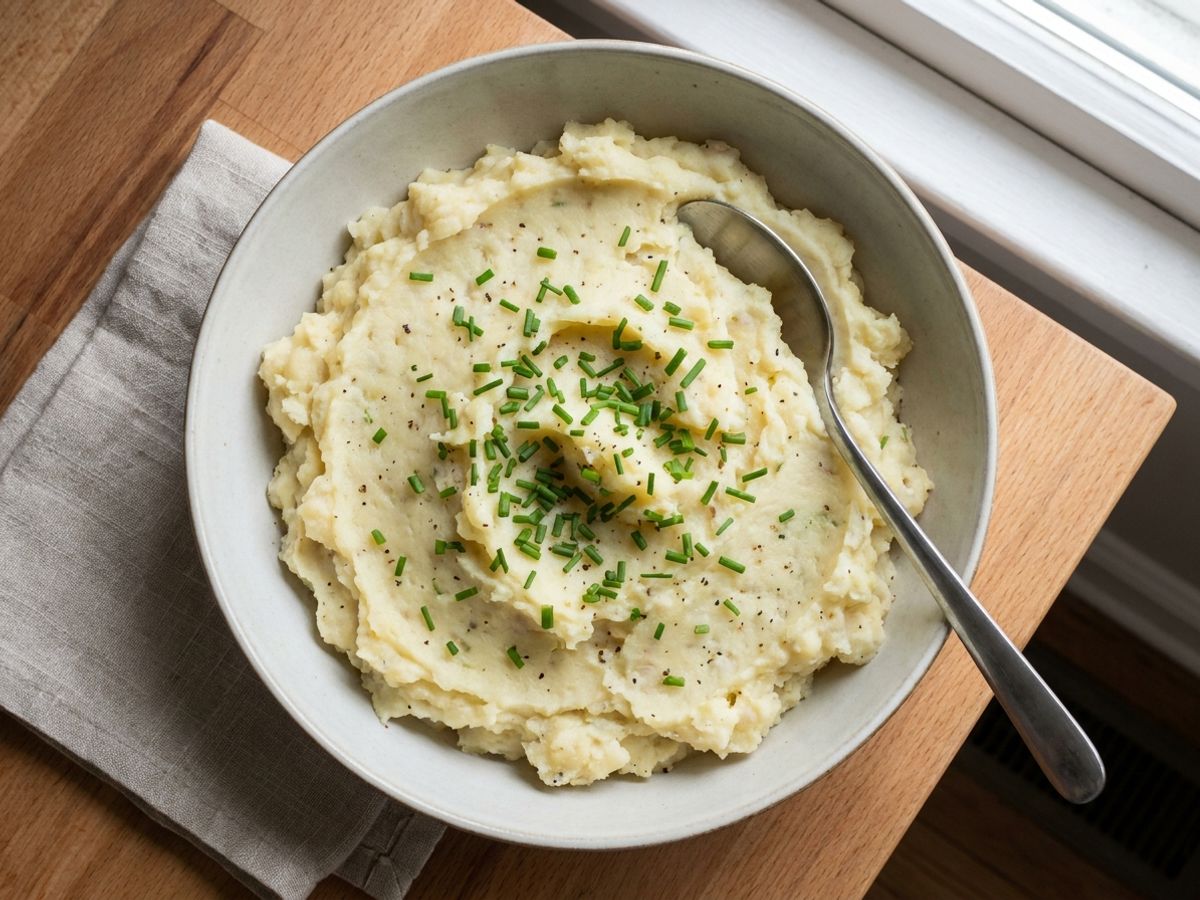
Low FODMAP mashed potatoes made with Yukon Gold potatoes, butter, lactose-free milk, and chives.
Ingredients
- 2 1/2 lb (1.1 kg) Yukon Gold or russet potatoes, peeled and cut into 1 1/2-inch chunks
- 1 tablespoon kosher salt, for the cooking water
- 4 tablespoons (57 g) unsalted butter, cut into pieces
- 3/4 cup (180 ml) lactose-free whole milk, warm
- 3/4 teaspoon fine salt, plus more to taste
- Freshly ground black pepper
- 2 tablespoons thinly sliced chives or scallion greens, to finish (optional)
Instructions
Boil the Potatoes
- Place the potato chunks in a large pot and cover with cold water by an inch. Add the kosher salt.
- Bring to a boil over high heat, then reduce to a steady simmer. Cook for 15 to 18 minutes, until a paring knife slides through a chunk with no resistance.
- Drain in a colander. Return the hot potatoes to the empty pot and set over low heat for 30 seconds to dry them out, shaking the pan so they don't stick.
Warm the Dairy
- While the potatoes cook, warm the milk and butter together in a small saucepan over low heat until the butter is melted and the mixture is steaming. Don't let it boil.
- Warm dairy blends in smoothly and keeps the potatoes hot.
Mash and Finish
- Mash the potatoes directly in the pot with a potato masher or ricer. A ricer gives a fluffy texture; a masher leaves more body.
- Pour in about three-quarters of the warm milk and butter. Fold gently with a spatula until absorbed. Add more milk a splash at a time until the mash is loose but not soupy.
- Season with the fine salt and a few grinds of black pepper. Taste and adjust.
- Transfer to a warm bowl and scatter the chives over the top.
Tips & Substitutions
- Use a ricer for a smooth texture. A ricer or food mill gives a smooth mash. A masher keeps more structure, which most home cooks prefer. Never use a food processor or blender; the blades over-work the starch and the result turns to glue.
- Swap in heavy cream for a richer mash. Replace the milk with 1/2 cup heavy cream plus 1/4 cup water. That is about 1 1/3 tablespoons of cream per serving, a small amount that is low FODMAP; for more cream than that, use lactose-free heavy cream.
- Dairy-free version. Use 1/4 cup garlic-infused olive oil in place of butter and 3/4 cup unsweetened almond milk or low-FODMAP chicken broth in place of the milk. The broth variant is especially good under gravy.
- Add a pinch of asafoetida for onion-adjacent depth. About 1/8 teaspoon bloomed in the warm butter. Use a gluten-free hing, since many brands cut it with wheat flour.
- For a softer dinner prep window, hold the finished mash in a heatproof bowl set over a pot of barely simmering water, covered, for up to an hour. Stir in another splash of warm milk before serving.
- If you want visible onion flavor, scatter extra scallion greens or chives over the top at the table, not stirred through. They hold their color and snap.
 Join the waitlist
We're building a Low FODMAP Recipes app. Add your email and we'll let you know when it launches.
Why This Works
Potatoes are one of the easy wins. Monash rates yellow and red potatoes as low-FODMAP at typical portions, with no strict serve-size cap. That gives potatoes real headroom on a low FODMAP plate.
Butter's lactose is tiny. Butter is almost all fat, with barely any lactose in it. Monash rates 1 tablespoon (19 g) as low-FODMAP, so 4 tablespoons across 6 servings is well under the limit.
Lactose-free milk instead of regular. Regular cow's milk is high-FODMAP because of the lactose. Lactose-free milk is the same product with the lactose already broken down at the factory, so it's low-FODMAP at 1 cup per serve.
Chives and scallion greens cover the aromatic base. Onion's fructans sit mostly in the white bulb, while chives and scallion greens are low FODMAP at this amount, so they replace the raw garlic and onion in classic mashed-potato seasonings.
Storage
Refrigerate in a sealed container for up to 3 to 4 days at 40°F (4°C) or below. Reheat on the stovetop or in the microwave with an extra splash of warm milk, stirring until loose. Mashed potatoes technically freeze, but the texture suffers; if you need to freeze a batch, whip in extra butter on reheating to bring it back.
Not sure about an ingredient?
Our low FODMAP food list rates 600+ foods low, moderate or high, with the serving size behind each rating, so you can check any ingredient or swap in this recipe before you make it.
For educational purposes only. Not medical advice. Consult a healthcare professional for personal guidance.
References
- All About Low FODMAP Mashed Potatoes — FODMAP Everyday
- Low FODMAP Creamy Mashed Potato with Gravy — A Little Bit Yummy
- Lactose and dairy products on a low FODMAP diet — Monash University FODMAP Blog
- All About Cream & FODMAPs — FODMAP Everyday