

Maple Mustard Dressing
A low FODMAP maple mustard dressing of extra-virgin olive oil, Dijon and whole grain mustard, maple syrup, apple cider vinegar, and lemon.
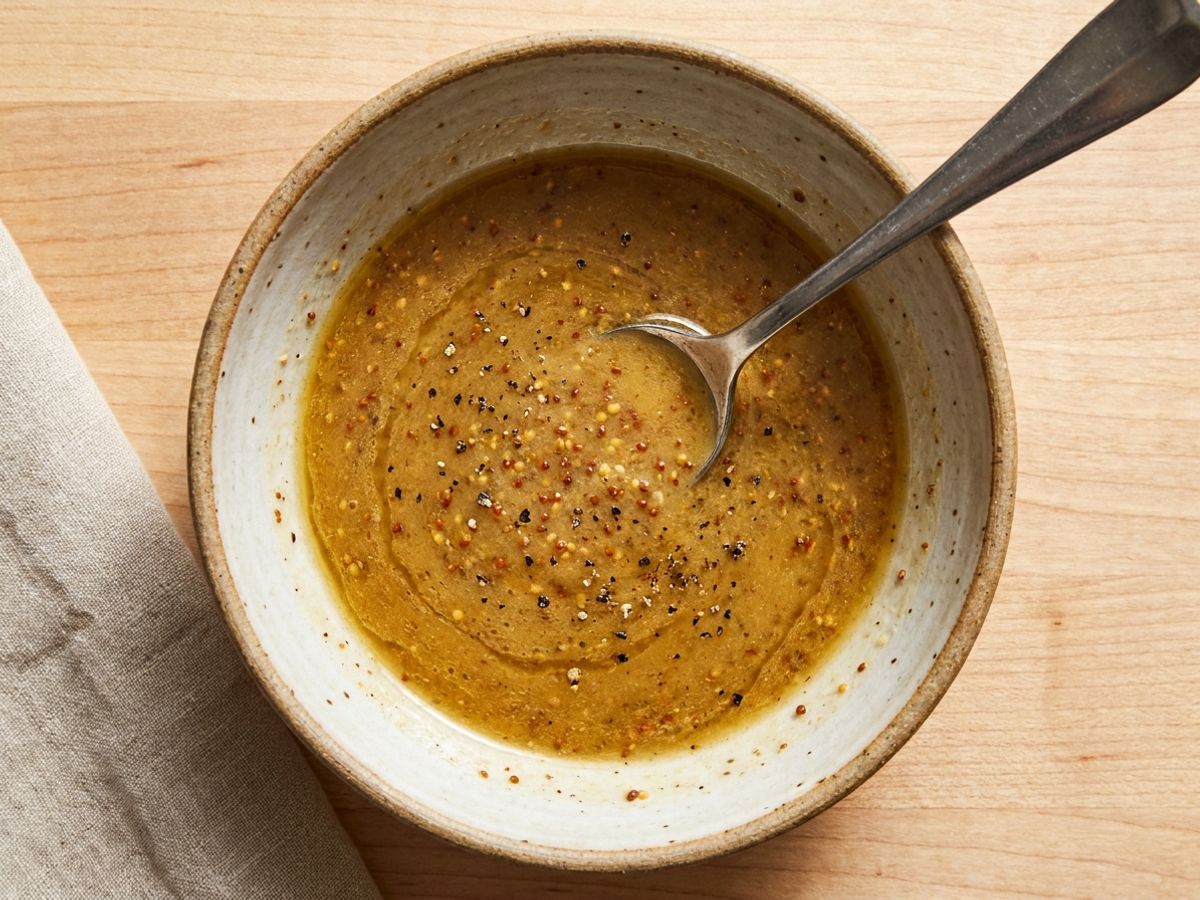
Classic honey mustard uses more honey than its small low FODMAP serve (about ½ teaspoon (4g)), and larger amounts are high in excess fructose and fructans. This version keeps the same balance of sweet, sharp, and tangy by swapping in pure maple syrup, which is low FODMAP at 1 tablespoon. It comes together in one bowl and works as a salad dressing, a dip for chicken, or a glaze for roasted potatoes.
Ingredients
- 1/4 cup (60 mL) extra-virgin olive oil (or garlic-infused olive oil for garlic flavor)
- 3 tablespoons (45 mL) Dijon mustard (check the label and skip any that list onion or garlic; choose a gluten-free brand if you need it)
- 2 tablespoons (30 mL) pure maple syrup (low-FODMAP at 1 tablespoon per Monash; this recipe uses about 1 teaspoon per serving)
- 2 tablespoons (30 mL) apple cider vinegar (or white wine vinegar)
- 1 tablespoon (15 mL) fresh lemon juice (optional, for brightness)
- 1 teaspoon (5 mL) whole grain mustard (optional, for texture)
- 1/4 teaspoon fine salt, or to taste
- Freshly ground black pepper, to taste
Instructions
Combine the base
- Add the Dijon mustard, maple syrup, apple cider vinegar, and lemon juice (if using) to a small bowl.
- Whisk until the mustard and maple syrup are fully blended and the mixture looks smooth.
Emulsify
- Pour in the olive oil in a slow, steady stream while whisking constantly. The dressing will thicken and turn glossy as the oil combines with the acid.
- Whisk in the whole grain mustard, if using, along with the salt and a few grinds of black pepper.
Taste and adjust
- Taste on a piece of lettuce or a spoon. Add a little more maple syrup for sweetness, more vinegar for tang, or a pinch more salt to round it out.
- Use right away, or transfer to a sealed jar and refrigerate. Shake or whisk again before each use, since the oil and acid separate as they sit.
Tips & Substitutions
- Make it creamy. Whisk in 2 tablespoons of plain mayonnaise or lactose-free plain yogurt for a thicker, dip-style dressing (it is then no longer vegan, and yogurt makes it no longer dairy-free). Check that the mayonnaise has no onion or garlic.
- Add garlic flavor. Swap the plain oil for garlic-infused olive oil. Fructans are not oil-soluble, so infused oil carries the flavor without the FODMAPs found in garlic bulb.
- Check the mustard label. Some Dijon and prepared mustards add onion powder, garlic, or wheat-based ingredients. Plain mustard made from mustard seed, vinegar, water, and salt is the simplest choice.
- Shake it in a jar. If you would rather not whisk, add everything to a lidded jar and shake hard for 20 seconds. It emulsifies just as well and stores in the same container.
- Adjust the ratio. Start with less maple syrup and vinegar, then build up to taste. Mustards vary in sharpness, so the balance shifts from brand to brand.
- Green onion note. For a mild oniony lift, whisk in 1 tablespoon of finely sliced scallion (green tops only). The green parts of scallions and leeks are low-FODMAP while the white bulb is not.
 Join the waitlist
We're building a Low FODMAP Recipes app. Add your email and we'll let you know when it launches.
Why This Works
- Maple syrup replaces honey. Honey is low FODMAP only at about ½ teaspoon (4g), and standard honey mustard uses more. Maple syrup is low FODMAP at 1 tablespoon, and this recipe spreads 2 tablespoons across six servings (about 1 teaspoon each).
- Mustard is naturally low FODMAP. Plain mustard made from mustard seed, vinegar, and salt has no added onion or garlic, so it delivers sharpness without fructans. Look up mustard in the FODMAP Foods app to see how its rating changes with portion size.
- Garlic flavor without fructans. Using garlic-infused oil instead of garlic bulb keeps the savory note because garlic's fructans do not dissolve into oil.
- Oil and vinegar base. Olive oil has no carbohydrate, and the vinegar and lemon juice are low FODMAP at these amounts.
Storage
Store the dressing in a sealed jar in the refrigerator for up to 1 week, or up to 4 days if you used homemade garlic-infused oil. The oil and acid will separate as it chills, so shake or whisk it back together before serving. Serve at room temperature or slightly chilled; there is no need to reheat. Freezing is not recommended, since the emulsion breaks and the texture turns grainy once thawed.
Not sure about an ingredient?
Our low FODMAP food list rates 600+ foods low, moderate or high, with the serving size behind each rating, so you can check any ingredient or swap in this recipe before you make it.
For educational purposes only. Not medical advice. Consult a healthcare professional for personal guidance.
References
- Sweeteners and the Low FODMAP Diet — Monash University FODMAP Blog
- All about onion, garlic and infused oils on the Low FODMAP Diet — Monash University FODMAP Blog
- Low FODMAP Ranch Dressing — FODMAP Everyday