

Kiwi Smoothie
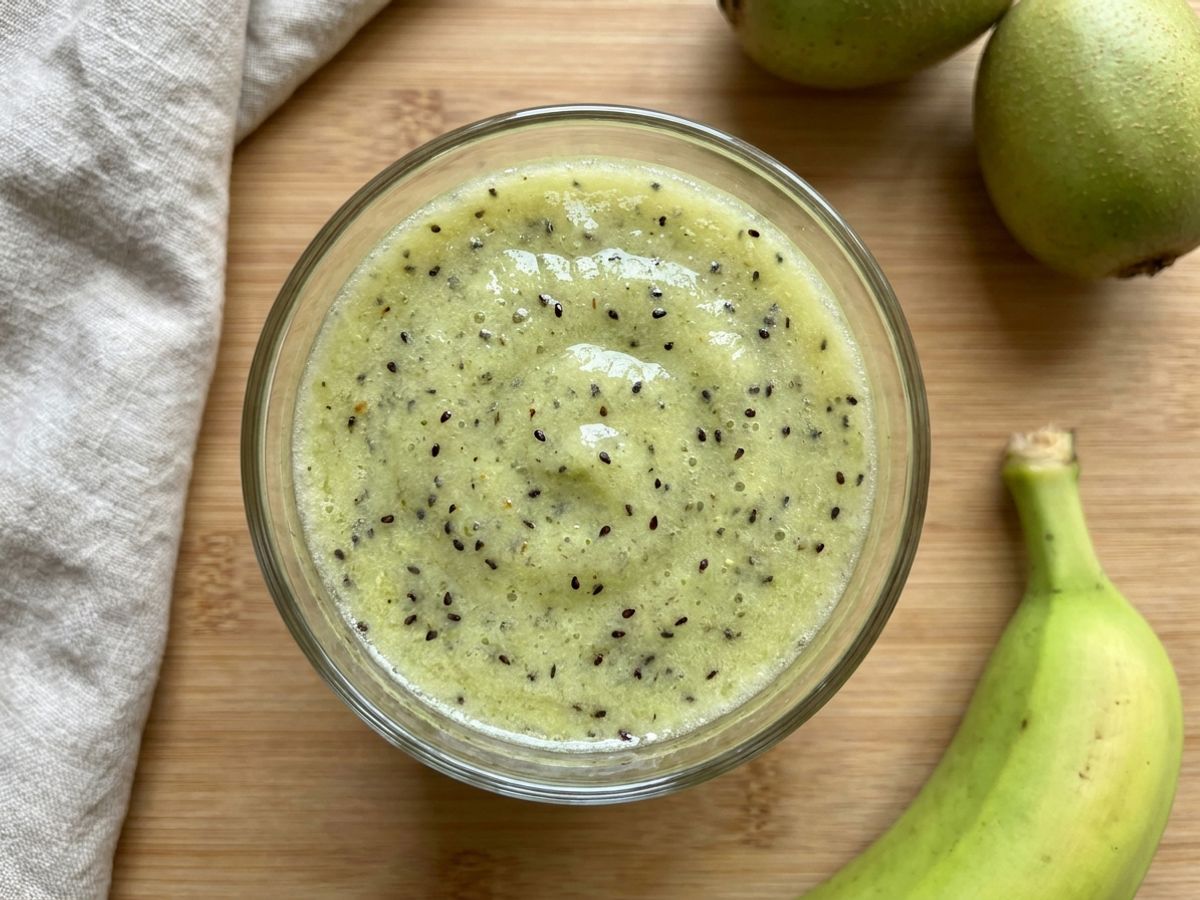
A low FODMAP kiwi smoothie of kiwi, a firm-yellow banana, lactose-free or almond milk, ginger, lime, and baby spinach.
Ingredients
- 150 g peeled kiwifruit (2 small green kiwis or 1 to 2 gold), weighed
- 1 firm-yellow banana (about 100 g, still slightly green at the stem)
- 1 cup (250 ml) lactose-free cow's milk or unsweetened almond milk
- 1/2 cup ice
- 1 teaspoon pure maple syrup (optional)
- 1/2 teaspoon freshly grated ginger (optional)
- 1 teaspoon fresh lime juice (optional)
- 1 handful (about 75 g) baby spinach (optional)
Instructions
Blend
- Add the milk to the blender first, then the kiwi, banana, ice, and any optional add-ins.
- Blend on high for 45 to 60 seconds, until smooth. Scrape down the sides once if the banana sticks.
- Pour into a glass and drink right away. Kiwi seeds stay whole and give a light speckle. That's normal.
Tips & Substitutions
- Pick the kiwi. Monash University testing puts kiwifruit, green or gold, at 2 small peeled fruit (150 g) per serve. Two green kiwis sit at that serve; one gold kiwi is a lighter pour, since gold is sweeter and larger.
- Keep the banana firm-yellow. Weigh the banana and choose one that's still slightly green at the stem. Monash lists firm, unripe banana as low at 1 medium (about 100 g). Riper bananas often become higher-FODMAP at smaller serves, so if yours is very ripe, reduce to a smaller portion. Look up bananas in the FODMAP Foods app to see how the rating changes with portion size.
- Check any protein powder label. Plain whey isolate is very low in lactose. Use about 25 g of a plain powder, and avoid any with inulin, chicory root fiber, FOS, sugar alcohols, or "prebiotic fiber"; formulas vary, so read the label each time.
- Pick the milk. Lactose-free cow and unsweetened almond (low FODMAP at 1 cup) are the easy options; macadamia and rice milk also work at tested serves. Oat milk is low only at about 100 ml, and cashew milk is not low FODMAP. Avoid any milk with inulin, chicory root fiber, or "prebiotic fiber" on the label.
- Sweeten with maple syrup only. A ripe-enough kiwi and banana are usually sweet enough on their own. If you want more, pure maple syrup is low at 1 tablespoon; a teaspoon is plenty. Honey is low FODMAP only at about ½ teaspoon (4g) and agave is high FODMAP at recipe amounts; skip polyol sweeteners like sorbitol, xylitol, and maltitol.
- Frozen kiwi works. Peel, slice, and freeze on a tray before bagging. Frozen kiwi thickens the smoothie; skip the ice and add a splash more milk if it's too thick to pour.
 Join the waitlist
We're building a Low FODMAP Recipes app. Add your email and we'll let you know when it launches.
Why This Works
Why kiwi. Monash researchers have studied green kiwifruit in people with constipation (see the sources above), and it is low FODMAP at the tested serve. This smoothie uses it for flavor and fiber; it is a drink, not a treatment.
Kiwi serve size. Monash lists green and gold kiwifruit as low FODMAP at 150 g, about 2 small peeled fruit. Keep the kiwi in one glass within that.
Banana ripeness matters. Banana's FODMAP profile shifts as it ripens: firm-yellow is low at a medium fruit, but the serve shrinks sharply once the peel speckles. Pick carefully and weigh if you're in the elimination phase.
Protein-powder trap. Plenty of plant-protein blends contain inulin, chicory root fiber, or sugar alcohols: all high-FODMAP and often hidden behind "prebiotic" or "gut-health" marketing. Read the ingredient list every time (formulations change), whichever powder you pick.
Spinach is a freebie. Baby spinach is low-FODMAP at 1.5 cups (about 75 g), so a handful adds color, magnesium, and folate without nudging the math.
Storage
Blend and drink right away. If you need to hold one, cap it in a sealed container and refrigerate for up to 24 hours at 40°F (4°C) or below. Shake or re-blend before drinking; separation and a slight color shift are normal. To prep ahead, freeze the peeled kiwi and sliced banana in a zip bag and add milk and ice at blend time.
Not sure about an ingredient?
Our low FODMAP food list rates 600+ foods low, moderate or high, with the serving size behind each rating, so you can check any ingredient or swap in this recipe before you make it.
For educational purposes only. Not medical advice. Consult a healthcare professional for personal guidance.
References
- Kiwifruit, Green and Gold — Monash University FODMAP
- Kiwi fruit for constipation — Monash University FODMAP Blog
- Kiwifruit for constipation — American Journal of Gastroenterology
- Low FODMAP Protein Powders — FODMAP Everyday
- 13 Low FODMAP Ingredient Swaps & Alternatives (incl. milk alternatives) — Gourmend Foods