

Ketchup
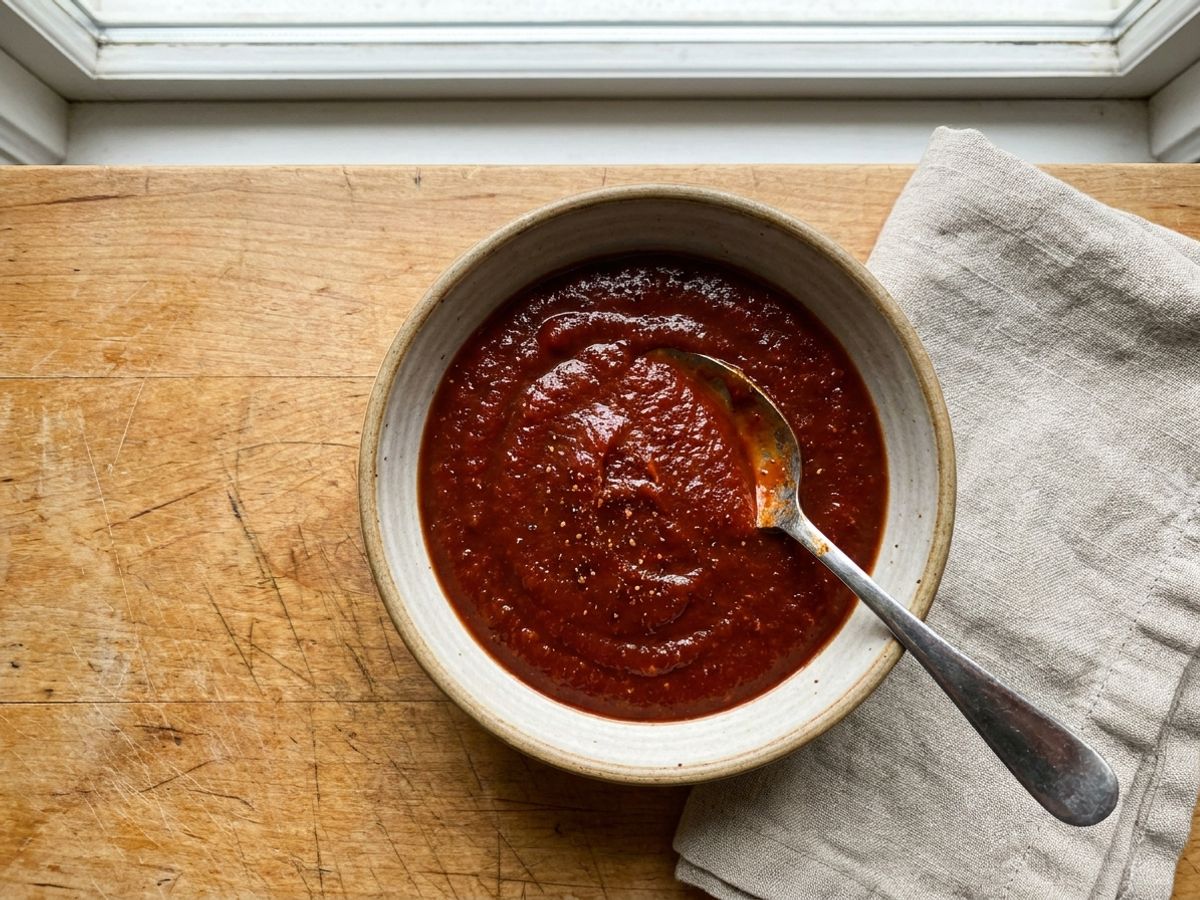
A low FODMAP ketchup made with tomato paste, maple syrup, white vinegar, brown sugar, paprika, mustard powder, and allspice.
Ingredients
- 1 can (6 oz / 170 g) tomato paste
- 1/3 cup water, plus more to thin
- 3 tablespoons pure maple syrup
- 2 tablespoons white vinegar (or apple cider vinegar)
- 1 tablespoon brown sugar
- 3/4 teaspoon fine salt
- 1/2 teaspoon smoked or sweet paprika
- 1/4 teaspoon mustard powder
- 1/8 teaspoon ground allspice
- Pinch of ground clove
- Freshly ground black pepper
Instructions
Whisk
- In a small saucepan off the heat, whisk the tomato paste, water, maple syrup, vinegar, brown sugar, salt, paprika, mustard powder, allspice, clove, and a few grinds of pepper until smooth.
Simmer
- Set the pan over medium-low heat and bring to a bare simmer.
- Cook for 8 to 10 minutes, stirring often, until glossy and thickened. It should mound on a spoon the way ketchup does.
- Thin with a tablespoon of water at a time if it gets too thick. Taste and adjust salt, sugar, or vinegar.
Cool
- Remove from heat and cool to room temperature before jarring. The ketchup tightens further as it chills.
Tips & Substitutions
- Watch the tomato paste serve. Monash lists tomato paste as low-FODMAP at about 1 tablespoon (20g) per serve. A 6 oz can split across 16 tablespoon-sized servings is about 11 g of paste per portion, under that.
- Check the label on store-bought ketchup. Many mainstream brands list high-fructose corn syrup, onion powder, or "natural flavors" that can include garlic. This recipe keeps those out.
- Use maple syrup, not honey. Honey is low FODMAP only at about ½ teaspoon (4g), and larger amounts are high in excess fructose and fructans. Maple syrup is low-FODMAP at 1 tablespoon per serve, and brown or white sugar are fine at typical amounts. Agave is high-FODMAP.
- Apple cider vinegar tastes softer. White vinegar is sharper and closer to bottled ketchup; apple cider vinegar adds a little fruity depth. Either works.
- Pinch of asafoetida for a mild onion-like flavor. Stir 1/8 teaspoon in with the spices. Use a gluten-free brand, since many are cut with wheat flour.
- Thicker for burgers, thinner for fries. Simmer a minute or two longer for a stiff burger ketchup; add a splash of water for a pourable dipping consistency. The thinner version is the dip for the chicken nuggets.
 Join the waitlist
We're building a Low FODMAP Recipes app. Add your email and we'll let you know when it launches.
Why This Works
Tomato paste does most of the work. Ketchup is basically concentrated tomato plus sweetener plus vinegar. A 6 oz can across 16 servings puts about 11 g of paste in each tablespoon-sized portion, inside the roughly 1 tablespoon (20g) Monash serve.
No onion or garlic powder. Commercial ketchups almost all list one or both. Leaving them out and using paprika, mustard, allspice, and clove instead covers the savory-warm register without the fructans.
Maple syrup instead of high-fructose corn syrup. Maple and a little brown sugar hit the same sweet-tangy balance without it.
Vinegar sharpens it. Ketchup without enough acid tastes like pizza sauce. Two tablespoons of vinegar is what pulls the flavor into ketchup territory.
Storage
Refrigerate in a clean jar for up to 3 weeks. The flavor settles and rounds out after a day in the fridge, so ketchup made ahead tastes better than ketchup used right off the stove. Freeze in 1/2-cup portions for up to 3 months; thaw overnight in the fridge.
Not sure about an ingredient?
Our low FODMAP food list rates 600+ foods low, moderate or high, with the serving size behind each rating, so you can check any ingredient or swap in this recipe before you make it.
For educational purposes only. Not medical advice. Consult a healthcare professional for personal guidance.
References
- Are Tomatoes & Tomato Products Low FODMAP? — FODMAP Everyday
- All about onion, garlic and infused oils on the Low FODMAP Diet — Monash University FODMAP Blog
- Are Tomato Sauce & Ketchup Low FODMAP? — A Little Bit Yummy
- Find the Hidden FODMAPs (Sugar Alcohols & Sweeteners) — Kate Scarlata, RDN