

Kale Chips
Low FODMAP kale chips baked with garlic-infused olive oil, sea salt, and grated pecorino.
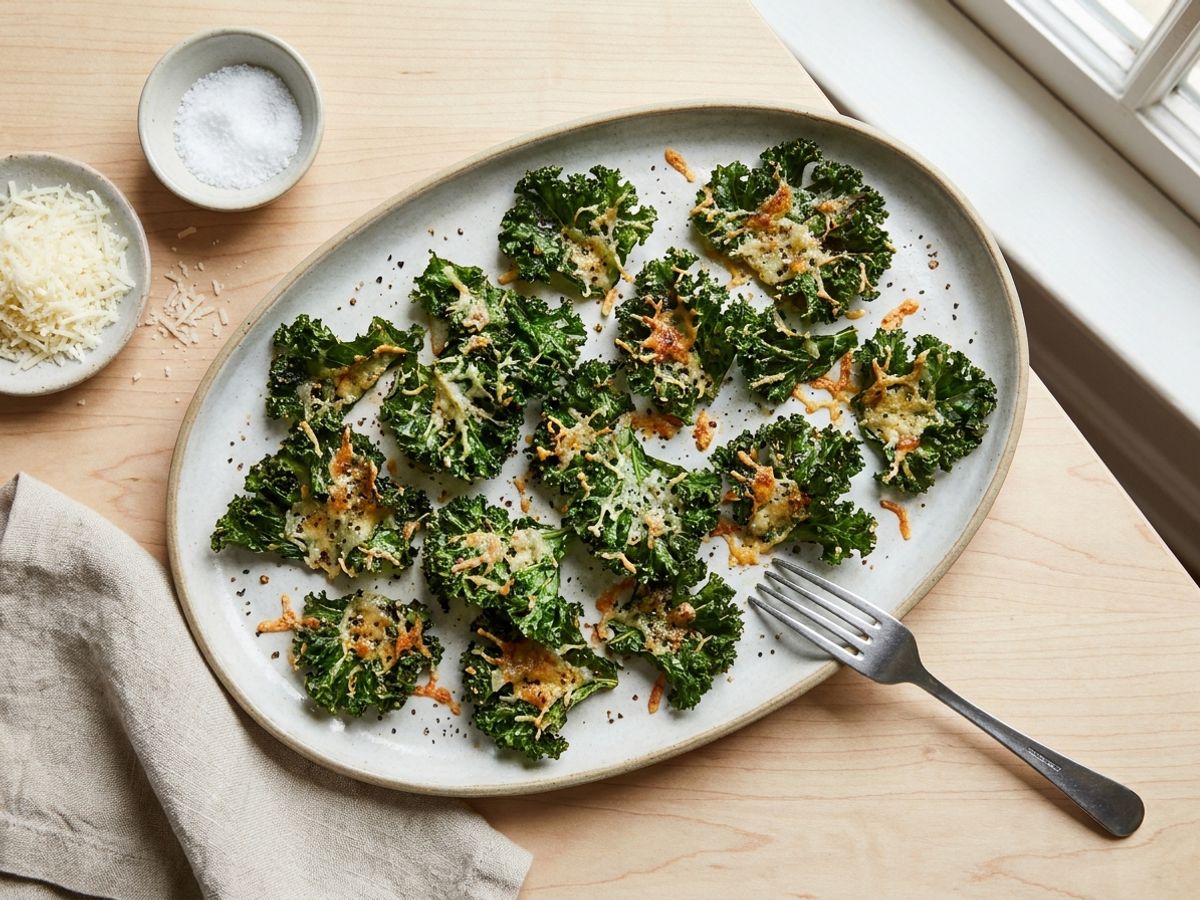
Ingredients
- 1 large bunch curly kale (about 150g / 5 oz), stems removed, torn into palm-size pieces. This makes roughly 2 snack servings. Kale is low FODMAP in tested servings. Look it up in the FODMAP Foods app to see how the rating changes with portion size.
- 1 tablespoon (15 ml) garlic-infused olive oil, or plain extra-virgin olive oil
- 1/4 teaspoon fine sea salt
- 2 tablespoons (about 12g) finely grated pecorino romano or parmesan (hard aged cheese)
- Pinch of black pepper (optional)
- For a vegan version: swap the cheese for 1 tablespoon nutritional yeast
Instructions
Prep the kale
- Preheat the oven to 300F (150C). Line two large baking sheets with parchment.
- Wash the kale and dry it thoroughly with a salad spinner and a clean towel. Any surface water turns to steam in the oven and leaves the chips soft.
- Strip the leaves off the tough center stems and tear them into pieces roughly the size of your palm. They shrink as they bake, so keep them large.
Season and bake
- Put the kale in a large bowl, drizzle the oil over it, and massage with your hands for 1 to 2 minutes so every leaf gets a thin, even coat.
- Sprinkle on the salt (and pepper, if using) and toss again.
- Spread the leaves in a single layer across both sheets with no overlap. Crowding traps steam and prevents crisping.
- Bake for 18 to 25 minutes, rotating the sheets front to back halfway through, until the leaves are crisp and the edges are just starting to color. Watch closely for the last 5 minutes, since they go from done to scorched quickly.
Finish
- Pull the sheets out and immediately sprinkle the warm chips with the grated pecorino so it clings.
- Let them cool on the sheet for about 5 minutes. They finish crisping as they cool.
Tips & Substitutions
- Dry the kale completely. Leftover water is the main reason chips turn out limp. Spin, then blot with a towel before you add oil.
- Bake low and slow. A 300F oven dries the leaves without burning them. If your chips brown before they crisp, drop the temperature and add a few minutes.
- Garlic flavor without the bulb. Use garlic-infused olive oil for a savory hit, since the fructans in garlic are not oil-soluble and stay behind.
- Make it vegan. Replace the pecorino with 1 tablespoon nutritional yeast, added before baking or sprinkled on while warm.
- Do not crowd the pan. Overlapping leaves steam each other. Use two sheets rather than piling everything onto one.
- Mind the serving size. Kale is low FODMAP in tested amounts but can add up in large portions.
 Join the waitlist
We're building a Low FODMAP Recipes app. Add your email and we'll let you know when it launches.
Why This Works
- Kale is low FODMAP in tested servings. Dividing the bunch into two servings keeps each portion to about 75g before removing the stems.
- Flavor comes from infused oil, not onion or garlic bulb. Garlic fructans do not dissolve into oil, so garlic-infused oil delivers taste without the FODMAP load.
- Hard aged cheese is naturally low in lactose. Pecorino and parmesan lose most of their lactose during aging, which keeps them low FODMAP in the small amount used here.
- No bottled seasoning blends. Skipping premixed powders avoids the hidden onion and garlic powder that show up in most snack coatings.
Storage
Store fully cooled chips in an airtight container at room temperature for 1 to 2 days. Do not refrigerate them, since the moisture will soften the leaves. If they lose their crunch, spread them on a sheet and re-crisp in a 300F (150C) oven for 3 to 5 minutes, then cool before eating.
Not sure about an ingredient?
Our low FODMAP food list rates 600+ foods low, moderate or high, with the serving size behind each rating, so you can check any ingredient or swap in this recipe before you make it.
For educational purposes only. Not medical advice. Consult a healthcare professional for personal guidance.
References
- Is Cheese Low FODMAP? — FODMAP Everyday
- All about onion, garlic and infused oils on the Low FODMAP Diet — Monash University FODMAP Blog
- Low FODMAP Diet Food Lists — Kate Scarlata, RDN