

Iced Coffee
Low FODMAP iced coffee made with overnight cold brew, almond or lactose-free milk, and maple syrup.
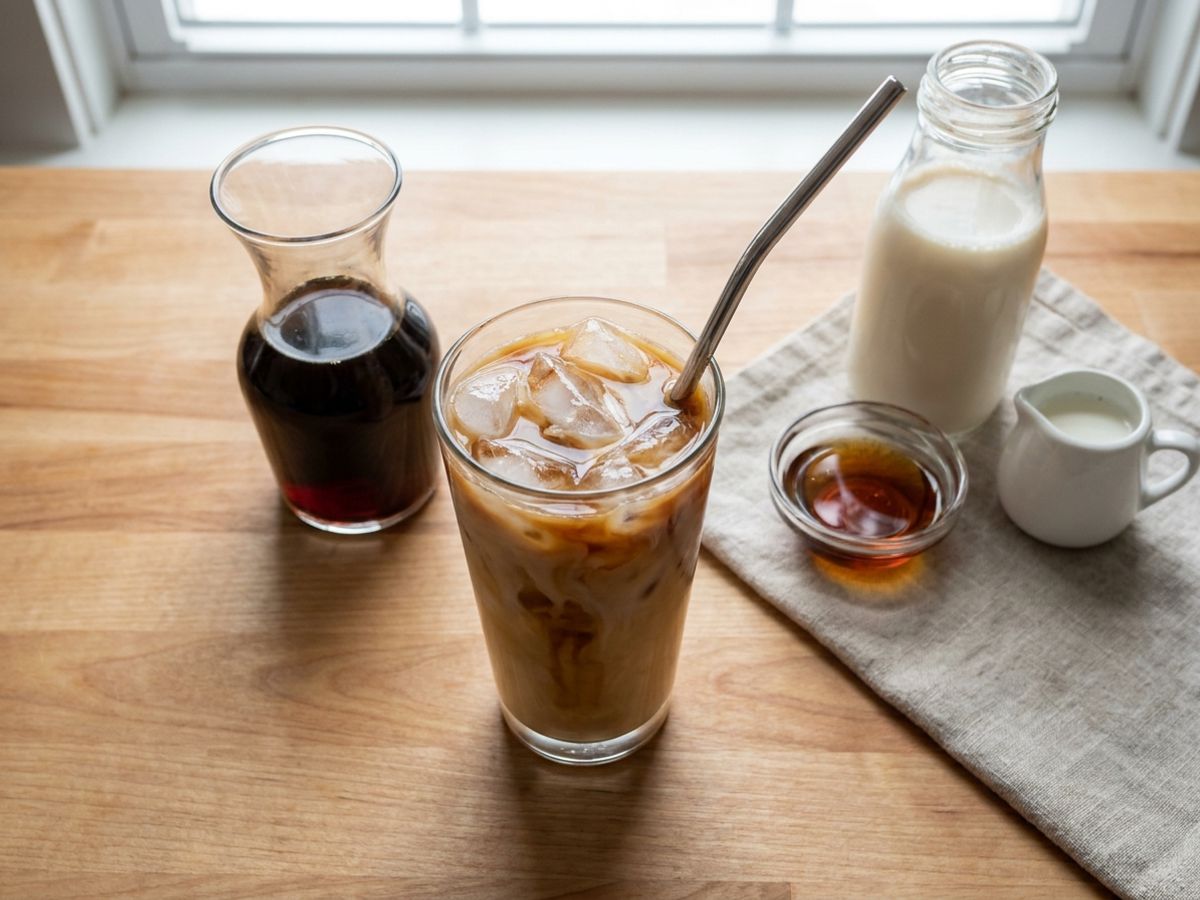
Ingredients
- 1 cup (100g) coarsely ground coffee, medium or dark roast
- 4 cups (1 liter) cold filtered water
- Ice, to fill each glass
- Milk, about 1/2 cup (125ml) per glass. Use unsweetened almond milk, lactose-free milk, or a low-FODMAP plant milk of your choice. If you use oat milk, keep it to about 100ml (a scant 1/2 cup) per serving, its low FODMAP serve.
- 1 to 2 teaspoons pure maple syrup per glass, to taste (low-FODMAP up to 1 tablespoon)
- Optional: splash of lactose-free cream or a few drops of vanilla extract
Instructions
Make the cold brew concentrate
- Add the ground coffee to a large jar or pitcher. Pour in the cold water and stir gently so all the grounds are wet.
- Cover the jar and refrigerate for 12 to 18 hours. A longer steep gives a stronger concentrate.
- Strain the coffee through a fine-mesh sieve lined with a paper coffee filter or a double layer of cheesecloth. Discard the grounds. You should have about 3 1/4 cups of concentrate (the grounds hold back some water), about 3/4 cup per glass.
Build the iced coffee
- Fill a tall glass with ice.
- Pour in cold brew concentrate to fill the glass about two-thirds of the way. Dilute with a splash of cold water first if you prefer a lighter cup.
- Add about 1/2 cup (125ml) of your chosen milk.
- Stir in 1 to 2 teaspoons of maple syrup until it dissolves. Taste and adjust, then serve right away.
Tips & Substitutions
- Swap the milk freely. Unsweetened almond milk and lactose-free milk are both low-FODMAP at 1 cup, so either works as your base. Regular cow's milk is high in lactose at this amount, so it is left out.
- Watch the oat milk pour. Oat milk is low FODMAP only at about 100ml per serving, and scan your carton with the FODMAP Foods app, since results vary by brand.
- Sweeten without honey or agave. Maple syrup is low-FODMAP up to 1 tablespoon, and plain cane or white sugar works too. Honey is low only at about 1 teaspoon; skip agave and polyol "sugar-free" syrups like sorbitol or maltitol.
- Make a quick version. No time to cold brew? Brew a strong pot of coffee, cool it, and refrigerate until cold, then build the glass the same way. Brewing over ice keeps it from tasting watered down.
- Adjust the strength. For a milder cup, dilute the concentrate 1:1 with cold water before adding milk. Decaf works the same way if you are cutting back on caffeine.
- Add flavor cleanly. A few drops of vanilla extract or 1 tablespoon of lactose-free cream per glass rounds it out at a low FODMAP amount. Skip bottled flavored syrups unless the label is clear of high-FODMAP additives.
 Join the waitlist
We're building a Low FODMAP Recipes app. Add your email and we'll let you know when it launches.
Why This Works
- Coffee itself is low in FODMAPs. Brewed coffee is not a significant FODMAP source in normal servings, so a plain iced coffee comes down to what you pour in. Keep it to a couple of cups across the day and check your own tolerance.
- The milk choice carries the risk. Standard cow's milk holds lactose, which is the common problem in creamy coffee drinks. Almond milk and lactose-free milk keep lactose low while keeping the drink smooth.
- Maple replaces honey. Honey is low FODMAP only at about 1 teaspoon and agave is high FODMAP, while maple syrup is low FODMAP at up to 1 tablespoon.
- Portions stay in check. Capping oat milk at about 100ml and maple at a couple of teaspoons keeps a glass within tested low FODMAP amounts.
Storage
Keep the strained cold brew concentrate in a covered jar in the fridge for up to 1 week. Build each glass fresh with ice, milk, and maple so the coffee does not dilute or turn bitter as the ice melts. This drink is best served cold and is not suited to freezing or reheating.
Not sure about an ingredient?
Our low FODMAP food list rates 600+ foods low, moderate or high, with the serving size behind each rating, so you can check any ingredient or swap in this recipe before you make it.
For educational purposes only. Not medical advice. Consult a healthcare professional for personal guidance.
References
- 13 Low FODMAP Ingredient Swaps & Alternatives (incl. milk alternatives) — Gourmend Foods
- Sweeteners and the Low FODMAP Diet — Monash University FODMAP Blog