

High-Protein Breakfast Bowl
A low FODMAP breakfast bowl with crispy potatoes, two fried eggs, spinach, cherry tomatoes, bell pepper, feta, and lactose-free Greek yogurt.
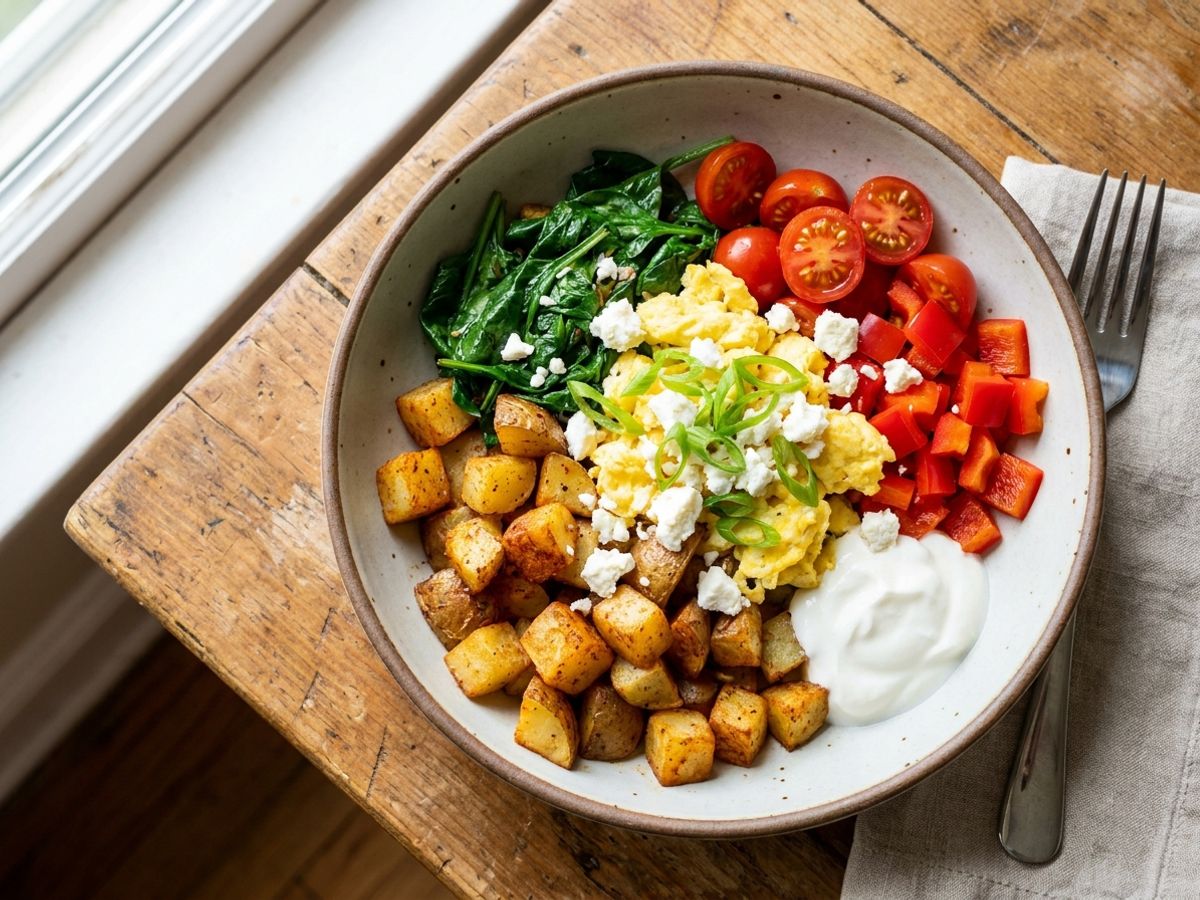
Ingredients
- 4 large eggs
- 2 medium (about 300 g) waxy potatoes (Yukon Gold or red), cut into 1/2-inch dice
- 3 cups (150 g) baby spinach, loosely packed
- 6 cherry tomatoes (about 90 g), halved
- 1/2 medium (75 g) red bell pepper, diced
- 1/2 cup (80 g) crumbled feta
- 1/2 cup (120 g) plain lactose-free Greek yogurt (optional, for extra protein)
- 2 tablespoons garlic-infused olive oil, divided
- 2 tablespoons thinly sliced scallion greens (green tops only)
- 1/2 teaspoon smoked paprika
- Salt and freshly ground black pepper
- 1 tablespoon chopped fresh chives or parsley (optional)
Instructions
Roast the Potatoes
- Heat the oven to 425°F (220°C). Toss the diced potatoes with 1 tablespoon of the garlic-infused oil, the smoked paprika, 1/2 teaspoon salt, and a few grinds of pepper on a rimmed sheet pan.
- Spread into a single layer. Roast for 18 to 22 minutes, tossing once halfway through, until the edges are golden and crisp.
- In the last 5 minutes of roasting, scatter the diced bell pepper around the potatoes so it softens and chars at the edges.
Wilt the Spinach
- When the potatoes have about 3 minutes left, heat 1/2 tablespoon of the garlic-infused oil in a nonstick skillet over medium heat.
- Add the spinach and a pinch of salt. Toss for 30 to 60 seconds until the leaves just collapse. Transfer to a plate.
Fry the Eggs
- Wipe the skillet. Add the remaining 1/2 tablespoon garlic-infused oil and heat over medium.
- Crack in the eggs, season with salt and pepper, and cook for 2 to 3 minutes until the whites are set but the yolks still jiggle. Cover the pan for the last 30 seconds if you want the tops slightly set.
Build the Bowls
- Divide the crispy potatoes and bell pepper between two shallow bowls. Tuck the wilted spinach alongside.
- Slide two eggs onto each bowl. Scatter the halved cherry tomatoes and crumbled feta over the top.
- Add a spoonful of lactose-free Greek yogurt to the side of each bowl if using. Finish with the scallion greens, chives or parsley, and a final grind of pepper.
Tips & Substitutions
- Make the potatoes ahead. Roast a double batch on Sunday and store in an airtight container for up to 4 days at 40°F (4°C) or below. Reheat in a dry nonstick skillet over medium heat for 3 to 4 minutes to crisp them back up; the microwave turns them soft.
- Swap the egg style. Soft-scrambled, poached, or a quick two-egg omelet all work. If you want more protein without the yolks, use 3 whole eggs plus 2 egg whites per person.
- Extra protein. Add 2 ounces (60 g) of chopped cooked bacon, plain rotisserie chicken, or cold smoked salmon. Skip anything with an onion or garlic seasoning blend; most commercial breakfast sausage uses both.
- Watch the spinach serve. Monash tests baby spinach as low-FODMAP up to 1.5 cups (75 g) per person. Three cups across two servings is 75 g per person, at that serve. English (mature) spinach also tests low and wilts down even more.
- Tomato and pepper serves. Cherry tomatoes are low FODMAP at 3 per person (45 g), so use 6 halved across two bowls. Red bell pepper is low at 43 g per serve, and 1/2 a medium pepper split between two bowls is about 37 g each.
- No onion or raw garlic. The infused oil and scallion greens carry the allium flavor. Don't reach for yellow onion, shallot, leek bulb, or raw garlic; all high-FODMAP in typical amounts. Scallion greens (the dark green tops only) are low-FODMAP in typical portions; the white and light-green parts are not.
- Check the yogurt label. Some lactose-free Greek yogurts add inulin or chicory root fiber for thickness; both are high-FODMAP. Pick a plain version with a short ingredient list.
 Join the waitlist
We're building a Low FODMAP Recipes app. Add your email and we'll let you know when it launches.
Why This Works
Eggs, potatoes, and yogurt add up to a solid amount of protein. Two eggs per person give you about 12 grams, feta adds roughly 5 grams for a 40-gram portion, and a scoop of lactose-free Greek yogurt can push the total to around 25 to 30 grams depending on the brand. All of these are low-FODMAP in the portions used here; just pick a plain yogurt without inulin or chicory root fiber.
Potatoes. Plain white, red, and Yukon Gold potatoes are low FODMAP at the serves Monash has tested, and this bowl uses about 150 g per person. Roasted potato makes a heartier base than toast.
Feta is a low-lactose cheese. Feta tests low-FODMAP at 40 g per serve, roughly a quarter cup crumbled. It is low in lactose at that serving. Aged cheddar, parmesan, and lactose-free goat cheese play the same role if you want to rotate.
Garlic-infused oil. Garlic fructans don't carry over into the oil, so infused oil delivers the flavor without the FODMAP load. Use your own or a Monash-certified store-bought version. If making homemade, strain out every piece of garlic, refrigerate immediately, and use within 3 to 4 days; leaving solids in oil is a botulism risk.
Storage
The bowl is best assembled fresh; eggs don't hold well. For meal prep, store the roasted potatoes and bell pepper separately in an airtight container for up to 4 days at 40°F (4°C) or below, and cook the eggs and wilt the spinach to order. The cherry tomatoes, feta, yogurt, and scallion greens can all be prepped ahead and stored in the fridge for 2 to 3 days. Don't freeze cooked eggs or the roasted potatoes; both turn watery on thaw.
Not sure about an ingredient?
Our low FODMAP food list rates 600+ foods low, moderate or high, with the serving size behind each rating, so you can check any ingredient or swap in this recipe before you make it.
For educational purposes only. Not medical advice. Consult a healthcare professional for personal guidance.
References
- Meat, Seafood, Eggs and Cooking Fats: Low FODMAP? — Monash University FODMAP
- Is Cheese Low FODMAP? — FODMAP Everyday
- Gluten Free Bread and the Low FODMAP Diet — A Little Bit Yummy