

Hash Browns
Low FODMAP hash browns made with shredded russet potatoes, garlic-infused olive oil, scallion greens, and paprika.
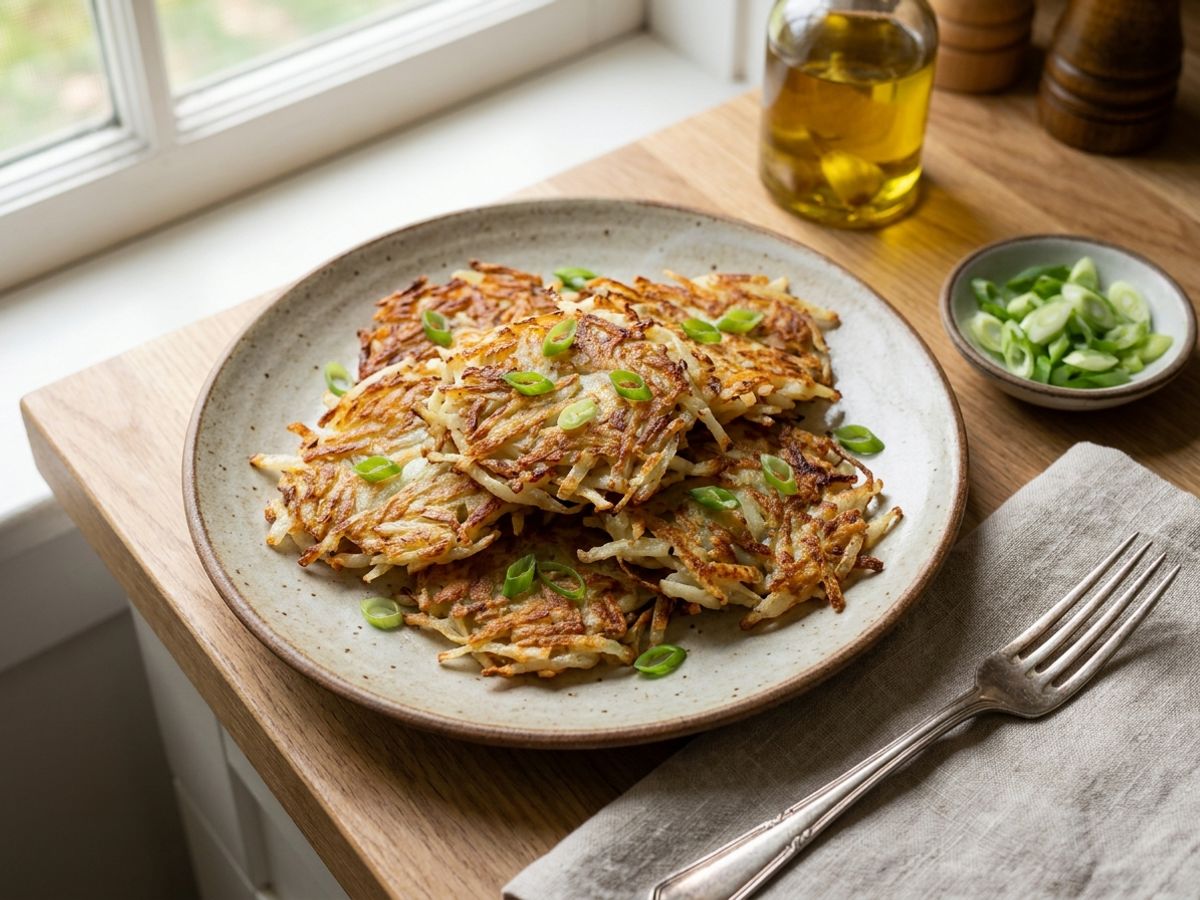
Ingredients
- 2 large russet potatoes (about 600g / 1.3 lb), peeled
- 2 tablespoons garlic-infused olive oil
- 1/2 teaspoon fine salt
- 1/4 teaspoon black pepper
- 2 tablespoons scallion (spring onion) green tops only, thinly sliced
- Pinch of paprika (optional, for color)
Monash detected no FODMAPs in plain white potato at the serves it tested. Use only the GREEN part of the scallion, since the white bulb carries the same fructans as onion.
Instructions
Shred and rinse
- Peel the potatoes and grate them on the large holes of a box grater, or use the coarse shredding disc of a food processor.
- Place the shreds in a large bowl of cold water and swish for 20 to 30 seconds. Drain, refill, and repeat until the water runs mostly clear. This removes surface starch so the shreds crisp instead of turning gummy.
- Transfer the potato to a clean kitchen towel, gather it into a bundle, and wring out as much water as you can over the sink. Dry shreds are the difference between crisp and soggy.
Season
- Put the squeezed potato in a dry bowl and fluff it with your fingers to separate the strands.
- Add the salt, black pepper, scallion greens, and paprika if using. Toss until evenly coated.
Crisp in the pan
- Heat the garlic-infused oil in a heavy or nonstick skillet over medium-high until it shimmers.
- Add the potato and press it into an even layer about 1/2 inch thick. Do not stir. Let it cook undisturbed for 5 to 7 minutes, until the underside is deep golden.
- Flip in sections with a spatula, press again, and cook the second side another 5 to 6 minutes until browned and cooked through. Season with a little more salt if needed and serve hot.
Tips & Substitutions
- Squeeze twice. After the first wring, let the towel-wrapped potato sit 2 minutes, then wring again. The extra moisture you remove translates directly into crunch.
- Do not crowd the pan. Cook in two batches if your skillet is small. A thin, even layer browns; a tall pile steams.
- Swap the oil. If you do not have garlic-infused oil, plain olive oil or a neutral oil works. You lose the savory note but keep it low-FODMAP.
- Add more green. Extra sliced scallion green tops or chopped chives stirred in raise the oniony flavor without adding fructans.
- Waxy potatoes are fine. Yukon Gold or red potatoes shred and crisp well too. Russets give the fluffiest interior because of their higher starch.
- Reheat crisp. These go soft in the microwave. Warm leftovers in a dry skillet or a hot oven to bring back the crunch.
 Join the waitlist
We're building a Low FODMAP Recipes app. Add your email and we'll let you know when it launches.
Why This Works
- Potato. Monash detected no FODMAPs in plain white potato at its tested serves, so it makes a filling base.
- Infused oil delivers garlic flavor. Garlic's fructans do not dissolve in oil, so strained garlic-infused oil adds the aroma without them.
- Green tops replace the onion. The green part of scallions and leeks is low-FODMAP, while the white bulb is not. Using greens only gives an onion-like note at a low FODMAP amount.
- Rinsing removes only starch, not FODMAPs. The rinse-and-squeeze step is about texture. It washes away surface starch for crisping and does not change the low-FODMAP status of the dish.
Storage
Cool leftovers, then refrigerate in an airtight container for up to 3 days. For longer storage, freeze cooked and cooled hash browns in a single layer, then bag them for up to 2 months. Reheat straight from the fridge or freezer in a dry skillet or a 400F (200C) oven until hot and crisp again, rather than the microwave, which softens them.
Not sure about an ingredient?
Our low FODMAP food list rates 600+ foods low, moderate or high, with the serving size behind each rating, so you can check any ingredient or swap in this recipe before you make it.
For educational purposes only. Not medical advice. Consult a healthcare professional for personal guidance.
References
- All about onion, garlic and infused oils on the Low FODMAP Diet — Monash University FODMAP Blog
- How to Use Spring Onion (Green Onion) on the Low FODMAP Diet — A Little Bit Yummy
- All About Low FODMAP Mashed Potatoes — FODMAP Everyday