

Greek Salad
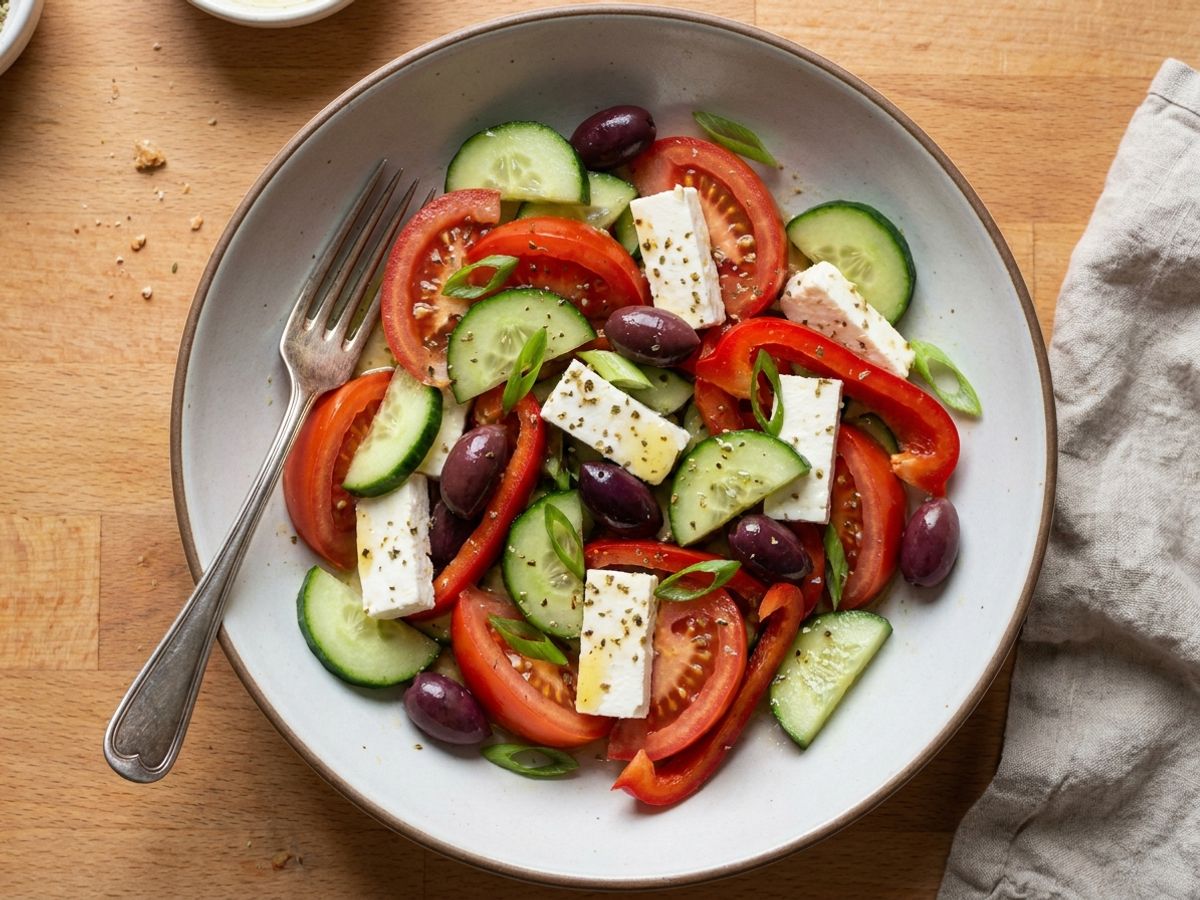
A low FODMAP Greek salad of cucumber, tomatoes, red bell pepper, feta, olives, and scallion greens in a lemon oregano dressing.
Ingredients
- 1 large continental (English) cucumber, about 300g, halved and sliced into half-moons
- 2 medium common tomatoes, about 260g, cut into wedges (stays low FODMAP at roughly 65g per serving)
- 1 small red bell pepper, about 120g, seeded and sliced (keep red capsicum to 43g, about 1/3 cup, per serving)
- 160g feta cheese, cubed or cut into slabs (40g per serving, the Monash-tested low FODMAP serve)
- 12 to 16 kalamata or green olives, about 60g
- Green tops of 3 to 4 scallions (spring onions), thinly sliced, in place of red onion
- 1/4 cup (60ml) extra virgin olive oil
- 1 tablespoon garlic-infused olive oil (optional, for garlic flavor)
- 2 tablespoons (30ml) fresh lemon juice
- 1 tablespoon red wine vinegar
- 1 teaspoon dried oregano (or 1 tablespoon fresh, chopped)
- 1/4 teaspoon salt, plus more to taste
- Black pepper to taste
Instructions
Make the dressing
- In a small jar or bowl, combine the olive oil, garlic-infused oil (if using), lemon juice, red wine vinegar, oregano, salt, and black pepper.
- Seal and shake, or whisk, until the dressing looks cloudy and combined. Taste and adjust the salt and lemon.
Prep the vegetables
- Add the sliced cucumber to a large bowl.
- Cut the tomatoes into wedges and add them to the bowl.
- Add the sliced red bell pepper, the scallion green tops, and the olives.
Assemble
- Pour the dressing over the vegetables and toss gently to coat.
- Add the feta, either tossed through as cubes or set on top as a slab in the traditional style.
- Let the salad sit for about 5 minutes so the flavors combine, then serve.
Tips & Substitutions
- Feta at 40g per serving. That is the Monash-tested low FODMAP serve, so weigh it when you portion for a crowd.
- Use scallion green tops, not red onion. The green parts of scallions (and leek greens) give an allium note without the fructans in onion bulbs.
- Add garlic flavor with infused oil. Fructans do not dissolve into oil, so a tablespoon of strained garlic-infused oil adds garlic taste with no garlic pieces in the bowl.
- Choose tomatoes with the portion in mind. Common and roma tomatoes are low FODMAP around 65g per serving, and cherry tomatoes are low FODMAP at about 5 medium (45g).
- Watch the red pepper amount. Red capsicum is low FODMAP at 43g per serving (about 1/3 cup). Green capsicum gives you more room at 75g if you want a bigger portion.
- Make it vegan or dairy-free. Leave out the feta or swap in marinated firm tofu. Look up any substitute in the FODMAP Foods app to see how its rating changes with portion size.
 Join the waitlist
We're building a Low FODMAP Recipes app. Add your email and we'll let you know when it launches.
Why This Works
- No onion or garlic bulb. Onions and garlic are high in fructans, so scallion greens and garlic-infused oil provide the allium flavor instead.
- Feta is low in lactose. The recipe provides 40g per person, the tested low FODMAP serve.
- Infused oil carries garlic flavor. Fructans are not oil-soluble, so garlic-infused oil gives you the taste without the FODMAPs that come from the clove.
- Produce is portioned, not just picked. Tomato and red pepper both have serving caps, so the recipe fixes the amounts rather than leaving them open.
Storage
Greek salad is best eaten the day it is made. To prep ahead, store the chopped vegetables and the dressing in separate covered containers in the fridge for up to 3 days, then combine just before serving. Once dressed, the salad softens and is best within a day. Do not freeze it, since the raw vegetables and feta turn watery when thawed.
Not sure about an ingredient?
Our low FODMAP food list rates 600+ foods low, moderate or high, with the serving size behind each rating, so you can check any ingredient or swap in this recipe before you make it.
For educational purposes only. Not medical advice. Consult a healthcare professional for personal guidance.
References
- All about onion, garlic and infused oils on the Low FODMAP Diet — Monash University FODMAP Blog
- Is Cheese Low FODMAP? — FODMAP Everyday
- Are Tomatoes & Tomato Products Low FODMAP? — FODMAP Everyday