

Frittata
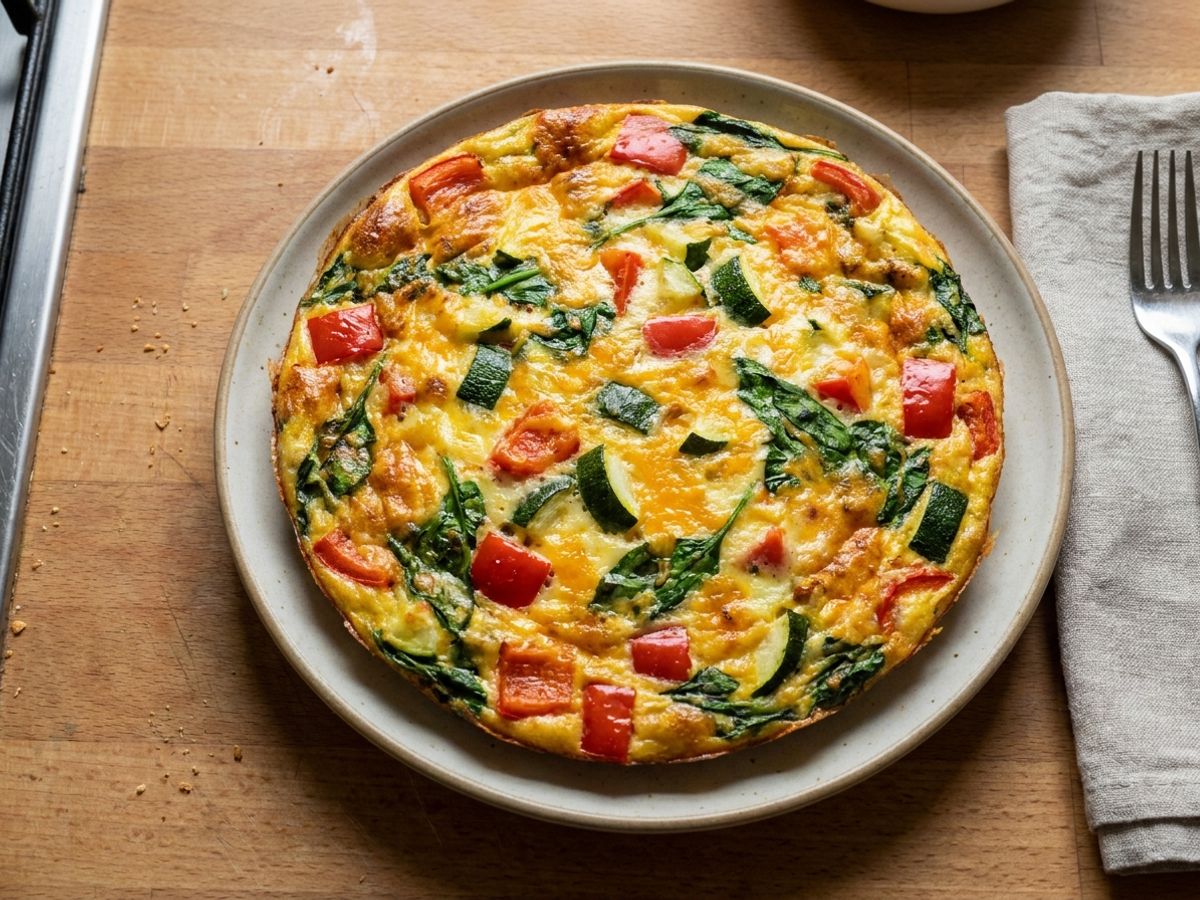
A low FODMAP frittata with eggs, lactose-free milk, baby spinach, red bell pepper, zucchini, scallion greens, and cheddar.
Ingredients
- 8 large eggs
- 2 tbsp (30 ml) lactose-free milk
- 2 tbsp garlic-infused olive oil, divided
- 75 g baby spinach (about 2 cups loosely packed)
- 1 medium red bell pepper (about 120 g), diced (about 30 g per wedge). Monash lists red bell pepper as low FODMAP at 43 g per person.
- 1 small zucchini (about 120 g), diced. Monash lists a 65 g (1/2 cup) low FODMAP serving, with larger amounts adding fructans.
- Green tops of 2 scallions (spring onions), thinly sliced (dark green parts only)
- 40 g (about 1/2 cup) grated cheddar or parmesan
- 1/2 tsp salt
- Black pepper, to taste
- 1 tbsp chopped fresh parsley or basil (optional)
Instructions
Prep the pan and vegetables
- Heat the oven to 350 F (180 C). Dice the red bell pepper and zucchini into small, even pieces, and slice the green scallion tops.
- Whisk the eggs, lactose-free milk, grated cheese, salt, and a few grinds of pepper in a bowl until the yolks and whites are fully combined.
Build the base
- Warm 1 tbsp of the garlic-infused oil in a 10-inch oven-safe (cast iron or stainless) skillet over medium heat. Add the bell pepper and zucchini and cook for 4 to 5 minutes, stirring, until they soften.
- Add the baby spinach and scallion greens and cook for about 1 minute, just until the spinach wilts. Spread the vegetables into an even layer.
Set the frittata
- Add the remaining 1 tbsp garlic-infused oil to the pan and swirl it up the sides. Pour the egg mixture evenly over the vegetables and cook undisturbed for 3 to 4 minutes, until the edges begin to set.
- Transfer the skillet to the oven and bake for 12 to 15 minutes, until the center is set and no longer jiggles. Egg dishes are safely cooked at 160 F (71 C) on an instant-read thermometer.
- Rest for 5 minutes, scatter with parsley or basil if using, then slice into 4 wedges and serve.
Tips & Substitutions
- Keep zucchini portions modest. Monash lists a low FODMAP serving of 65 g (1/2 cup) for green zucchini, and larger amounts add fructans. Divided across four wedges, each gets about 30 g.
- Use the green scallion tops only. The white and pale bulb ends carry the same fructans as onion, while the dark green tops give allium flavor without them.
- Pick a hard, aged cheese. Cheddar and parmesan are very low in lactose, so a grated handful sits within low FODMAP limits and melts into the eggs cleanly.
- Swap the vegetables freely. Diced carrot, chopped kale, or a few halved cherry tomatoes all work. Keep each addition to its tested serving, and look it up in the FODMAP Foods app to see how its rating changes with portion size.
- Make your own garlic oil. Bottled garlic and onion seasonings hide fructans, so use garlic-infused olive oil for the savory backbone.
- Adjust the milk for texture. The 2 tbsp of lactose-free milk gives a softer set. Leave it out for a firmer, denser frittata.
 Join the waitlist
We're building a Low FODMAP Recipes app. Add your email and we'll let you know when it launches.
Why This Works
- Fructans do not dissolve in oil. Infusing olive oil with garlic carries the flavor while the fructans stay behind, so the oil works even though whole garlic does not.
- Scallion greens are allium without the load. The dark green tops test low in FODMAPs, unlike the bulb and white base, so they stand in for onion.
- Hard cheeses are low in lactose. Cheddar and parmesan are low FODMAP at a standard grated portion like the one here.
- The vegetables are portioned to their caps. Baby spinach, red bell pepper, and zucchini each have a tested low FODMAP serving, and dividing them across the pan keeps every plate within range.
Storage
Keep leftover wedges in an airtight container in the fridge for up to 4 days, and reheat gently in the microwave or a low oven so the eggs stay tender. The frittata is also good cold, straight from the fridge. To freeze, wrap individual wedges and store for up to 1 month, then thaw overnight in the fridge before reheating.
Not sure about an ingredient?
Our low FODMAP food list rates 600+ foods low, moderate or high, with the serving size behind each rating, so you can check any ingredient or swap in this recipe before you make it.
For educational purposes only. Not medical advice. Consult a healthcare professional for personal guidance.
References
- All about onion, garlic and infused oils on the Low FODMAP Diet — Monash University FODMAP Blog
- Is Cheese Low FODMAP? — FODMAP Everyday
- How to Use Spring Onion (Green Onion) on the Low FODMAP Diet — A Little Bit Yummy