

Eggs Benedict
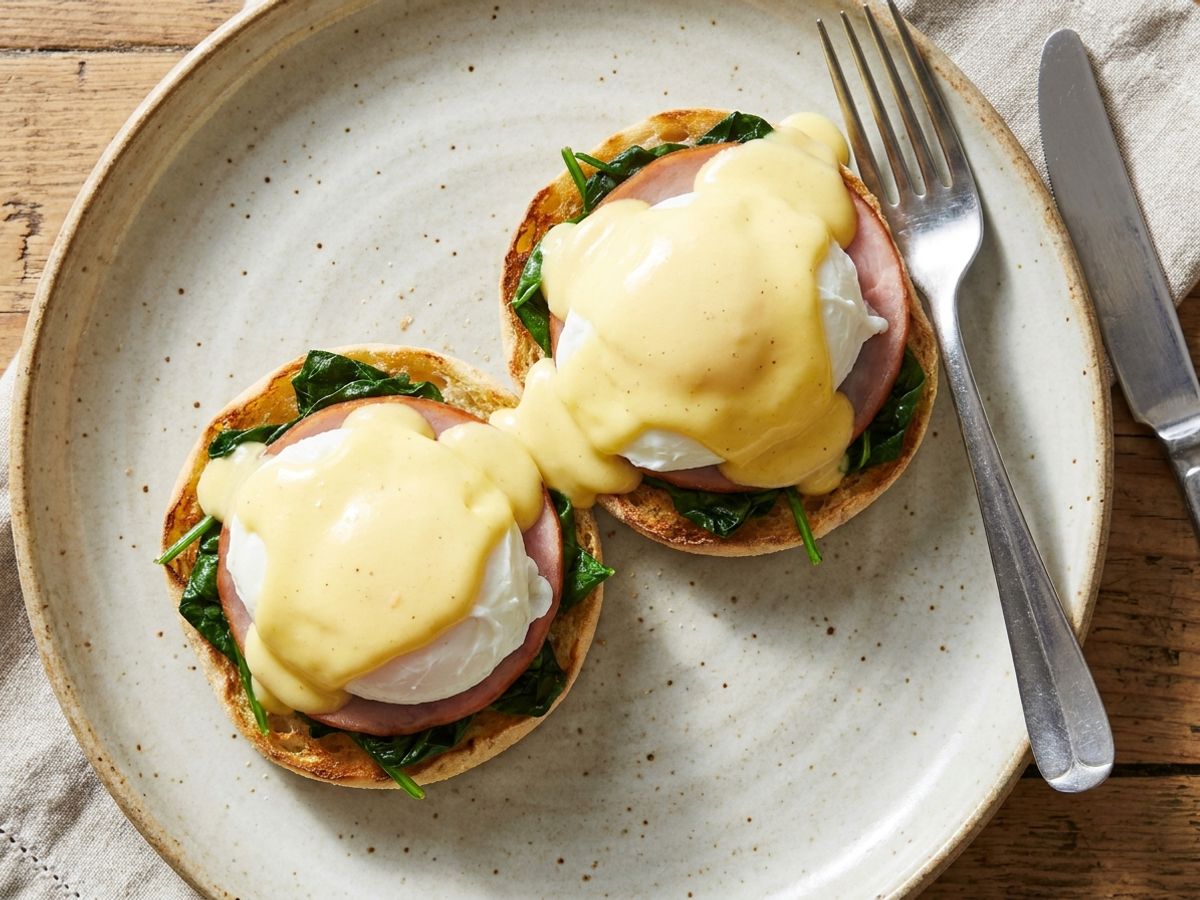
Low FODMAP eggs Benedict with poached eggs, Canadian bacon, and a ghee, egg yolk, and lemon hollandaise on a gluten-free English muffin.
Ingredients
Blender hollandaise
- 3 large pasteurized egg yolks (the sauce is not heated to a safe temperature)
- 1 tablespoon (15 ml) fresh lemon juice
- 1/2 cup (115 g) ghee (clarified butter)
- 1/4 teaspoon salt
- Pinch of cayenne or ground white pepper (optional)
Poached eggs and base
- 4 large eggs
- 1 tablespoon (15 ml) white or apple cider vinegar, for the poaching water
- 2 gluten-free English muffins, split (a certified low FODMAP brand, or read the label and skip any that list onion, garlic, inulin, chicory root, fruit concentrates, or sugar alcohols)
- 4 slices Canadian bacon or uncured ham, or 4 oz (115 g) smoked salmon (for deli meats, read the label and skip anything cured with onion or garlic)
- 1 cup (about 30 g) baby spinach, optional
- 1 tablespoon chopped chives or scallion green tops, to garnish
Instructions
Make the blender hollandaise
- Melt the ghee in a small saucepan or the microwave until it is hot and just starting to foam, about 160 to 170F. Keep it warm.
- Add the pasteurized egg yolks, lemon juice, and salt to a blender or a tall cup if using an immersion blender. Blend for about 10 seconds until pale and combined.
- With the motor running on low, drizzle in the hot ghee in a thin, steady stream. The sauce will thicken as the ghee emulsifies. Stop once it is pourable and coats the back of a spoon.
- Taste and add the cayenne or white pepper and more salt if needed. Leave the sauce in the blender jar and set it in a bowl of warm water so it stays loose while you cook the eggs.
Poach the eggs
- Fill a wide saucepan with about 3 inches of water and bring it to a bare simmer with small bubbles rising, not a rolling boil. Add the vinegar.
- Crack each egg into a small cup. Give the water a gentle swirl and slide the egg into the center. Add the eggs one or two at a time so they do not crowd.
- Poach for 3 to 4 minutes for a soft yolk. For food safety the USDA notes that a runny yolk is not fully cooked, so poach longer for a firm yolk, or use pasteurized eggs if you are cooking for anyone who should avoid undercooked eggs.
- Lift each egg out with a slotted spoon and rest it briefly on a paper towel to drain.
Assemble
- Toast the English muffin halves. If you are using ham, warm the slices in a dry skillet for a minute per side. If you are adding spinach, wilt it in the same pan for about 30 seconds.
- Set two muffin halves on each plate. Top each with a slice of ham (and spinach, if using), then a poached egg.
- Spoon the warm hollandaise over each egg. Garnish with chives or scallion green tops and serve right away.
Tips & Substitutions
- Rescue a broken sauce. If the hollandaise turns thin or grainy, blend in an extra warm egg yolk, or whisk 1 teaspoon of hot water into a fresh yolk and slowly stream the broken sauce back in.
- Swap the protein. Plain smoked salmon (check the label for onion, garlic, and honey cures) or wilted spinach both work in place of ham.
- Ghee in the sauce. Ghee is butter with the milk solids removed, so it carries no lactose at all, while plain butter is only low FODMAP up to about 20g per serving and this sauce uses more than that. Look up butter in the FODMAP Foods app to see how its rating changes with portion size.
- Choose the poaching acid. Plain white vinegar keeps the whites tight without adding flavor. Apple cider vinegar works too and is low-FODMAP in the small amount used here.
- Poach the eggs ahead. Poach until the whites are fully set (use pasteurized eggs if you want soft yolks), chill right away in ice water, and refrigerate up to 2 days. Reheat in hot water for about 1 minute before serving.
- Read the muffin label. Some gluten-free breads and muffins add inulin or chicory root fiber, which is high in fructans. Pick a brand without those or make your own from a tested blend.
 Join the waitlist
We're building a Low FODMAP Recipes app. Add your email and we'll let you know when it launches.
Why This Works
- Ghee instead of a cream sauce. This hollandaise leans on ghee and egg yolk rather than milk or cream, so the lactose load stays low even though the sauce is rich.
- Lemon and yolk carry the flavor, not aromatics. Skipping the onion and garlic that flavor many brunch sauces removes the main fructan source and lets the lemon and pepper stand on their own.
- A gluten-free muffin swaps out the wheat. Wheat-based English muffins bring fructans from the flour. A certified low FODMAP gluten-free muffin gives you the same base without the wheat.
- Building from scratch. Bottled hollandaise mixes and cured meats often list onion and garlic. Making the sauce yourself and checking meat labels means you know what is on the plate.
Storage
Hollandaise is best made fresh and does not hold or reheat well, since high heat scrambles the yolks and it can separate in the fridge. Assemble and serve it right away. If you want to prep ahead, poach the eggs up to 2 days early, store them in cold water in a covered container in the fridge, and reheat gently before plating. Whisk the sauce together just before serving.
Not sure about an ingredient?
Our low FODMAP food list rates 600+ foods low, moderate or high, with the serving size behind each rating, so you can check any ingredient or swap in this recipe before you make it.
For educational purposes only. Not medical advice. Consult a healthcare professional for personal guidance.
References
- Safe Handling of Eggs — USDA Food Safety and Inspection Service
- Lactose and dairy products on a low FODMAP diet — Monash University FODMAP Blog
- Choosing a Low FODMAP All-Purpose Flour — FODMAP Everyday