

Deviled Eggs
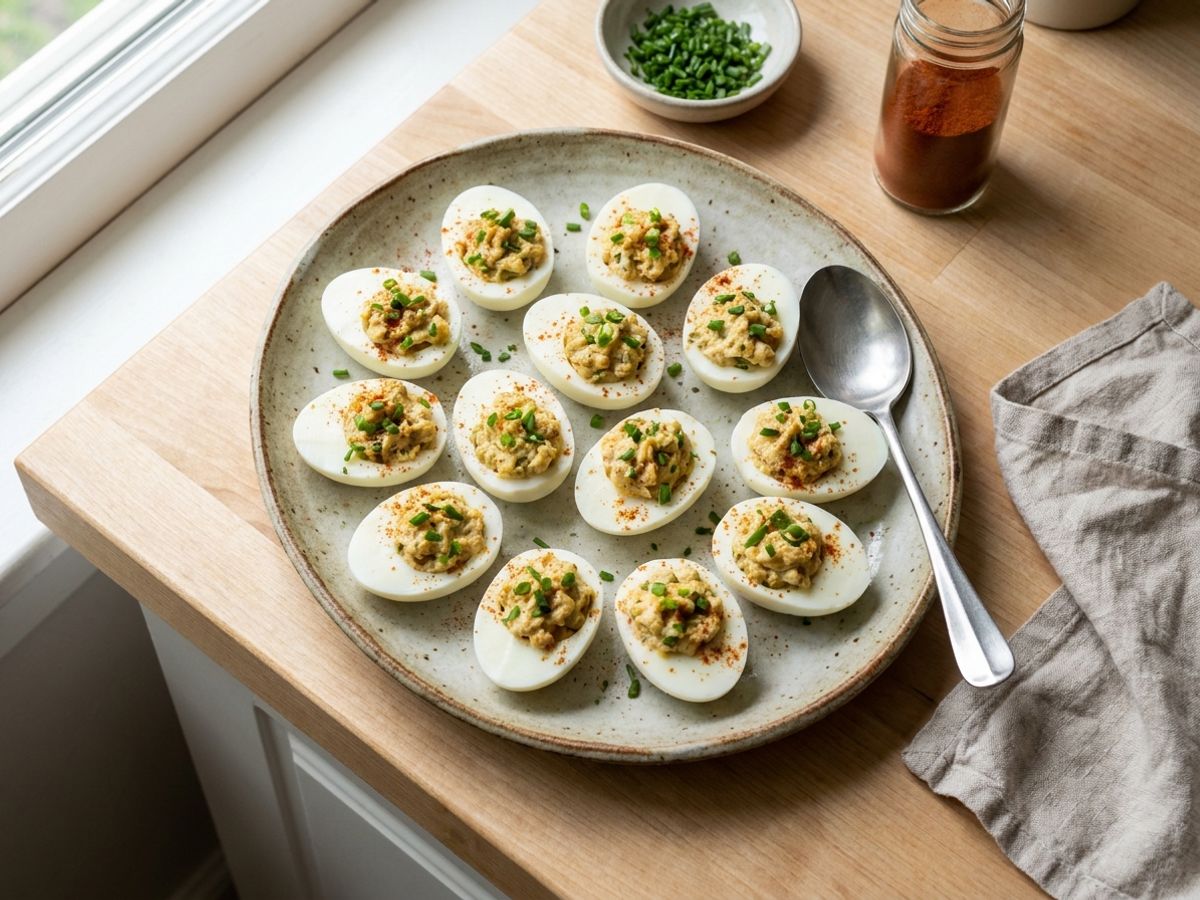
Low FODMAP deviled eggs made with mayonnaise, Dijon mustard, vinegar, chives, and paprika.
Ingredients
- 6 large eggs
- 3 tablespoons mayonnaise (Hellmann's, Duke's, or any brand without garlic, onion, or high-fructose corn syrup)
- 1 teaspoon Dijon mustard (check the label; most plain Dijon is fine, but skip any that list garlic or onion in the spices)
- 1 teaspoon white wine vinegar or apple cider vinegar
- 1/4 teaspoon fine salt
- 1/8 teaspoon freshly ground black pepper
- 1 tablespoon finely chopped fresh chives or scallion greens (green tops only), plus more to finish
- Smoked or sweet paprika, to finish
Instructions
Boil
- Place the eggs in a single layer in a saucepan and cover with cold water by about an inch. Bring to a rolling boil over high heat, then immediately cover, remove from the heat, and let sit for 11 minutes.
- While the eggs cook, fill a medium bowl with ice and cold water.
- Transfer the eggs to the ice bath with a slotted spoon and let cool for at least 10 minutes. A full chill stops carryover cooking and makes the shells peel more cleanly.
Peel and halve
- Tap each egg gently on the counter to crack the shell all over, then peel under a thin stream of cold water. Starting at the wide end (where the air pocket sits) makes peeling easier.
- Slice each egg in half lengthwise with a sharp knife. Pop the yolks into a mixing bowl and set the whites on a serving plate, cut side up.
Make the filling
- Mash the yolks with a fork until crumbly. Add the mayonnaise, Dijon, vinegar, salt, and pepper. Stir until smooth and creamy. Taste and adjust: a little more mustard, a pinch more salt, another drop of vinegar.
- Stir in the chopped chives or scallion greens.
Fill
- Divide the yolk mixture evenly among the 12 whites, about 2 teaspoons per half. For a neater look, transfer the filling to a zip-top bag, snip off a corner, and pipe it in.
- Dust the tops with paprika and scatter with a few more chopped chives.
Tips & Substitutions
- Use scallion greens or chives for the onion flavor. The green tops are the low FODMAP part of the scallion, and chives work the same way for a sharp, grassy bite.
- Check the mayo label. Most plain supermarket mayos (oil, egg yolk, vinegar, lemon, salt) work; avoid any with garlic, onion, or high-fructose corn syrup, which rules out most flavored mayos and aioli.
- Skip jarred relish unless you read the label carefully. Most pickle relishes contain onion or high-fructose corn syrup. For tang, stir in 1 teaspoon finely chopped dill pickles (no onion or garlic on the label) plus a splash of vinegar.
- Add capers for a briny version. A teaspoon of finely chopped capers stirred into the yolks is a small, low FODMAP amount across six eggs.
- Make them ahead. Boil, peel, and halve the eggs up to a day in advance, store the whites and yolks separately in the fridge, and fill just before serving.
- Easy peel trick. Eggs that are 7 to 10 days old peel more cleanly than fresh ones.
 Join the waitlist
We're building a Low FODMAP Recipes app. Add your email and we'll let you know when it launches.
Why This Works
Eggs are low FODMAP. Monash lists eggs with no detectable FODMAPs, so the base of the dish is low FODMAP; two or three halves make a typical serving.
Plain mayonnaise, mustard, and vinegar. Plain mayo has no high FODMAP ingredients, and the 3 tablespoons across 12 halves is about 3/4 teaspoon per half. Plain Dijon and white wine or apple cider vinegar are low FODMAP at seasoning amounts.
Chives and scallion greens carry the onion flavor. Scallion green tops and chives are low FODMAP at these amounts, while the white bulb is high FODMAP.
The garnish is where most versions go wrong. Store-bought and restaurant deviled eggs often add raw onion, onion powder, sweet relish with HFCS, or garlic mayo; chives, plain mayo, and Dijon keep the flavor classic and the recipe low FODMAP.
Storage
Refrigerate in an airtight container, in a single layer, for up to 2 days at 40°F (4°C) or below. The whites dry out beyond that. Deviled eggs don't freeze.
Not sure about an ingredient?
Our low FODMAP food list rates 600+ foods low, moderate or high, with the serving size behind each rating, so you can check any ingredient or swap in this recipe before you make it.
For educational purposes only. Not medical advice. Consult a healthcare professional for personal guidance.
References
- Meat, Seafood, Eggs and Cooking Fats - Low FODMAP? — Monash University FODMAP Blog
- All about onion, garlic and infused oils on the Low FODMAP Diet — Monash University FODMAP Blog
- Low FODMAP Bacon Deviled Eggs — FODMAP Everyday
- Scallions and FODMAPs (Green Tops Are Low FODMAP) — FODMAP Everyday