

Cucumber Tomato Salad
A low FODMAP cucumber tomato salad with feta, scallion greens, dill, mint, and a garlic-infused oil and red wine vinegar dressing.
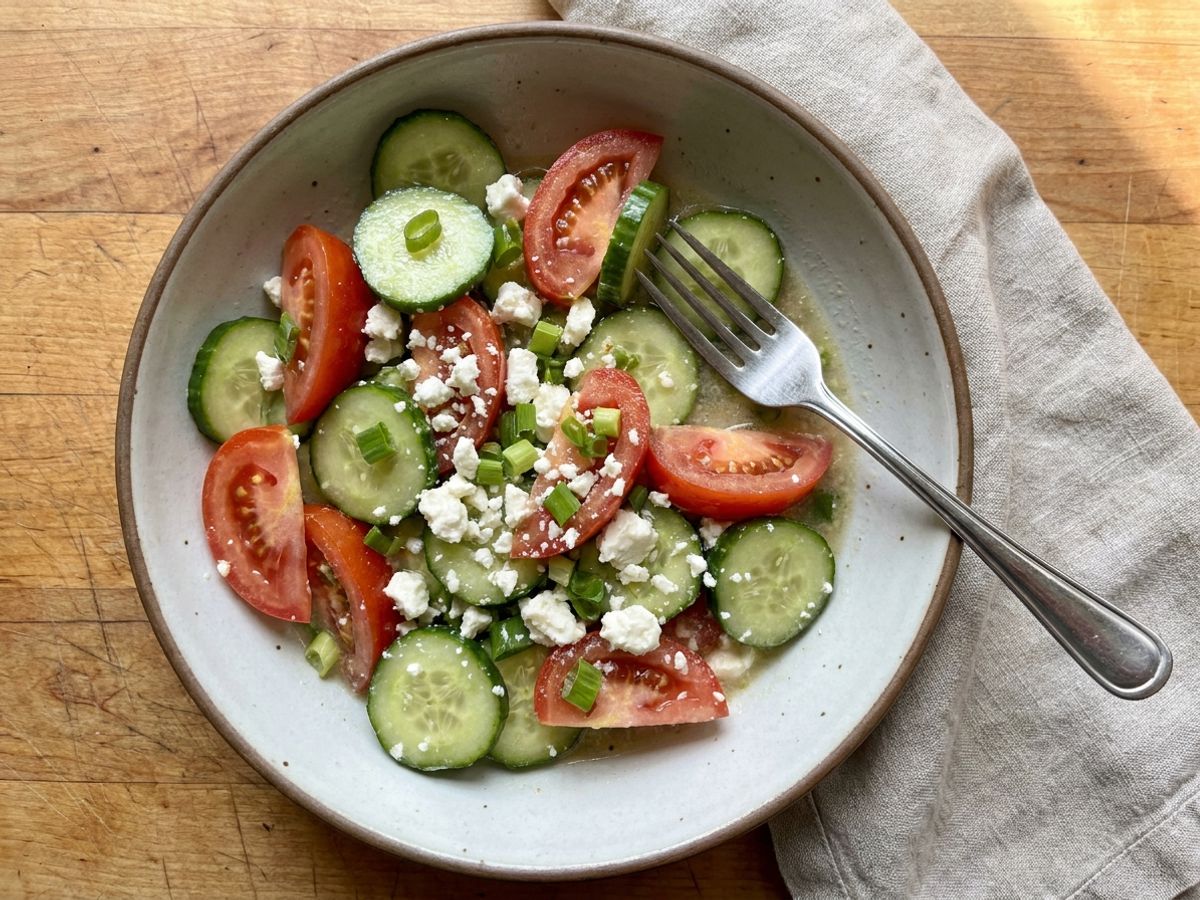
Ingredients
Dressing
- 3 tbsp (45 ml) extra virgin olive oil
- 1 tbsp (15 ml) garlic-infused olive oil
- 2 tbsp (30 ml) red wine vinegar
- 1/2 tsp plain Dijon mustard (check the label for onion or garlic)
- 1/2 tsp salt
- Freshly ground black pepper, to taste
Salad
- 1 large common cucumber (about 300 g), halved lengthwise and sliced, or roughly 3 cups. This works out to about 75 g per serving.
- 2 medium common (round or Roma) tomatoes (about 260 g total), cut into wedges or chunks. This keeps tomato near 65 g per serving.
- 100 g feta, crumbled (about 3/4 cup). This is about 25 g per serving.
- 3 scallions (spring onions), GREEN tops only, thinly sliced
- 2 tbsp chopped fresh dill or flat-leaf parsley
- 1 tbsp chopped fresh mint (optional)
Instructions
Make the dressing
- In a small bowl or jar, combine the extra virgin olive oil, garlic-infused olive oil, red wine vinegar, Dijon mustard, salt, and a few grinds of black pepper.
- Whisk or shake until the dressing looks thick and slightly cloudy. Set it aside so the flavors come together while you prep the vegetables.
Prep the vegetables
- Halve the cucumber lengthwise. If the seeds look very wet, scrape them out with a spoon so the salad does not go watery, then slice the cucumber into half-moons.
- Cut the tomatoes into bite-size wedges or chunks. If you are using cherry tomatoes instead, halve them.
- Slice only the green tops of the scallions and discard the white bulb ends. Chop the dill or parsley and the mint if using.
Assemble
- In a large bowl, combine the cucumber, tomatoes, scallion greens, and herbs.
- Give the dressing a final whisk, pour it over the salad, and toss gently to coat.
- Scatter the crumbled feta over the top and fold it in lightly so it stays in visible pieces. Let the salad rest for 5 to 10 minutes, then taste, adjust the salt and pepper, and serve.
Tips & Substitutions
- Salt the cucumber to keep it crisp. For a firmer salad, toss the sliced cucumber with a pinch of salt, let it drain in a colander for 10 minutes, then pat it dry before adding it. Reduce the salt in the dressing to balance.
- Swap the herbs freely. Dill, parsley, mint, basil, and chives are all low-FODMAP, so use whatever you have. Chives give a mild onion flavor and are low FODMAP at these amounts, unlike an onion bulb, which is high in fructans.
- Make it dairy-free. Leave out the feta, or use a dairy-free cheese with no cashews, inulin, onion, or garlic. The red wine vinegar dressing carries the salad on its own.
- Watch bottled dressings. Most Italian and vinaigrette bottles list onion or garlic in the first few ingredients. Making the dressing from the listed ingredients avoids onion and garlic.
- Cherry tomatoes work too. Use 12 cherry tomatoes (about 180 g) in place of the round tomatoes, so each serving has about 3 (45 g), the low FODMAP serve.
- Add crunch without high-FODMAP add-ins. Up to 1 tablespoon of toasted pine nuts or 10 walnut halves per serving adds texture. Skip wheat croutons, and check gluten-free ones for onion, garlic, or inulin.
 Join the waitlist
We're building a Low FODMAP Recipes app. Add your email and we'll let you know when it launches.
Why This Works
- Garlic-infused oil, no bulb. The fructans in garlic are not oil-soluble, so infused oil delivers the flavor while the FODMAPs stay behind in the discarded solids. That is why it replaces chopped garlic here.
- Scallion greens instead of onion. The green tops of scallions are low-FODMAP, while the white bulb concentrates the same fructans found in onion. Using only the greens gives onion flavor at a low FODMAP amount.
- Portion-capped tomato, cucumber, and feta. Each is low-FODMAP at the amount used per serving: cucumber near 75 g, common tomato near 65 g, and feta near 25 g. Feta is a lower-lactose cheese that sits within a low-FODMAP serving at 40 g.
- Vinegar carries the acid, not high-fructose sweeteners. Red wine vinegar is low-FODMAP, so the dressing needs no honey or agave to balance it. If you want a touch of sweetness, a small pinch of white sugar is fine.
Storage
Store leftovers in an airtight container in the fridge for up to 2 days, though the cucumber and tomato soften and release liquid over time. Drain off any pooled juices and add a splash of fresh red wine vinegar before serving again. It does not freeze well. For a larger bowl, look up the ingredients in the FODMAP Foods app to see how their rating changes with portion size.
Not sure about an ingredient?
Our low FODMAP food list rates 600+ foods low, moderate or high, with the serving size behind each rating, so you can check any ingredient or swap in this recipe before you make it.
For educational purposes only. Not medical advice. Consult a healthcare professional for personal guidance.
References
- Are Tomatoes & Tomato Products Low FODMAP? — FODMAP Everyday
- Is Cheese Low FODMAP? — FODMAP Everyday
- How to Use Spring Onion (Green Onion) on the Low FODMAP Diet — A Little Bit Yummy