

Chocolate Peanut Butter Smoothie
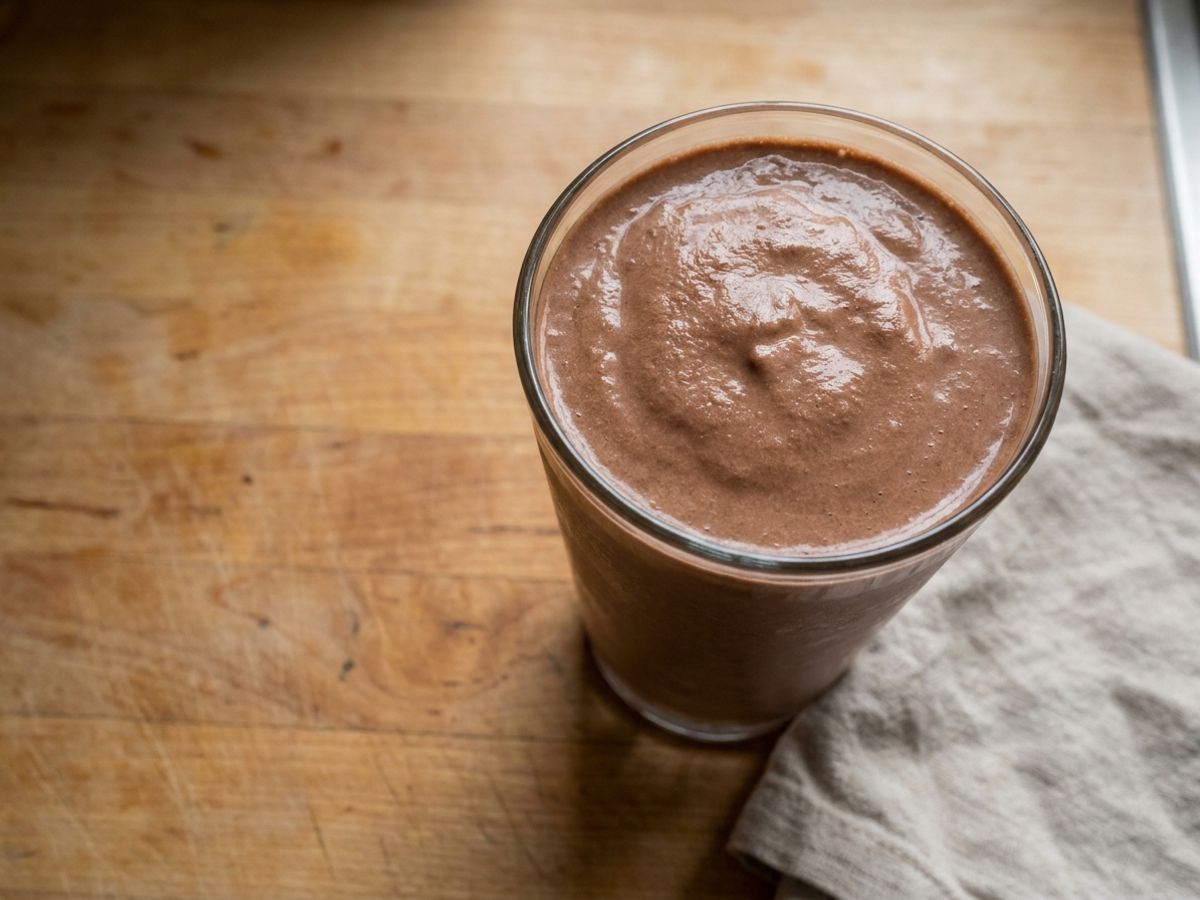
A low FODMAP smoothie of a firm-yellow banana, peanut butter, cocoa powder, lactose-free or almond milk, and maple syrup.
Ingredients
- 1 firm-yellow banana (about 100 g), still slightly green at the stem
- 2 tablespoons (about 32 g) smooth peanut butter, no honey or added fiber
- 2 heaping teaspoons (about 8 g) unsweetened cocoa or cacao powder
- 1 cup (250 ml) lactose-free cow's milk or unsweetened almond milk
- 1/2 cup ice
- 1/2 teaspoon pure vanilla extract (optional)
- 1 to 2 teaspoons pure maple syrup (optional)
- Pinch of salt (optional, brings out the chocolate)
Instructions
Blend
- Add the milk first, then the banana, peanut butter, cocoa powder, ice, vanilla, maple syrup, and salt.
- Blend on high for 45 to 60 seconds, until the cocoa and peanut butter are fully broken up and the drink looks uniformly chocolate-brown with no streaks.
- Pour into a tall glass and drink right away. It thickens for a minute or two, then thins as the ice melts.
Tips & Substitutions
- Measure the cocoa. Monash lists 2 heaping teaspoons (about 8 g) of unsweetened cocoa or cacao powder as the low-FODMAP serve. One rounded tablespoon is roughly the same. Above that, cocoa can tip into moderate-FODMAP, so don't free-pour.
- Use unsweetened cocoa, not drinking chocolate. Dutch-process and natural unsweetened cocoa powders are fine. Skip pre-sweetened "hot chocolate" mixes; most contain milk powder, inulin, or high-fructose sweeteners. Raw cacao powder works the same as cocoa at the 8 g serve.
- Pick the right banana. Firm-yellow, still slightly green at the stem, is the low-FODMAP serve at 1 whole banana (about 100 g). Once a banana is spotty-ripe, Monash drops the serve to 1/3 of a banana (about 35 g). Use a firm one, or freeze firm-yellow slices so it's ready to use.
- Check the peanut butter label. You want plain peanuts and salt. Skip jars with honey, agave, inulin, chicory root fiber, or "prebiotic fiber." A 2 tablespoon (about 32 g) scoop is the low-FODMAP serve.
- Pick a low-FODMAP milk. Lactose-free cow, unsweetened almond (up to 1 cup / 250 ml), or rice milk (up to about 210 ml) all work; macadamia is low at 1 cup too. Carton coconut milk is low up to 3/4 cup. Oat milk is low only at about 100 ml, and cashew milk is not low FODMAP. Avoid any milk with inulin, chicory root fiber, or added "prebiotic fiber."
- Make it a protein smoothie. Add 1 scoop (about 25 g) of plain or chocolate whey protein isolate, which is very low in lactose. Check the label for inulin, chicory root, FOS, and polyol sweeteners (sorbitol, mannitol, xylitol, maltitol, isomalt); flavored powders often add them.
- Freeze the banana. Peel a firm-yellow banana, slice it, and freeze on a tray. Frozen banana plus ice makes a thicker, colder smoothie, more like a frozen chocolate shake.
- Sweeten with maple syrup. Honey is low FODMAP only at about ½ teaspoon and agave is high FODMAP at recipe amounts. Cocoa is bitter without a little sweetness, so 1 to 2 teaspoons of pure maple syrup usually lands it. Skip sugar-free "keto" sweeteners that list xylitol, sorbitol, maltitol, or inulin.
 Join the waitlist
We're building a Low FODMAP Recipes app. Add your email and we'll let you know when it launches.
Why This Works
Cocoa serve is small, but enough. Monash lists unsweetened cocoa powder as low-FODMAP at 2 heaping teaspoons, about 8 g. Above that, it starts adding up on FODMAPs. Eight grams is plenty to make a glass taste genuinely chocolate, especially with peanut butter adding a lot of the flavor; you don't need to push past the serve.
Banana ripeness matters more than size. Monash lists a firm banana (yellow, no brown spots) as low FODMAP up to 1 medium, about 100 g, but a ripe, spotty banana drops to a 1/3 banana serve, about 35 g. A firm one is what lets this glass use a whole banana.
Peanut butter serve. Peanuts are a true low-FODMAP nut, and 2 tablespoons (about 32 g) of plain peanut butter fits cleanly at the low serve. The catch is added ingredients; honey, agave, inulin, and chicory root fiber all turn up in "natural" and "gut-health" jars. Read the ingredient list and stick to jars that list peanuts and salt.
Milk choice. Lactose is the FODMAP issue in regular cow's milk. Lactose-free milk and unsweetened almond milk are low FODMAP at 1 cup, which is why this recipe pours a full glass. Chocolate hides a watery milk, so pick one you'd actually drink on its own.
Sweetener rule. Cocoa is naturally bitter, so this recipe needs a little more sweetness than the plain peanut butter banana version. Pure maple syrup is low-FODMAP at 1 tablespoon, so 1 to 2 teaspoons is well under that. Honey is low only at about ½ teaspoon and agave is high FODMAP at recipe amounts. Keto sweeteners with xylitol, sorbitol or maltitol are high FODMAP polyols.
Storage
Blend and drink right away. If you need to hold one, cap it in a sealed container and refrigerate for up to 24 hours at 40°F (4°C) or below. Shake or re-blend before drinking; cocoa and peanut butter both settle as they sit. To prep ahead, freeze sliced firm-yellow banana in a zip bag and add milk, peanut butter, cocoa, and ice at blend time.
Not sure about an ingredient?
Our low FODMAP food list rates 600+ foods low, moderate or high, with the serving size behind each rating, so you can check any ingredient or swap in this recipe before you make it.
For educational purposes only. Not medical advice. Consult a healthcare professional for personal guidance.
References
- Cocoa Powder — Monash University FODMAP
- Peanut Butter — Monash University FODMAP
- Banana, common (unripe) — Monash University FODMAP
- All About Cocoa & FODMAPs — FODMAP Everyday
- 13 Low FODMAP Ingredient Swaps & Alternatives (incl. milk alternatives) — Gourmend Foods
- Low FODMAP Protein Powders — FODMAP Everyday