

Breakfast Casserole
A low FODMAP breakfast casserole of shredded hash browns, ham, bell pepper, and aged cheddar in an egg and lactose-free milk custard.
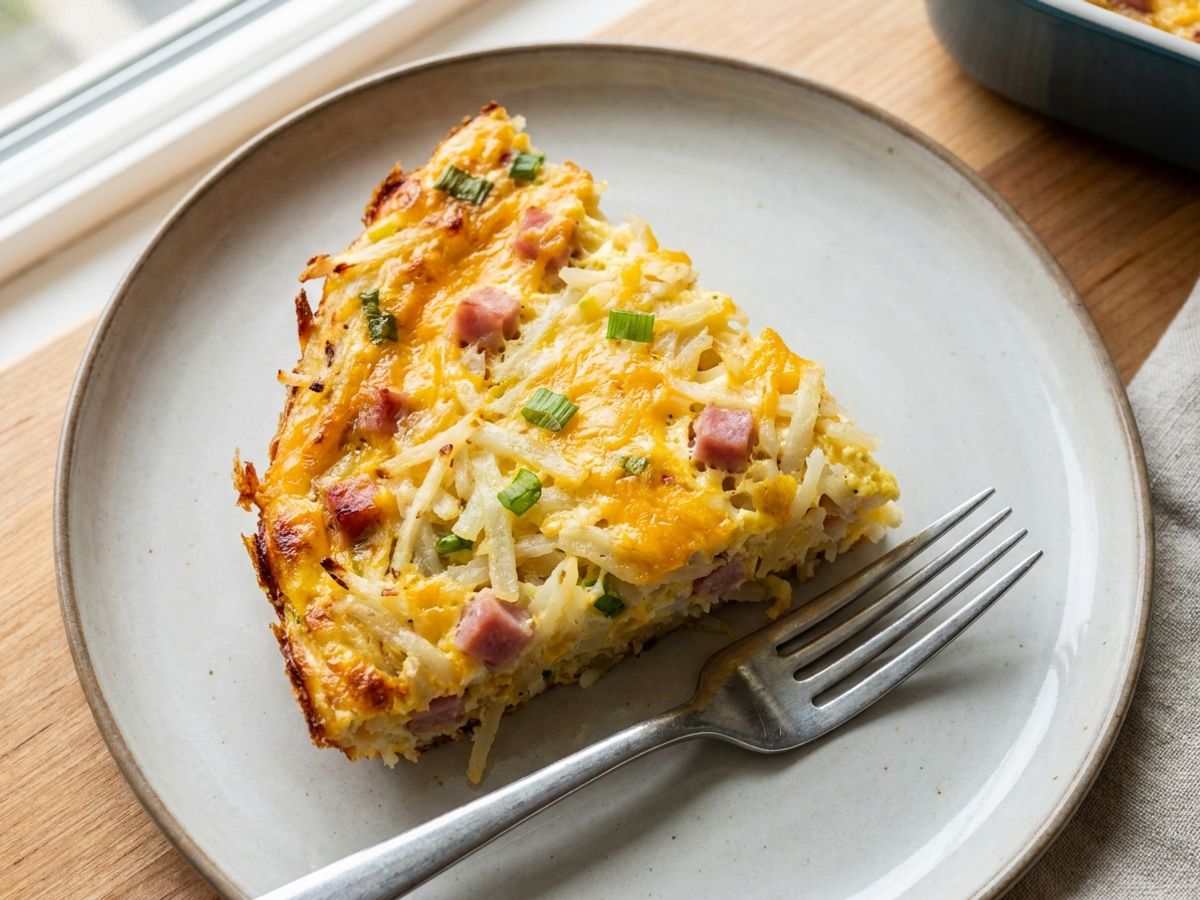
Ingredients
- 2 tbsp garlic-infused olive oil, plus a little extra for greasing the dish
- 500g (about 4 cups) plain shredded potato hash browns, thawed if frozen (potato as the only vegetable on the label, no added onion)
- 225g (about 1 1/2 cups) diced cooked ham, from a ham without onion or garlic in the ingredients
- 1/2 cup sliced scallion GREEN tops only (about 4 scallions, dark green parts)
- 1 medium red bell pepper, diced (optional; one pepper across 8 servings is under the 43g red pepper serve)
- 170g (about 1 1/2 cups) shredded aged cheddar, divided (cheddar is naturally low in lactose)
- 12 large eggs
- 1 cup (240ml) lactose-free milk
- 3/4 tsp salt
- 1/2 tsp ground black pepper
Instructions
Prep the base
- Heat your oven to 375F (190C). Grease a 9x13 inch (23x33 cm) baking dish with a little garlic-infused oil.
- If your hash browns are frozen, thaw them, then press them firmly in a clean towel to squeeze out as much water as you can. Excess water makes the casserole soggy.
- Warm the 2 tbsp garlic-infused oil in a large skillet over medium heat. Add the hash browns and cook for 6 to 8 minutes, stirring now and then, until they lose their raw look and pick up a little color. Stir in the red bell pepper for the last 2 minutes if using. Remove from the heat and let cool for 5 minutes.
Layer and pour
- Spread the hash brown mixture evenly across the greased dish. Scatter the diced ham, scallion green tops, and 1 cup of the cheddar over the top.
- In a large bowl, whisk the eggs, lactose-free milk, salt, and pepper until fully combined and slightly foamy.
- Pour the egg mixture evenly over the layered base, gently pressing everything down so the custard reaches the bottom. Top with the remaining 1/2 cup cheddar.
Bake
- Bake, uncovered, for 45 to 50 minutes, until the center is set and no longer jiggles and the top is golden. If you assembled it the night before and are baking straight from the fridge, add 5 to 10 minutes.
- For food safety, the egg custard should reach 160F (71C) in the center. Check with an instant-read thermometer if you are unsure.
- Let the casserole rest for 10 minutes before slicing into 8 portions. This lets the custard firm up and cut cleanly.
Tips & Substitutions
- Squeeze the potatoes dry. Any water left in thawed hash browns waters down the egg custard and leaves the base mushy. Wring them in a towel until barely damp.
- Check the ham label. Many deli and cured hams carry onion or garlic powder. Scan the ingredients and pick one seasoned only with salt, sugar, or dextrose.
- Swap the protein. Cooked breakfast sausage or chopped crisp bacon both work in place of ham; check the label for onion, garlic, inulin, chicory root, and honey. Brown and drain them first.
- Add low-FODMAP vegetables. Diced red bell pepper (up to about 43g per serving; green pepper is low at 75g) or a handful of baby spinach (up to 75g) fold in well. Stir spinach in wilted and squeezed dry.
- Watch the cheese portion. A serving here runs about 20g of cheddar, well within its 40g low FODMAP serve.
- Bake it fresh or make it ahead. Assemble the whole casserole, including pouring over the egg custard and adding the top cheese, then cover and refrigerate up to 12 hours, then bake in the morning with the extra time noted above.
 Join the waitlist
We're building a Low FODMAP Recipes app. Add your email and we'll let you know when it launches.
Why This Works
- Garlic flavor without the fructans. Fructans are not oil-soluble, so garlic-infused oil carries the aroma while the fructans stay behind in the discarded garlic.
- Onion flavor from green tops. The dark green parts of scallions are low in fructans, unlike the white bulb, so they add savory depth without the FODMAP load.
- Lactose-free custard. Standard milk adds lactose across 12 eggs' worth of custard. Lactose-free milk keeps the creamy texture with the lactose already broken down.
- Aged cheddar is low in lactose. As cheese ages, most of its lactose is used up, which is why a sensible portion of cheddar fits a low-FODMAP plate.
Storage
Cool leftovers, then refrigerate, covered, for up to 4 days. Reheat individual squares in the microwave for 1 to 2 minutes or in a 350F (175C) oven until warmed through. To freeze, wrap cooled portions individually and freeze for up to 2 months, then thaw overnight in the fridge before reheating. Portions stay within low-FODMAP amounts as long as you keep to one slice at a sitting. If you are unsure about an ingredient, look it up in the FODMAP Foods app to see how its rating changes with portion size.
Not sure about an ingredient?
Our low FODMAP food list rates 600+ foods low, moderate or high, with the serving size behind each rating, so you can check any ingredient or swap in this recipe before you make it.
For educational purposes only. Not medical advice. Consult a healthcare professional for personal guidance.
References
- All about onion, garlic and infused oils on the Low FODMAP Diet — Monash University FODMAP Blog
- How to Use Spring Onion (Green Onion) on the Low FODMAP Diet — A Little Bit Yummy
- Safe Handling of Eggs — USDA Food Safety and Inspection Service