

Bone Broth
A low FODMAP bone broth simmered from chicken or beef bones with carrots, celery, leek and scallion greens, parsley, thyme, and bay leaves.
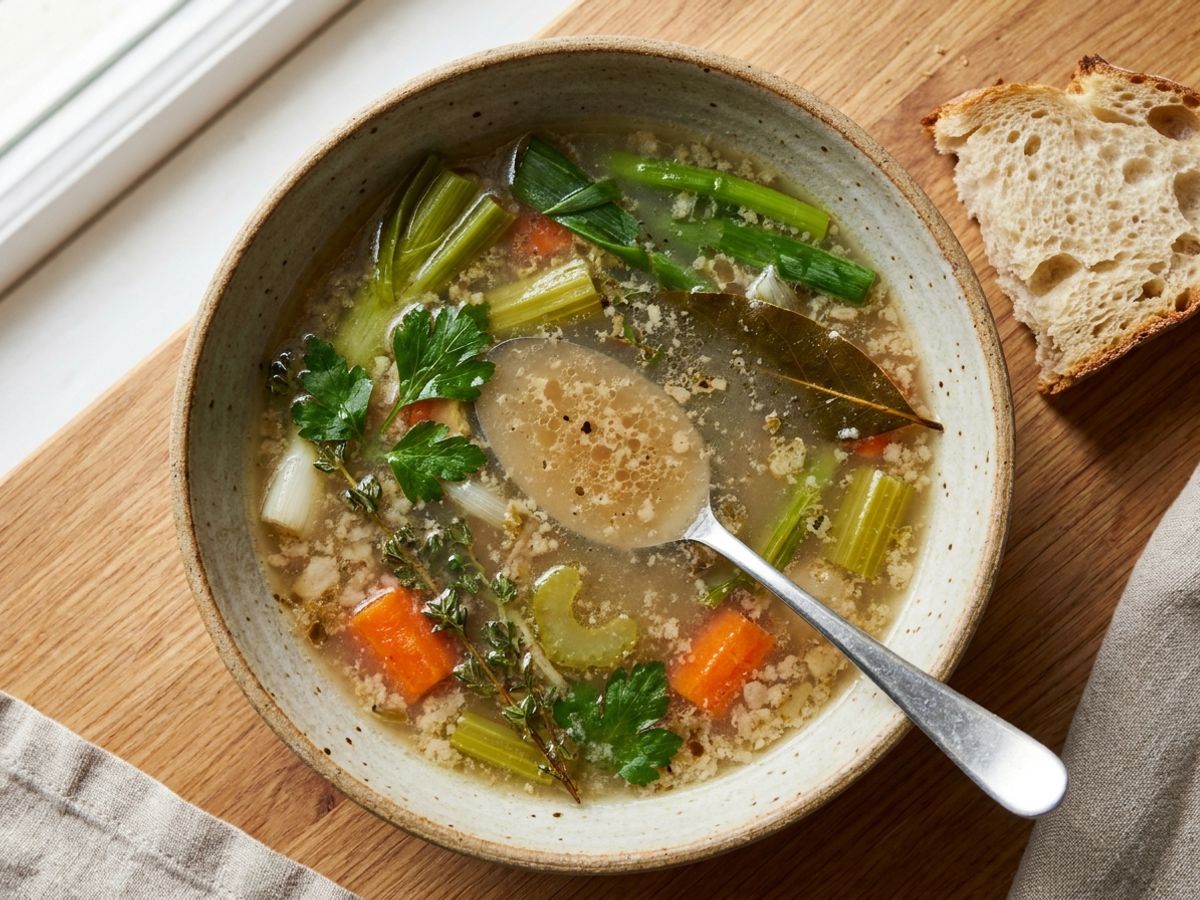
Ingredients
- 4 to 5 lb (1.8 to 2.3 kg) bones: chicken carcasses and wings, beef marrow and knuckle bones, or a mix of the two
- 14 to 20 cups (3.3 to 4.7 L) cold filtered water, enough to cover the bones by 1 to 2 inches
- 2 tbsp apple cider vinegar
- 2 medium carrots, roughly chopped
- 1 stalk celery, roughly chopped (optional)
- Green tops of 1 large leek, rinsed and roughly chopped (about 1 cup)
- Green tops of 4 to 5 scallions, roughly chopped
- 6 sprigs fresh parsley
- 4 sprigs fresh thyme
- 2 bay leaves
- 1 tsp whole black peppercorns
- Salt, to taste (added after straining)
Instructions
Roast the Bones (Optional, for Beef)
- If you're using beef bones, heat the oven to 425°F (220°C) and spread the bones in a single layer on a rimmed sheet pan. Roast for 30 to 40 minutes until deeply browned. This step is optional for chicken but adds more flavor for any red-meat broth.
- Scrape the bones and any browned bits into a large stockpot or slow cooker.
Build the Pot
- Add the carrots, celery, leek greens, scallion greens, parsley, thyme, bay leaves, and peppercorns.
- Pour in the cold water, enough to cover the bones by 1 to 2 inches.
- Stir in the apple cider vinegar and let the pot sit off the heat for 20 to 30 minutes. The vinegar helps pull minerals out during the simmer.
- Do not add salt yet; the volume will reduce and concentrate.
Simmer Long and Low
- On the stovetop, bring to a gentle boil over medium-high heat, then drop to the lowest setting that still produces the occasional small bubble. In a slow cooker, start on high for 1 hour, then switch to low. Skim any foam that rises in the first 30 minutes.
- For chicken bones, hold at a bare simmer for 12 hours on the stovetop (or 18 hours on low in a slow cooker); the timing above is for chicken. Beef bones need up to 24 hours to release more gelatin.
- Check every few hours and top off with hot water if the liquid drops below the bones. Covered for most of the cook, uncovered for the last hour if you want a more concentrated broth.
Strain and Cool
- Turn off the heat and let the pot rest for 15 minutes so the solids settle and the fat separates.
- Pour through a fine-mesh sieve into a clean pot or large bowl. Discard the bones and aromatics. For a clearer broth, strain a second time through cheesecloth.
- Salt to taste now that the final volume is set. Expect about 8 to 12 cups of finished broth depending on how much reduced during the simmer.
- Cool quickly by setting the container in an ice bath or dividing into shallow containers. Refrigerate within 2 hours of cooking.
- The next day you should see a firm, jiggly gel. That's the gelatin from the bones. Skim the hardened fat cap off the top if you want a leaner broth, or stir it back in for richness.
Tips & Substitutions
- Ask your butcher for mixed bones. A good bone broth uses a mix of marrow bones (for fat and flavor), knuckle or neck bones (for collagen), and meaty bones like oxtail or wings (for body). All marrow bones can turn out greasy and thin.
- Leek greens and scallion tops work well in place of onion. Most of the fructans sit in the white bulb of both plants, and the dark green tops are low FODMAP at the amounts used. The greens add the flavor you want in a long simmer.
- Keep celery to one stalk, or skip it. Celery carries mannitol, and one stalk divided across 10 servings is a small, low FODMAP amount per bowl. Leave it out if you prefer.
- Apple cider vinegar is low-FODMAP at this amount. Two tablespoons in a full pot is well within Monash's low-FODMAP serve for plain apple cider vinegar. People use it to help pull minerals out during a long simmer, and it won't leave a vinegar taste after the cook.
- If you want a little garlic flavor, finish with garlic-infused olive oil. Stir 1 to 2 teaspoons into a hot mug of broth. Adding it to the simmering pot wastes the flavor.
- For a shorter cook, make low-FODMAP chicken broth instead. The 3 to 4 hour chicken version gives you a clean cooking stock; this 12 to 24 hour bone broth gives you the gelled, sippable kind.
 Join the waitlist
We're building a Low FODMAP Recipes app. Add your email and we'll let you know when it launches.
Why This Works
Bone broth mostly comes down to cook time. The difference between a cooking stock and a sippable bone broth is getting collagen into the broth, and that takes 12 or more hours of bare-simmer heat. If you simmer it longer, you'll usually get a more gelled broth.
Onion and garlic matter more in long-simmered broth. Commercial bone broths often hide onion and garlic behind "natural flavor," "vegetable broth," or "spices" on the label. Onion or garlic simmered for hours can make the finished broth high FODMAP, which is why this one leaves them out.
Gel is a good sign. A properly made bone broth sets to a wobbly gel in the fridge. If it doesn't gel, try a longer, gentler simmer or more joint and knuckle bones next time.
Storage
Refrigerate in sealed containers at 40°F (4°C) or below for 3 to 4 days; freeze anything you won't use by then. For longer storage, freeze in 2-cup portions for soups and stews, in 1-cup portions for sipping mugs, and in a silicone ice-cube tray (about 2 tablespoons per cube) for deglazing pans or finishing sauces. Frozen bone broth keeps for up to 6 months. Thaw overnight in the fridge, or drop frozen cubes straight into a hot pan.
Not sure about an ingredient?
Our low FODMAP food list rates 600+ foods low, moderate or high, with the serving size behind each rating, so you can check any ingredient or swap in this recipe before you make it.
For educational purposes only. Not medical advice. Consult a healthcare professional for personal guidance.
References
- All about onion, garlic and infused oils on the Low FODMAP Diet — Monash University FODMAP Blog
- Low FODMAP Homemade Beef Stock (Bone Broth) — FODMAP Everyday
- How to Use Spring Onion (Green Onion) on the Low FODMAP Diet — A Little Bit Yummy
- Are Leeks Low FODMAP? 2026 Guide — Gourmend Foods