

Bibimbap
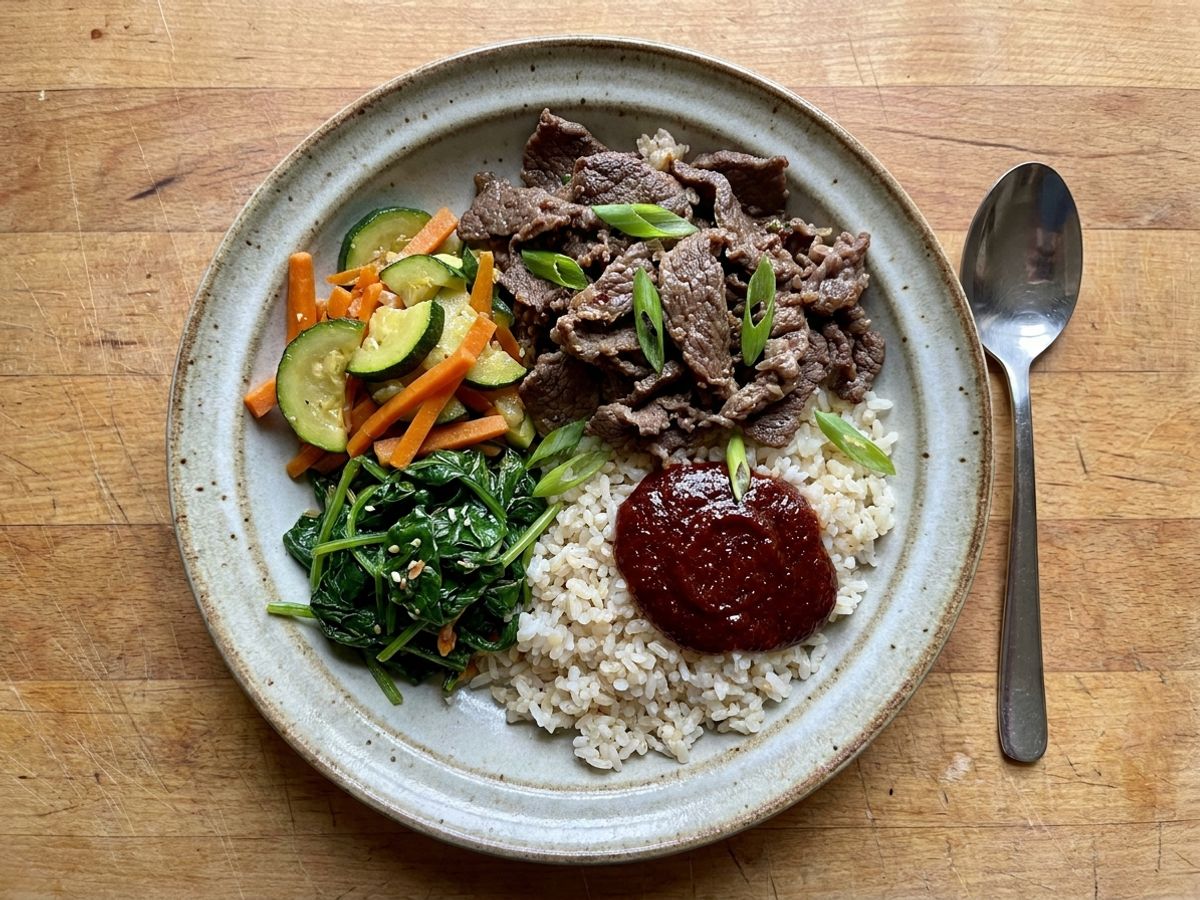
A low FODMAP bibimbap of rice, sesame-marinated beef, spinach, bean sprouts, carrot, zucchini, cucumber, and a fried egg with a garlic-free gochujang-style sauce.
Ingredients
Rice
- 1 1/2 cups (300g) uncooked short-grain or jasmine rice, cooked (about 4 cups cooked)
Beef and marinade
- 12 oz (340g) beef sirloin or ribeye, thinly sliced against the grain
- 2 tbsp gluten-free tamari or soy sauce
- 1 tbsp garlic-infused olive oil
- 1 tbsp toasted sesame oil
- 2 tsp maple syrup
- 1 tsp finely grated fresh ginger
- 2 tbsp finely sliced scallion, green tops only
- 1/4 tsp black pepper
Gochujang-style sauce
- 4 tsp gochugaru (Korean red pepper flakes), 1 tsp per serving
- 2 tbsp (28g) tomato paste
- 1 tbsp gluten-free tamari
- 1 tbsp maple syrup
- 1 tbsp rice vinegar
- 1 tbsp garlic-infused olive oil
- 1 tsp toasted sesame oil
- 1 tsp cane sugar
- 2 to 3 tbsp water, to loosen
Vegetables and egg
- 5 oz (150g) baby spinach (baby spinach is low-FODMAP up to 75g per serve)
- 1 cup (100g) mung bean sprouts
- 1 medium carrot (about 80g), julienned
- 1 small zucchini (about 130g), julienned (about 33g per serve)
- 1/2 cup (75g) drained canned champignon (button) mushrooms or sliced oyster mushrooms
- 1 Persian cucumber, thinly sliced
- 4 eggs
- Garlic-infused olive oil and toasted sesame oil, for seasoning
- Toasted sesame seeds and salt, to taste
Instructions
Make the sauce and marinate the beef
- Whisk together the gochugaru, tomato paste, tamari, maple syrup, rice vinegar, 1 tbsp garlic-infused oil, 1 tsp sesame oil, and cane sugar. Add water a tablespoon at a time until it reaches a thick, spoonable consistency. Set aside.
- In a bowl, combine the sliced beef with the tamari, garlic-infused oil, sesame oil, maple syrup, ginger, scallion green tops, and black pepper. Toss to coat and let it sit while you prepare the rice and vegetables, at least 15 minutes.
Cook the rice and vegetables
- Cook the rice according to the package directions and keep it warm.
- Wilt the spinach in a dry or lightly oiled pan over medium heat until just collapsed, about 1 minute. Squeeze out excess water, then toss with a little sesame oil, a pinch of salt, and a few sesame seeds.
- Blanch the bean sprouts in boiling water for 1 minute, drain, and season the same way as the spinach.
- Wipe the pan, add a teaspoon of garlic-infused oil, and cook the carrot and zucchini separately over medium-high heat until just tender, 2 to 3 minutes each. Season each lightly with salt. Cook the mushrooms in the same way until browned. Keep the cucumber raw.
Cook the beef and eggs
- Heat a teaspoon of garlic-infused oil in a wide pan over medium-high heat. Add the beef in a single layer and sear, turning once, until browned and cooked through. Cook whole-muscle beef to 145F and rest it for 3 minutes.
- In a separate pan, fry the eggs in a little garlic-infused oil until the whites are set. For food safety, cook the eggs until both the white and yolk are firm, or use pasteurized eggs if you prefer a runny yolk.
Assemble
- Divide the warm rice among four bowls. Arrange the spinach, bean sprouts, carrot, zucchini, mushrooms, cucumber, and beef in separate sections on top.
- Top each bowl with a fried egg, a spoonful of the gochujang-style sauce, and a sprinkle of sesame seeds. Stir everything together at the table before eating.
Tips & Substitutions
- Adjust the heat. Gochugaru brings color and mild heat. Start with less and build up to the 4 tsp, which is 1 tsp of dried chili per serving.
- Swap the protein. Firm or extra-firm tofu and plain cooked chicken both work in place of beef. Use the same marinade and cook the tofu until golden.
- Mind the mushrooms. Skip shiitake and common button mushrooms, which are high in mannitol. Canned mushrooms and oyster mushrooms are the low-FODMAP choices here.
- Keep the rice plain. Cook plain white rice and avoid pre-seasoned or "fried rice" mixes, which often carry onion and garlic powder.
- Use the scallion greens only. The white bulb of a scallion holds the same fructans as an onion, so trim it off and keep the green tops for the marinade and garnish.
- Batch the sauce. The sauce keeps well, so double it and refrigerate the extra for quick bowls later in the week.
 Join the waitlist
We're building a Low FODMAP Recipes app. Add your email and we'll let you know when it launches.
Why This Works
- Garlic-infused oil delivers flavor without fructans. Fructans are not oil-soluble, so the oil carries garlic aroma into the beef and sauce while leaving the FODMAPs behind.
- The gochujang gets rebuilt from compliant parts. Bottled gochujang usually lists onion, garlic, and sometimes barley or wheat malt, so a scratch sauce of gochugaru, tomato paste, tamari, and sweeteners covers the sweet, savory, spicy profile without them.
- The vegetables are portion-managed. Baby spinach stays under 75g per serve, zucchini about 33g, and mushrooms come from the low-FODMAP canned or oyster options, which keeps the loaded bowl within tested limits.
- Scallion greens stand in for the onion note. The green tops are low-FODMAP and give the fresh allium lift that raw onion would otherwise provide.
Storage
Store leftover components separately in airtight containers in the fridge for up to 3 days, keeping the sauce in its own jar. Reheat the rice, beef, and cooked vegetables in a covered pan or microwave until steaming, and cook a fresh egg when you serve. This dish does not freeze well because the vegetables soften and weep. If you plan to scale up the portions, look up each ingredient in the FODMAP Foods app to see how its rating changes with portion size.
Not sure about an ingredient?
Our low FODMAP food list rates 600+ foods low, moderate or high, with the serving size behind each rating, so you can check any ingredient or swap in this recipe before you make it.
For educational purposes only. Not medical advice. Consult a healthcare professional for personal guidance.
References
- All about onion, garlic and infused oils on the Low FODMAP Diet — Monash University FODMAP Blog
- How to Use Spring Onion (Green Onion) on the Low FODMAP Diet — A Little Bit Yummy
- Safe Minimum Internal Temperature Chart — USDA Food Safety and Inspection Service